25-Minute Pantry Reset: From Chaotic to Organized in One Session
Stop buying duplicates and find what you need instantly with this shelf-by-shelf organization system
A chaotic pantry doesn't just make cooking more stressful—it actually costs you money when you buy duplicates because you can't find what you already have, or when perfectly good food expires hidden in the back. The thought of tackling pantry organization can feel overwhelming, which is why this shelf-by-shelf approach works so well—you're never pulling everything out at once and staring at a mountain of canned goods on your counter. Instead, you're doing manageable 5-minute segments that add up to a completely transformed pantry in about 25 minutes total. I started doing this quarterly reset after realizing I'd bought three containers of cinnamon because I couldn't see the ones I already had, and it's genuinely changed how smoothly meal planning and cooking flow in my kitchen. The secret is creating zones for similar items and positioning things based on how often you actually use them, so your everyday staples are at eye level while specialty ingredients live on higher shelves. Once everything has a designated spot and you can see what you have at a glance, you'll wonder how you ever functioned with pantry chaos.
What You'll Need (Minimal Investment)
- Cleaning Supplies:
- All-purpose cleaner or vinegar solution
- Microfiber cloths or paper towels
- Garbage bag for expired items
- Organization Tools (use what you have):
- Bins, baskets, or storage containers
- Shoebox lids for corralling small packets
- Clear containers for decanting bulk items (optional)
- Labels or label maker (optional but helpful)
- Category Zones to Create:
- Baking supplies (flour, sugar, baking powder, etc.)
- Snacks and quick grab items
- Canned goods and jarred items
- Grains, pasta, and rice
- Oils, vinegars, and condiments
- Breakfast items and cereals
Organization Steps (25 Minutes)
- Start with one shelf at a time rather than emptying the entire pantry—this prevents overwhelming yourself and lets you see progress quickly as you complete each section.
- Remove everything from that shelf and check expiration dates, tossing anything expired, stale, or that you realistically won't use no matter how much it cost originally.
- Wipe down the empty shelf thoroughly before returning items—this is your chance to eliminate crumbs, spills, and sticky spots that accumulate over months of use.
- Group similar items together as you return them to the shelf, creating designated zones so you always know exactly where to find and return each type of food.
- Position frequently used items at eye level where they're easiest to grab, moving specialty or occasional-use ingredients to higher or lower shelves out of prime real estate.
- Contain small packets, sauce mixes, and loose items in bins or even shoebox lids so they don't scatter across the shelf and disappear from view.
- Face all labels forward so you can see exactly what you have at a glance without pulling items out to check—this simple step prevents duplicate purchases.
- List staples you've run out of as you work through each shelf, creating a shopping list that ensures you restock essentials rather than buying random items you don't need.
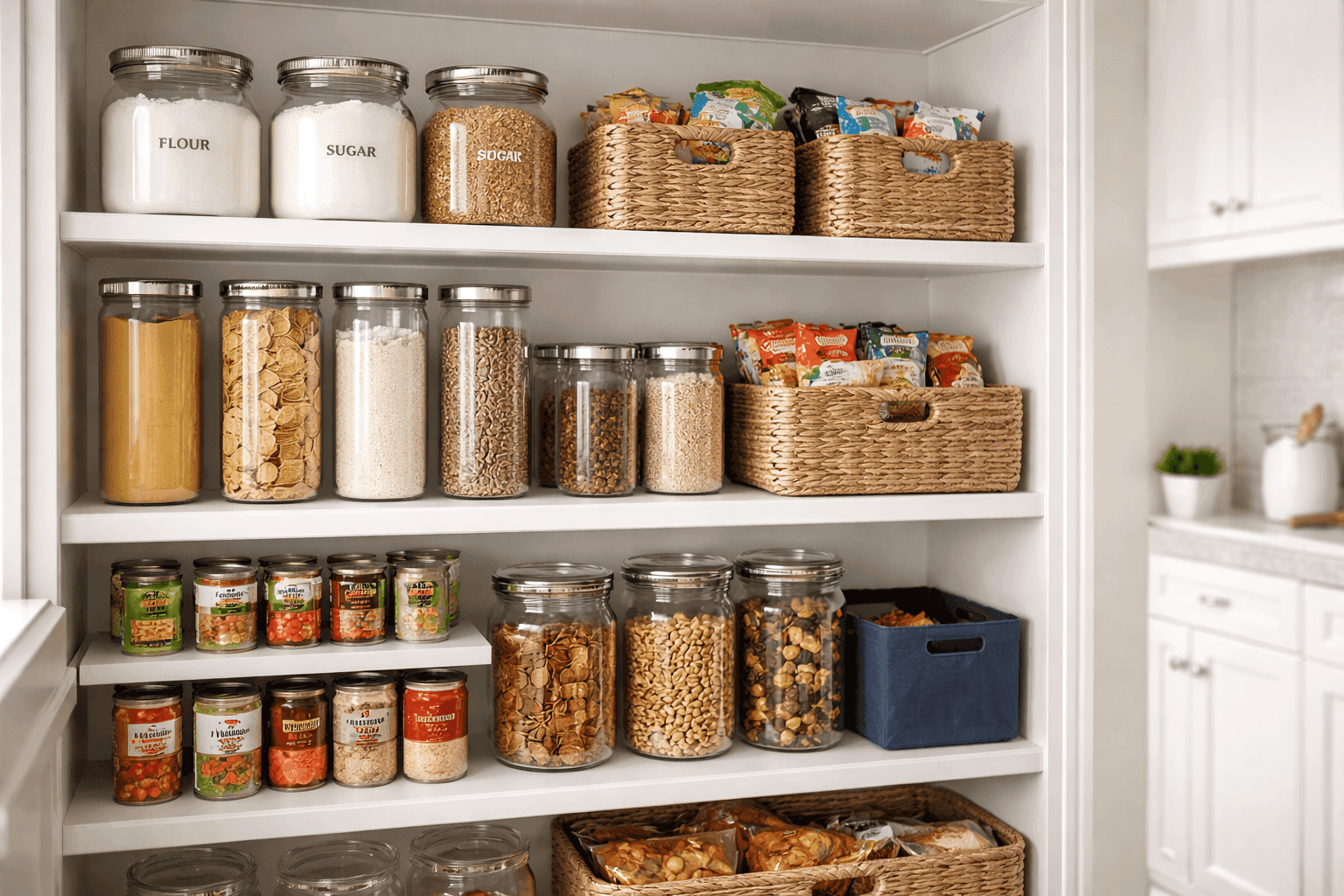
If you want to take your pantry from functional to Instagram-worthy, consider decanting bulk items like flour, sugar, rice, and pasta into matching clear containers—this creates a cohesive, high-end look while making it easy to see when you're running low. The investment in quality airtight containers pays off in longer food freshness and a pantry that genuinely sparks joy when you open the door. For a budget-friendly version, reuse large glass jars from pickles or pasta sauce after removing labels. Add a lazy susan to corner shelves or deep pantries so items in the back stay accessible with a simple spin. If you have the space, create a "first in, first out" system by placing newly purchased items behind existing ones—this ensures older items get used first and nothing expires forgotten in the back. The real magic happens when you maintain this system with a quick 5-minute reset each week, keeping chaos from creeping back in.