Architectural Detail: Transforming Doors with Decorative Trim
Elevate ordinary doors into custom design elements with simple molding
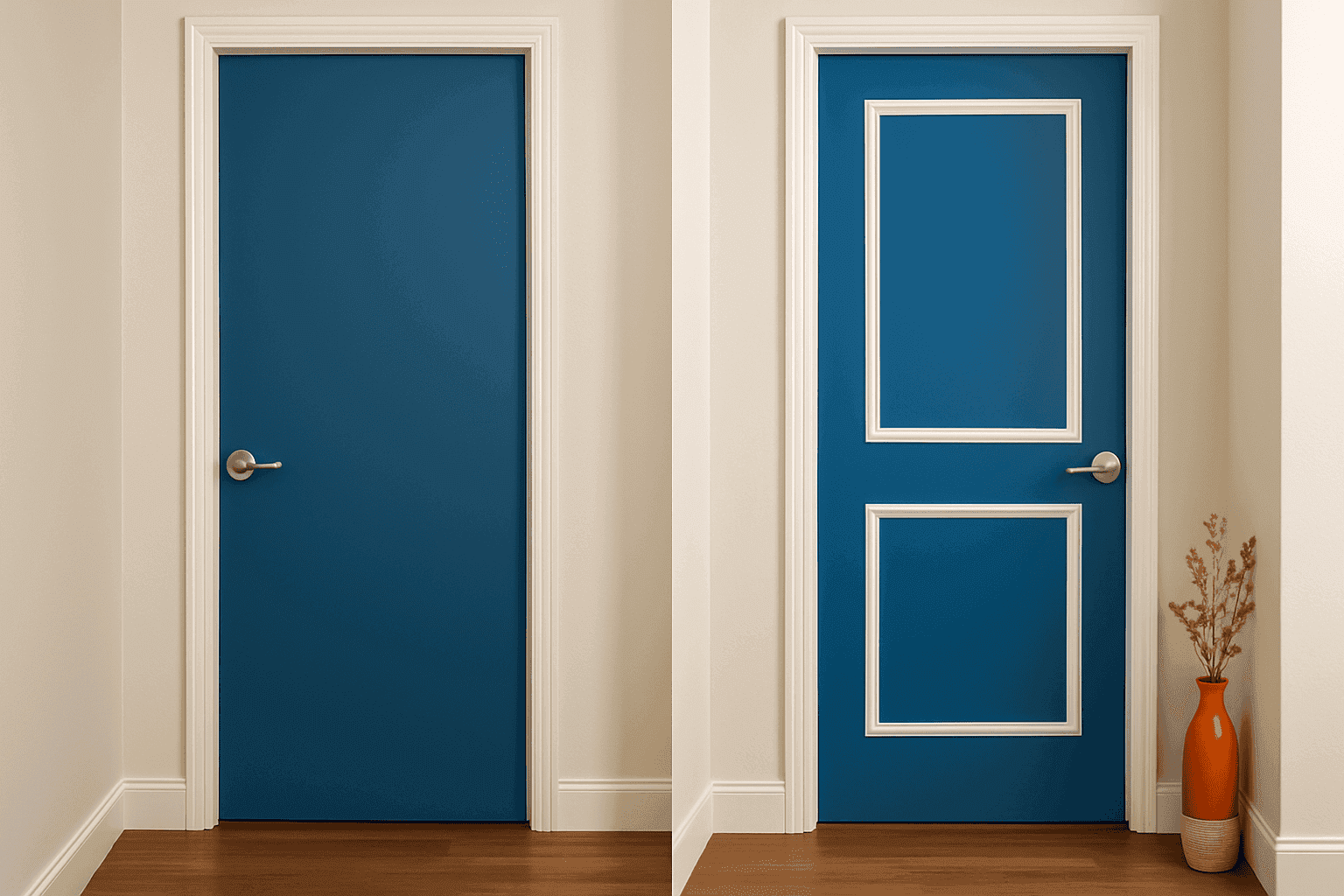
Flat, plain interior doors are standard in many homes, but they don't have to stay that way. Adding decorative trim transforms these everyday elements into architectural features that elevate your entire space. This simple yet impactful upgrade creates the look of expensive paneled doors at a fraction of the cost, allowing you to add custom character to your home without replacing doors entirely.
Materials
| Decorative molding (MDF or wood) |
| Miter saw or miter box with hand saw |
| Measuring tape and pencil |
| Nail gun or finishing nails |
| Wood filler and caulk |
| Primer and paint |
Method
- Design your pattern on paper first, considering classic panel layouts or more creative geometric designs.
- Measure and mark your door carefully, using a level to ensure straight lines. Consider leaving a 3-4 inch border around the edges.
- Cut molding pieces with 45-degree mitered corners for a professional finish at each junction.
- Attach trim to door using wood glue and finishing nails, working from top to bottom for consistent alignment.
- Fill nail holes and gaps with wood filler and caulk, then sand smooth before priming and painting the entire door.
For dramatic impact, paint the trim in a contrasting color from the door—try a crisp white trim on a deeply colored door or vice versa. For a sophisticated modern look, paint the entire door, including trim, in a high-gloss black or navy. If you're working with hollow core doors, use lighter MDF trim to avoid adding too much weight. Consider coordinating your door trim design with other molding in the room for a cohesive architectural statement.