How to Frame Doorways with Decorative Molding
Add instant character and sophistication with custom door trim
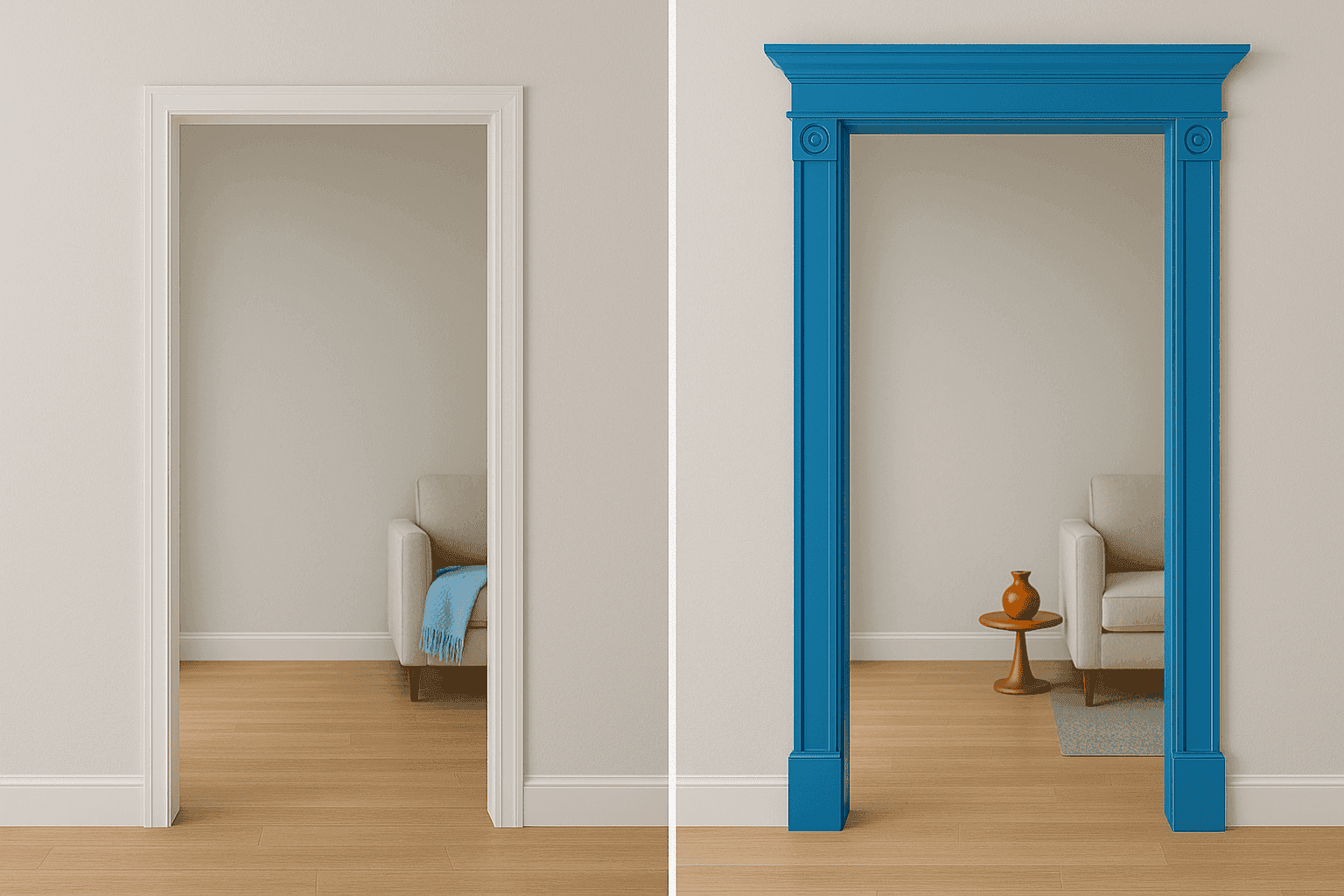
Plain doorways are missed opportunities for architectural interest. By adding decorative molding and trim around doorways, you can instantly elevate your home's character, creating the look of custom millwork for a fraction of the cost. This weekend project delivers high-impact results without requiring advanced carpentry skills—just attention to detail and precise measurements.
What You'll Need
| Decorative molding (1x4, 1x6, or crown molding) |
| Rosettes (optional for corners) |
| Plinth blocks (optional for base) |
| Measuring tape |
| Miter saw (or miter box and hand saw) |
| Nail gun with finishing nails (or hammer) |
| Level |
| Caulk and caulk gun |
| Wood filler |
| Sandpaper (220 grit) |
| Primer and paint |
How To Frame It
- Remove existing trim - If there's simple casing already in place, carefully remove it with a pry bar to avoid damaging the wall.
- Measure precisely - Measure the height and width of your doorway opening. Add 6-8" to each measurement to determine the outer dimensions of your new trim.
- Choose your design - Decide between classic (with plinth blocks and corner rosettes) or modern (with mitered corners) trim styles.
- Install plinth blocks - If using, place these decorative blocks at the bottom corners of the doorway first, ensuring they're level.
- Cut side casings - For styles with rosettes, cut side pieces to fit between plinth blocks and where rosettes will be placed. For mitered corners, cut 45° angles at the tops.
- Install side casings - Attach the vertical pieces using finishing nails, checking for level as you work.
- Add the header - Install the top horizontal piece, either with mitered corners or butted against corner rosettes.
- Attach decorative elements - Add rosettes at the top corners if using, then any additional layers of trim for a more substantial look.
- Fill nail holes - Use wood filler to cover all nail holes and joints, then sand smooth once dry.
- Caulk, prime, and paint - Apply caulk along all seams, prime the entire trim assembly, then paint with a durable semi-gloss finish.
For maximum impact, paint your new door trim in a contrasting color from your walls—either a few shades darker for a subtle statement or in a bold accent color for dramatic effect. Many designers use black doorway trim against white walls for a striking modern look. For older homes, consider proportions carefully; generally, wider and more substantial trim looks appropriate in traditional homes with higher ceilings, while slimmer profiles work better in contemporary spaces or homes with lower ceilings.