Belt Revival: Transform Old Belts into Stylish Hanging Shelves
Give forgotten belts new life as industrial-chic shelf brackets with unique personality
I was cleaning out my closet and staring at a pile of belts I never wore anymore when inspiration struck – these could become the most unique shelf brackets ever! What started as a way to avoid waste became one of my favorite upcycling projects because these belt shelves add such incredible character and industrial-chic style to any room. There's something so satisfying about giving perfectly good materials a second life while creating functional storage that no one else has. The texture and personality of different belt materials – smooth leather, worn canvas, studded designs – brings so much more visual interest than standard shelf brackets ever could. These hanging shelves have become conversation starters in my home because they're both practical and completely unexpected. Every time someone notices them, I get to tell the story of creative repurposing, and it feels so much better than having those belts collect dust in a donation bag!
Upcycling Materials
- Old Belts: Leather, canvas, or fabric belts in good condition (raid your closet!)
- Wooden Boards: Pine, reclaimed wood, or butcher block cut to desired shelf length ($8-25)
- Wall Hooks: Heavy-duty hooks rated for shelf weight, matching finish ($6-15)
- Hardware: Screws and wall anchors appropriate for your wall type ($3-8)
- Drill Bits: For creating holes in wooden shelf boards ($5-10 if needed)
- Finishing Supplies: Sandpaper, wood stain or paint if desired ($8-15)
- Total Per Shelf: $25-75 depending on materials, with belts being free from your closet
Assembly Process
- Select two matching or complementary belts that can support your shelf's intended weight
- Cut wooden board to desired shelf length and sand smooth for finished appearance
- Drill holes in board ends to accommodate belt width and prevent fraying
- Thread belts through holes, adjusting length for desired shelf height
- Install wall hooks at precise spacing to match belt positioning
- Hang belt loops on hooks and test stability with light items first
- Adjust belt holes if needed to achieve level, secure shelf positioning
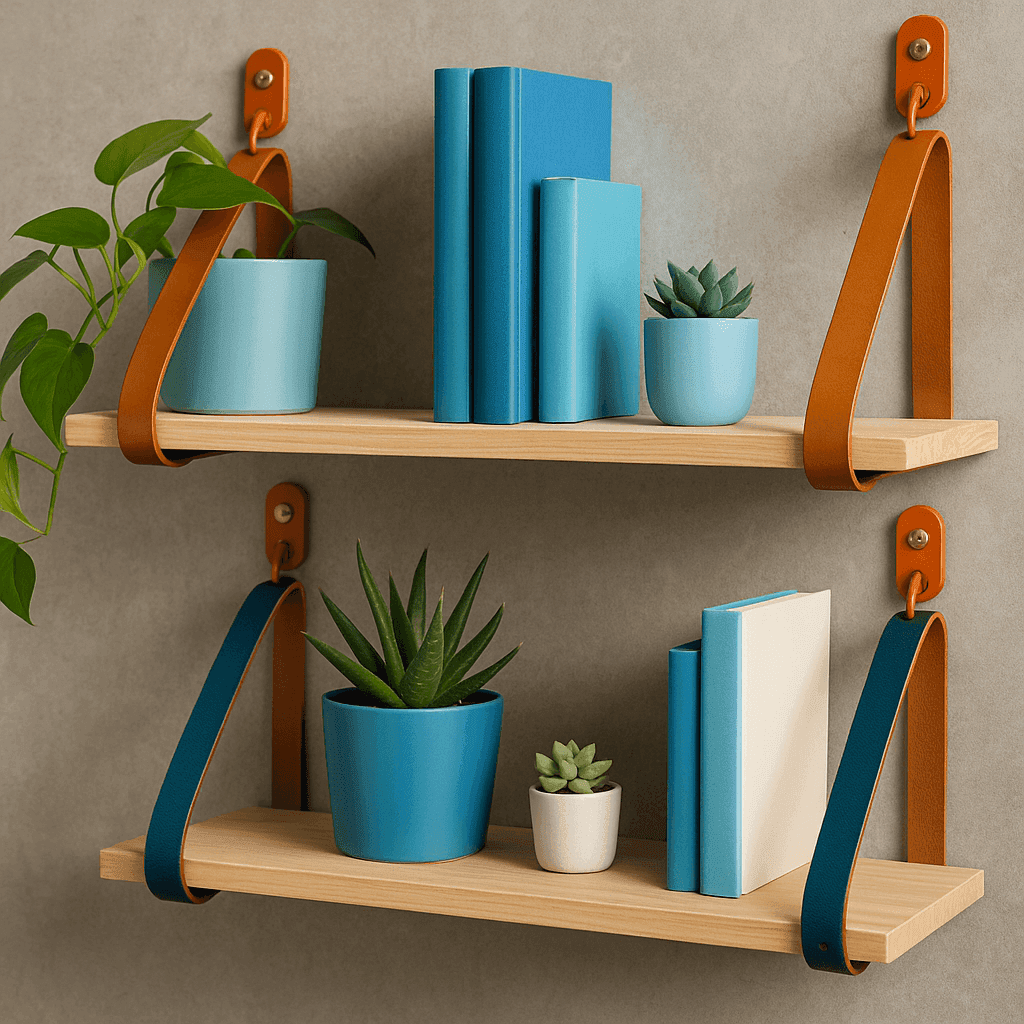
- Style with lightweight plants, books, or decorative objects that complement the industrial-chic aesthetic
Professional upcycling designers know that the secret to stunning belt shelves is embracing the belts' original character while ensuring structural integrity. Here's my signature approach: mix leather and canvas belts for textural interest, but keep metal hardware finishes consistent throughout your display. My favorite styling trick is creating a gallery wall effect with multiple belt shelves at different heights and lengths – it looks like custom industrial art! Pro tip: test weight capacity gradually by adding items over time, and always use wall anchors rated for more weight than you think you'll need. Also, consider the belt's original style when choosing what to display – a studded leather belt pairs beautifully with edgy industrial décor, while a canvas belt complements more rustic or bohemian styling. The goal is making it look intentionally designed rather than obviously repurposed!