Clutter Prevention: Stop Paper Piles At The Door
Create immediate sorting systems that prevent mail from migrating
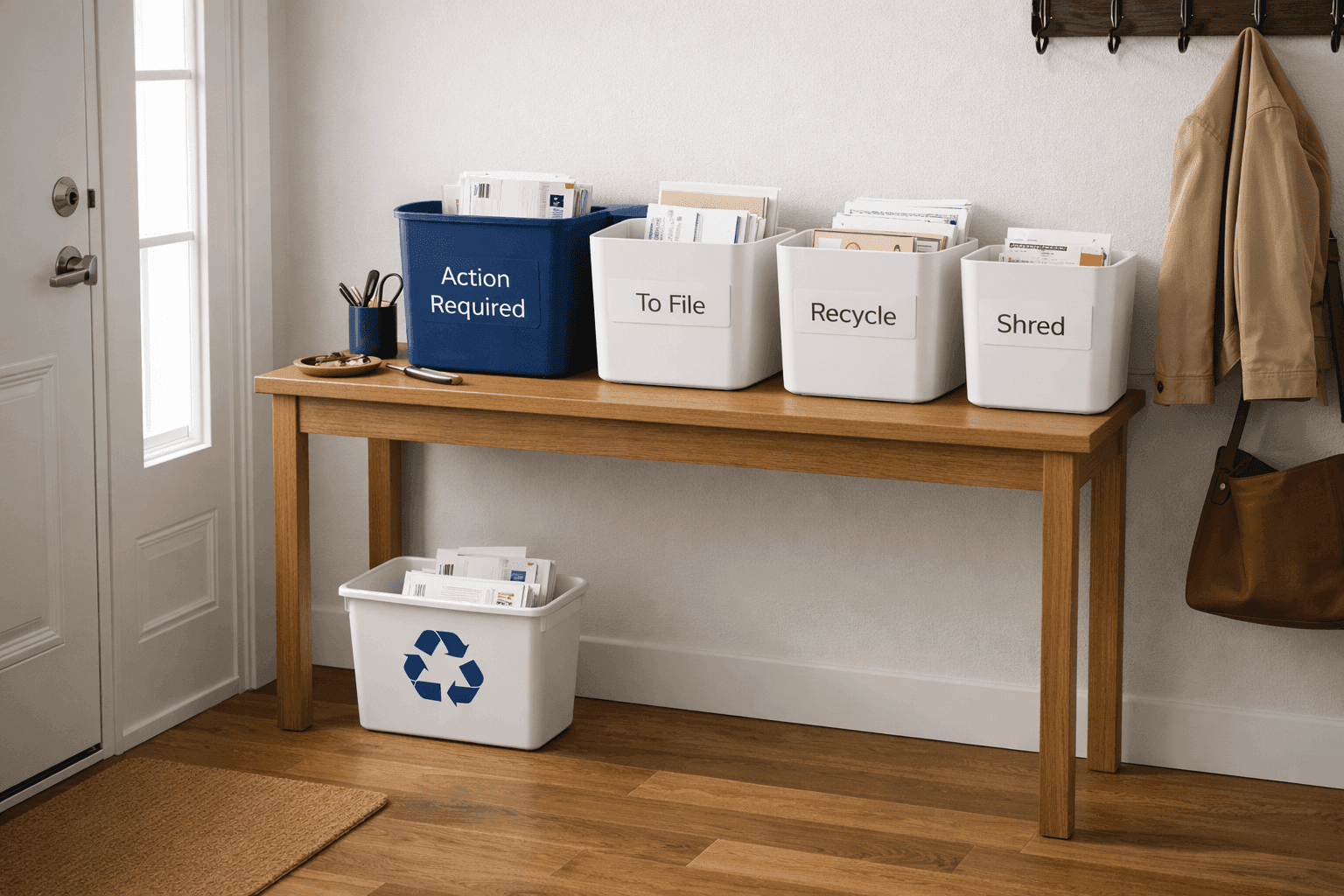
Mail enters homes daily and immediately migrates to kitchen counters, dining tables, home office desks, and random flat surfaces where it accumulates into overwhelming piles that mix important documents with junk requiring immediate recycling. The fundamental problem isn't the volume of mail—it's the lack of designated systems for processing it the moment it crosses your threshold, allowing paper to disperse throughout your home instead of being sorted, acted upon, or discarded right away. A simple mail sorting station positioned near your entrance creates immediate processing systems that prevent clutter before it begins, using labeled bins that categorize incoming mail into actionable categories: bills requiring payment, items needing responses, documents to file, recycling, and shredding. This twenty-minute setup costs $15-25 for organizational bins and takes less time than you'll spend this week hunting through random paper piles for that one important piece of mail you know arrived but cannot locate. The psychological impact of stopping clutter at entry points rather than allowing it to infiltrate your living spaces cannot be overstated—clear surfaces reduce mental load, designated homes for paper prevent the "I'll deal with it later" mentality that creates chaos, and immediate sorting ensures important items get attention before they're buried under subsequent mail deliveries. Unlike elaborate command centers requiring wall-mounting and complicated systems, basic mail sorting stations work perfectly on small entry tables, in mudroom cubbies, or even floor corners near doors—the key is proximity to where mail actually enters rather than perfection of execution.
What You'll Need
- Sorting Containers ($12-20):
- 3-5 small bins, trays, or baskets for categories
- Stackable letter trays for compact organization
- Wall-mounted file organizers for tight spaces
- Decorative boxes that match your entry aesthetic
- Labeling Supplies ($3-5):
- Label maker or printable labels
- Permanent marker and masking tape alternative
- Clear, specific category names everyone understands
- Essential Categories:
- "Action Required" - bills, RSVPs, forms needing completion
- "To File" - documents requiring permanent storage
- "To Read" - magazines, catalogs, newsletters
- "Recycle" - junk mail for immediate disposal
- "Shred" - sensitive documents requiring secure disposal
- Optional Additions ($2-5):
- Small recycling bin for immediate junk disposal
- Pen holder for marking dates or notes
- Letter opener for efficient processing
- Small calendar for tracking bill due dates
Create Your Station
- Choose a location immediately adjacent to where mail actually enters your home—entryway tables, mudroom shelves, or spots directly beside doors where mail gets deposited naturally rather than theoretical "perfect" locations requiring conscious detours.
- Select 3-5 containers that fit your available space and aesthetic preferences, prioritizing function over appearance since the best system is one you'll actually use consistently rather than elaborate setups you abandon quickly.
- Label each container clearly with specific categories that make intuitive sense for your household—avoid vague labels like "Important" that become catch-alls defeating the entire sorting purpose through ambiguity.
- Position the recycling bin most prominently since 60-70% of incoming mail is junk requiring immediate disposal—making recycling the easiest option encourages proper sorting rather than default "I'll deal with it later" piling.
- Add a small shred bin for sensitive documents requiring secure disposal—bank statements, medical information, and pre-approved credit offers should never enter regular recycling where identity thieves can access them easily.
- Establish the household rule that mail gets sorted immediately upon entry before coats are removed or bags are put down—this non-negotiable habit prevents the "temporary" counter placement that becomes permanent piles within days.
- Schedule weekly processing times when you actually address items in "Action Required" and "To File" bins, preventing these categories from becoming overflow storage that defeats your sorting efforts through neglect and accumulation.
- Review your system after two weeks, adjusting categories or positions based on actual usage patterns rather than maintaining theoretical perfect systems that don't match how you genuinely interact with incoming mail daily.
Professional organizers emphasize that mail sorting stations fail when positioned in "ideal" locations requiring conscious detours rather than where mail naturally gets deposited—if your family enters through the garage, positioning your station by the front door guarantees failure no matter how beautifully organized. For households with multiple adults, assign each person their own bin rather than trying to sort by category, allowing individuals to process their own mail on their own schedules without confusion about whose responsibility each item represents. The "one-touch rule" transforms mail management: handle each piece exactly once, immediately deciding whether it requires action, filing, reading, recycling, or shredding rather than shuffling papers between piles multiple times before finally processing them. Digitize what you can by switching to electronic statements and online bill payment, dramatically reducing incoming paper volume that requires physical sorting and storage in the first place. For families with children, add a homework/school papers bin that prevents important forms from getting lost among adult mail—back-to-school season generates paper requiring immediate attention that gets buried when mixed with routine household correspondence. The most important maintenance rule: empty recycling and shredding bins weekly at minimum, because overflowing disposal bins encourage reverting to counter piling when proper sorting feels impossible due to lack of physical space in designated containers.