Contained Beauty: Stylish Storage Solutions for Spring Refreshes
Transform your spring cleaning into a design opportunity with decorative baskets, glass jars, and artful organization
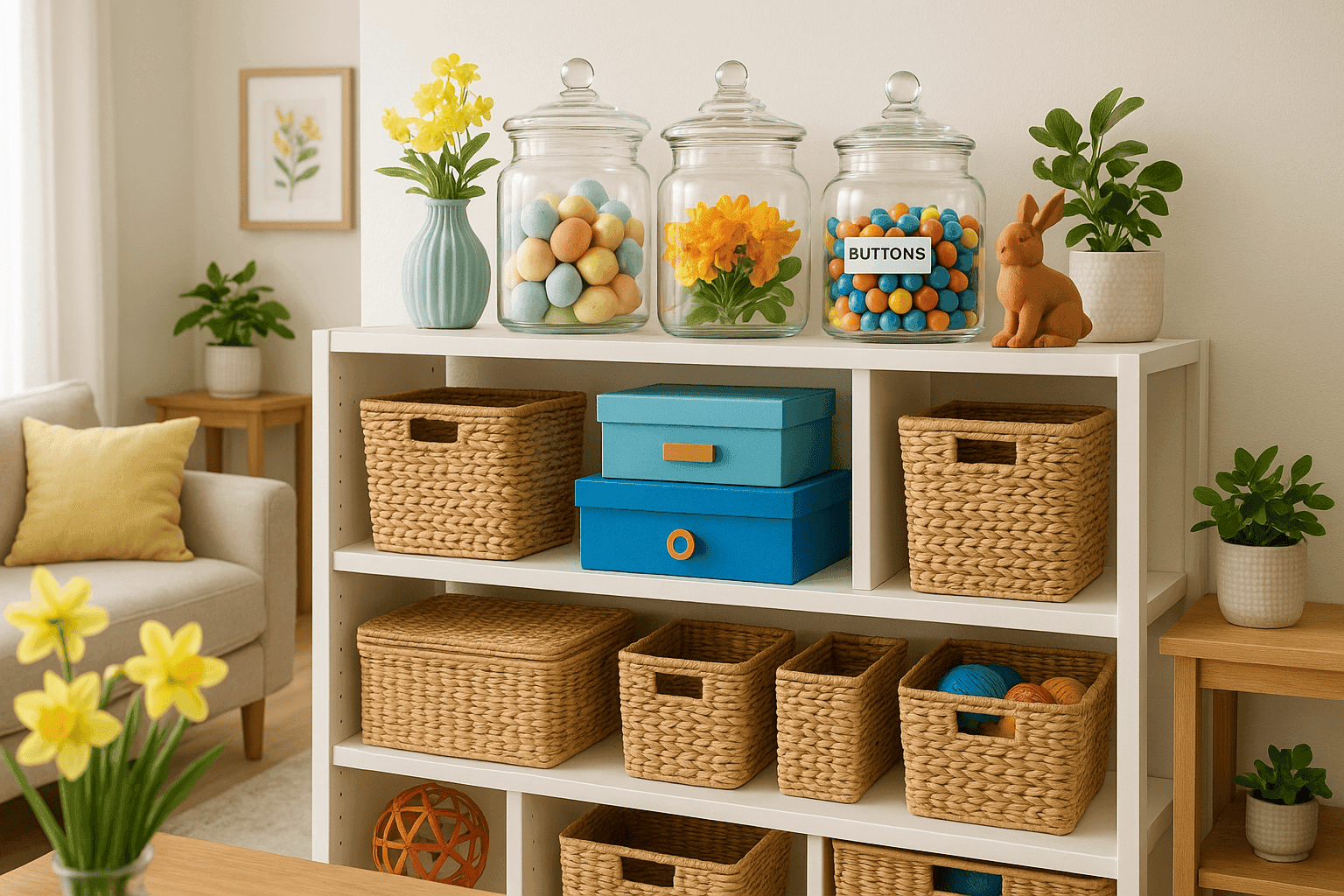
Spring cleaning becomes exponentially more rewarding when organization meets aesthetics. By incorporating beautiful storage solutions into your seasonal refresh, you transform utilitarian containers into design elements that enhance your space while maintaining order. Thoughtfully selected baskets, stylish boxes, and transparent jars not only corral clutter but also add texture, color, and visual interest to your rooms. This approach turns the practical necessity of storage into an opportunity for artistic expression, ensuring that your newly organized spaces feel intentionally designed rather than merely tidy. The result is a home that looks magazine-worthy while functioning more efficiently for everyday life.
What You'll Need
| Woven Storage: |
| • Natural fiber baskets (seagrass, water hyacinth, jute) |
| • Handled storage baskets for easy transport |
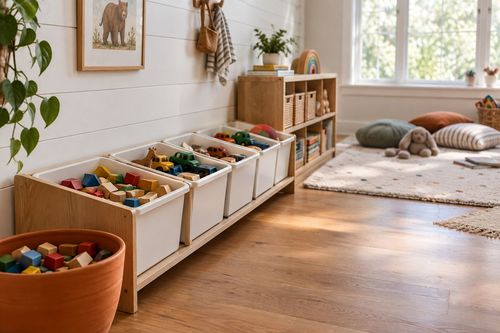
| • Decorative hampers for laundry or toys |
| • Storage ottomans with woven exteriors |
| • Lidded baskets for concealing contents |
| Glass & Transparent Containers: |
| • Apothecary jars in various sizes |
| • Mason jars with decorative lids |
| • Glass canisters for pantry items |
| • Clear acrylic organizers for small items |
| • Vintage glass vessels repurposed for storage |
| Decorative Boxes & Bins: |
| • Paper-covered storage boxes in spring colors |
| • Fabric-covered bins for shelving |
| • Decorative hatboxes for seasonal storage |
| • Wooden crates painted in spring hues |
| • Nesting boxes for tiered storage |
| Labeling & Organization Supplies: |
| • Decorative labels or tags |
| • Label maker with various font options |
| • Chalk markers for glass or blackboard surfaces |
| • Drawer dividers and separators |
| • Small cloth bags for grouping similar items |
| Display Elements: |
| • Decorative trays for corralling small items |
| • Wall-mounted baskets or organizers |
| • Floating shelves for displaying storage |
| • Hooks or pegs for hanging storage |
| • Small plants to intersperse with organizers |
How To Do It
- Assess your organizational needs:
- Identify key problem areas that need storage solutions
- Determine what types of items need containing in each space
- Measure spaces where storage containers will be placed
- Consider visibility preferences: hidden storage vs. display
- Note existing decor elements to ensure new storage complements them
- Declutter before organizing:
- Sort items into keep, donate, and discard piles
- Group similar items together to determine quantity needs
- Remove seasonal items that can be stored until needed
- Consider the "one year rule" - discard unused items
- Digitize paper documents when possible to reduce physical storage
- Choose a cohesive storage aesthetic:
- Select a limited color palette for containers (2-3 colors plus neutrals)
- Decide on primary materials (woven, glass, fabric, etc.)
- Consider your overall home style (modern, traditional, eclectic)
- Choose containers that can be mixed and matched while looking intentional
- Select patterns or textures that complement your existing decor
- Style open shelving with beautiful containers:
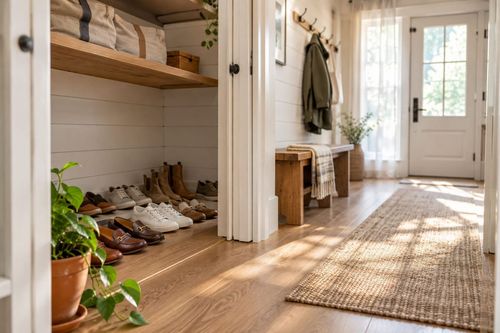
- Reserve eye-level shelves for most attractive storage
- Create visual rhythm by alternating container types
- Group similar containers for cohesive display
- Use baskets to corral smaller items into curated collections
- Incorporate decorative objects among storage pieces
- Transform pantry and kitchen storage:
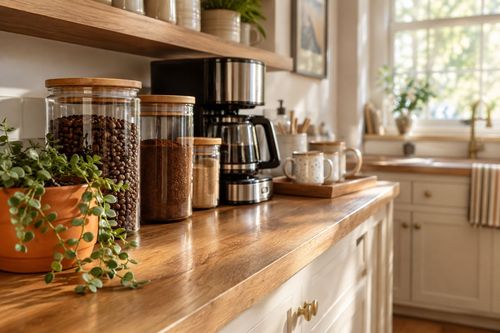
- Transfer dry goods into matching glass containers
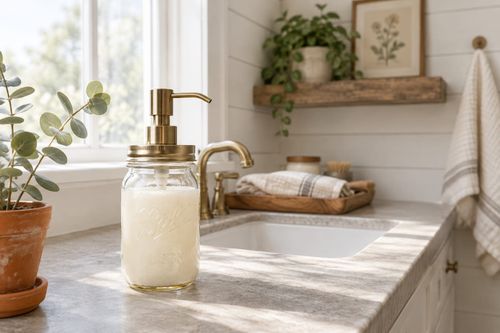
- Use labeled mason jars for herbs, spices, and baking ingredients
- Arrange woven baskets for produce or packaged foods
- Group cooking utensils in decorative crocks or containers
- Consider clear stackable containers for refrigerator organization
- Create bathroom organization that doubles as decor:
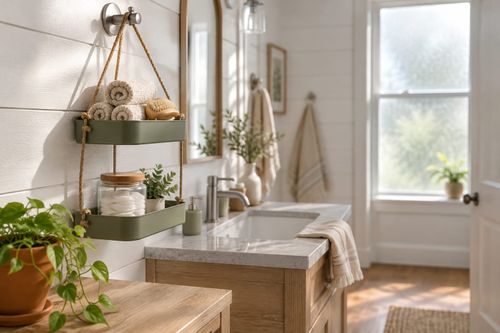
- Store cotton swabs and bath salts in glass apothecary jars
- Use pretty baskets for toilet paper and towel storage
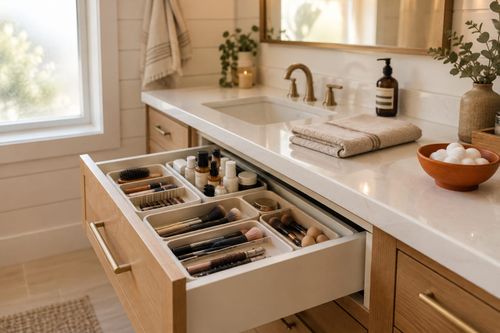
- Corral makeup and skincare in acrylic organizers
- Display pretty soaps and bath products on decorative trays
- Add small plants among organizational elements for living color
- Manage living room clutter with style:
- Use decorative boxes on coffee tables to contain remotes and small items
- Place large baskets next to sofas for blankets and pillows
- Store magazines and books in stylish magazine holders
- Incorporate storage ottomans that serve as seating and containment
- Use decorative bins on bookshelves to hide miscellaneous items
- Develop attractive bedroom organization:
- Choose decorative boxes for keepsakes and mementos
- Use fabric-covered bins for out-of-season clothing
- Style dresser tops with small trays for jewelry and accessories
- Add under-bed storage in woven materials if visible
- Incorporate hanging organizers that complement room decor
- Implement effective labeling systems:
- Create uniform labels that complement your aesthetic
- Use chalk markers on glass jars for flexible labeling
- Consider decorative tags for baskets and fabric bins
- Implement color-coding for different categories or family members
- Keep labels simple and legible while maintaining style
- Maintain your organized spaces:
- Establish a "one in, one out" rule for new purchases
- Schedule regular mini-decluttering sessions
- Adjust storage solutions as needs change
- Refresh containers seasonally with small updates
- Take photos of well-organized spaces as reference for maintaining order
Professional organizers use a principle called "containment hierarchy" when styling storage that's both beautiful and functional. This approach involves categorizing items by frequency of use, then selecting containers with corresponding accessibility: frequently used items go in open, easy-access vessels while occasionally used items can be stored in lidded containers that prioritize aesthetics. Another designer secret is the "rule of threes" for visible storage—limiting visible storage groupings to three different container styles maximum per room to maintain visual cohesion. For the most sophisticated look, professional stylists recommend choosing storage pieces that are one shade lighter or darker than your wall color rather than high-contrast options, creating a subtle layered effect that feels intentional yet calm. Finally, organization experts suggest dedicating approximately 20% of any storage system to flexibility—leaving space for growth or seasonal variations rather than filling containers to capacity—which maintains the clean, curated aesthetic that distinguishes designer organization from merely functional storage.