Dream Season: Map Your Best Garden While Snow Still Falls
Turn winter downtime into your most organized growing season ever
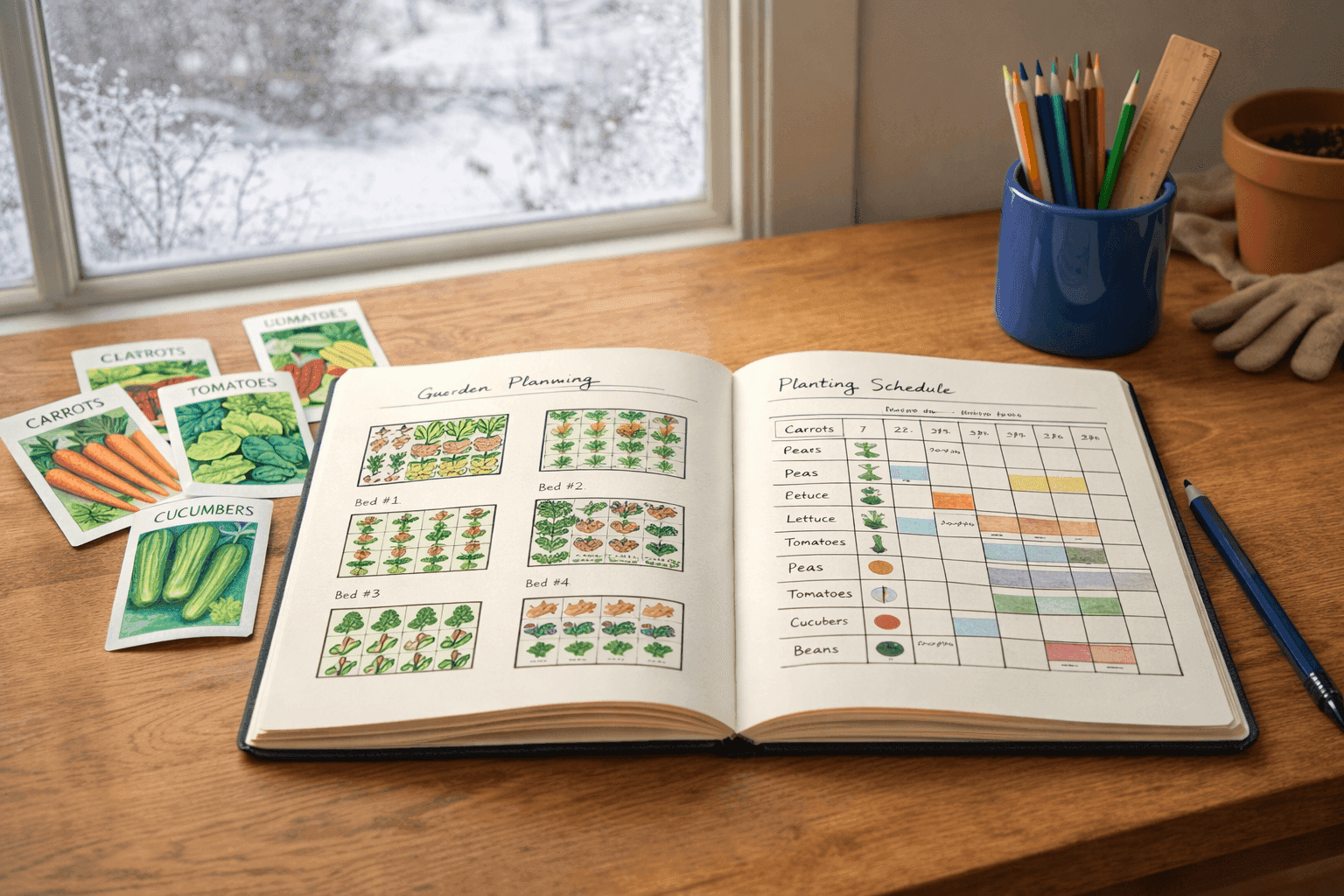
The difference between a chaotic, reactive growing season and a smooth, productive one often comes down to what happens during winter's quiet months. While fancy garden planning apps charge monthly subscriptions and pre-printed planners never quite match your specific needs, a custom journal costs under $10 and becomes exactly the tool you actually use. There's something deeply satisfying about sketching garden layouts by hand, plotting succession planting schedules that maximize harvest windows, and tracking which varieties performed best so you can repeat successes and avoid disappointments. This isn't just busywork to pass cold February days—thoughtful planning now prevents the mid-May panic of realizing you forgot to start tomato seeds or the August frustration of watching that perfect garden bed sit empty because you never figured out what to plant there. Your personalized journal becomes both a planning tool and a living record that gets more valuable with each season you add to it.
What You'll Need
- Journal Foundation (under $10):
- Blank hardcover notebook or bullet journal
- Grid or dot paper works best for layouts
- Alternative: 3-ring binder with graph paper
- Planning Tools:
- Colored pencils or fine-tip markers
- Ruler for straight garden bed lines
- Pencil with eraser for layout adjustments
- Sticky tabs for quick section navigation
- Reference Materials:
- Seed catalogs and saved seed packets
- Last year's planting notes if available
- Your region's frost date information
- Companion planting guide (free online)
Build Your System
- Create a title page and table of contents, establishing sections for garden layouts, planting schedules, seed inventory, supplier contacts, and monthly task lists—organization now saves confusion later.
- Map your actual garden space to scale on graph paper, marking dimensions, sun exposure patterns, water sources, and permanent features like sheds or pathways that affect planting decisions.
- Sketch this season's bed layouts showing what you'll plant where, using colored pencils to distinguish vegetable families and ensure you're rotating crops properly to prevent soil depletion.
- Calculate your key dates by working backward from your last frost date, creating a timeline for starting seeds indoors, direct sowing outdoors, and transplanting seedlings—precision here prevents costly timing mistakes.
- List every variety you want to grow with details about days to maturity, spacing requirements, and whether you'll start seeds or buy transplants—this inventory becomes your shopping guide.
- Design monthly task pages for March through October, breaking down what needs starting, transplanting, harvesting, or maintaining each month so nothing falls through the cracks during busy growing season.
- Reserve pages for notes on what worked and what didn't throughout the season, because your observations become invaluable data that makes next year's planning even more effective.
- Include a section for succession planting schedules if you want continuous harvests rather than everything ripening at once—staggered sowings mean fresh produce for months instead of weeks.
Master gardeners often create "dream pages" alongside practical planning—sketch that elaborate archway covered in climbing beans you've been envisioning, or design the perfect cutting garden layout even if you're starting with just one bed this year. These aspirational plans aren't fantasy; they're roadmaps for gradual expansion. Add pockets using tape or glue to store seed packets directly in your journal so everything stays together. Consider creating a companion planting reference page showing which vegetables help each other grow—tomatoes love basil, carrots improve when near onions, and beans fix nitrogen that heavy feeders like corn devour. The most successful gardeners treat their journals as living documents that evolve, adding photos, taping in particularly successful seed packet labels, and building a personalized encyclopedia that becomes more valuable than any store-bought guide.