Elegant Upgrades: How to Install Crown Molding
Add architectural detail that elevates any room in your home
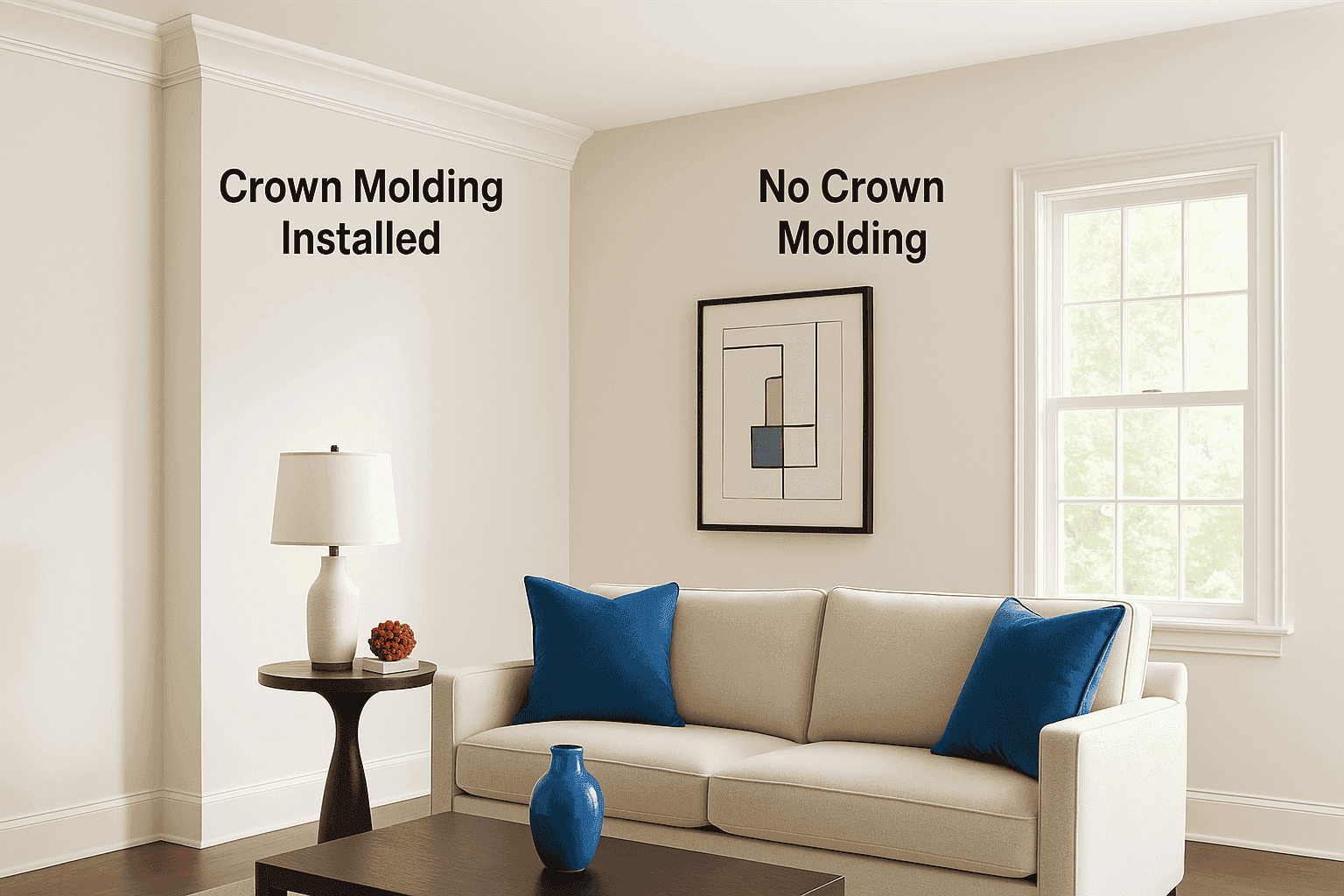
Crown molding adds instant sophistication to any room, creating a seamless transition between walls and ceiling. While it may look like a job for professionals, installing crown molding is a surprisingly manageable DIY project with the right tools and techniques. This classic architectural detail can dramatically increase the perceived value of your home while adding visual interest to otherwise plain spaces.
Materials
| Crown molding (MDF, wood, or polyurethane) |
| Miter saw or miter box with hand saw |
| Coping saw (for inside corners) |
| Finish nails or nail gun |
| Painter's caulk and wood filler |
| Primer and paint |
Method
- Measure carefully and mark the wall and ceiling where the molding will sit. Use a chalk line for longer walls.
- Cut outside corners at 45-degree angles, ensuring the bottom edge sits flat against the wall.
- For inside corners, cut one piece straight and cope the adjoining piece for a seamless fit.
- Secure to wall studs and ceiling joists using finish nails or a nail gun approximately every 16 inches.
- Fill nail holes and gaps with wood filler and caulk, then prime and paint for a finished look.
For a truly sophisticated look, consider painting your crown molding the same color as your walls instead of traditional white. This monochromatic approach creates height and elegance without visual interruption, making ceilings appear higher. In smaller rooms, this technique helps the space feel larger and more cohesive. For drama in formal spaces, try painting molding in a glossy finish while keeping walls matte in the same color.