Entryway Command Center: Building Custom Mudroom Lockers
Create personalized storage that keeps your family organized from the moment they walk in
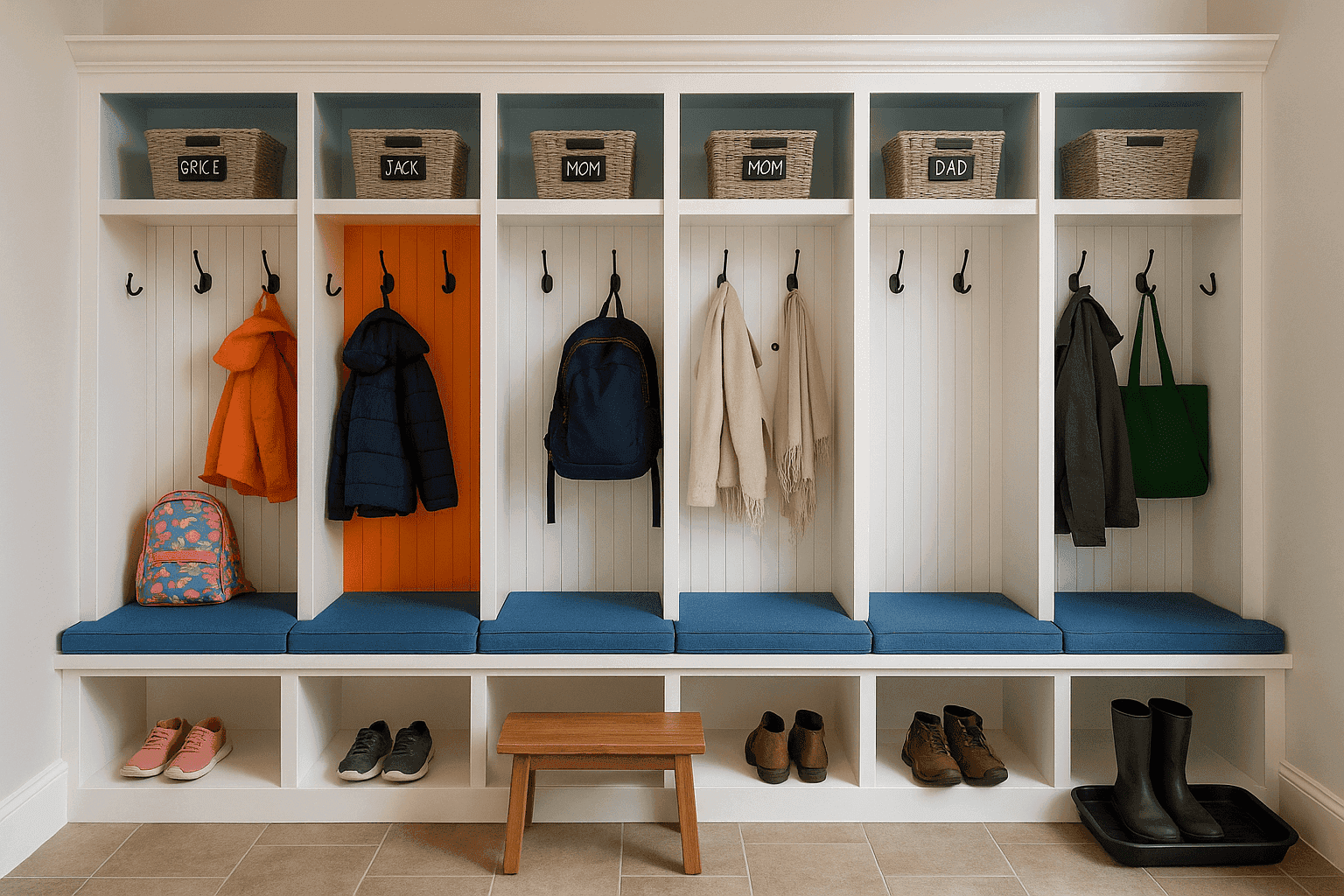
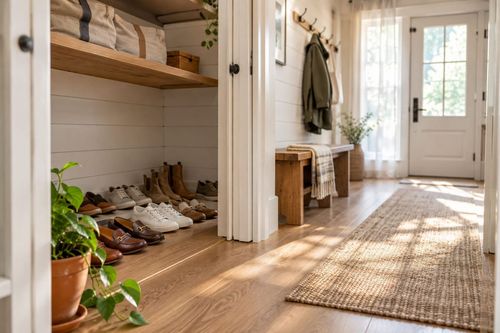
Mudroom lockers transform chaotic entryways into organized transition spaces that help contain clutter from the moment family members enter your home. Unlike store-bought hall trees or standard closets, custom-built lockers provide personalized storage tailored to your specific needs—from specialized compartments for sports equipment to individualized cubbies for each family member. With thoughtful planning and basic carpentry skills, you can create a functional, attractive organization system that keeps everyday essentials readily accessible while maintaining your home's style.
Materials & Components
| • Framework: Plywood (¾" cabinet-grade), 1x2s, 2x4s |
| • Bench Materials: 2x4s for frame, 1x material for top |
| • Backing Options: Beadboard, shiplap, plywood |
| • Dividers: ¾" plywood for vertical dividers |
| • Storage Elements: Shelving, cubbies, drawers |
| • Hardware: Hooks, knobs, hinges, drawer slides |
| • Fasteners: Wood screws, finish nails, pocket screws |
| • Tools: Saw, drill, level, measuring tape, square |
| • Finishing Materials: Paint, stain, polyurethane |
Construction Process
- Analyze your family's storage needs. Consider each family member's routines and essentials: sports equipment, backpacks, work bags, footwear types, and outerwear. Determine how many individual lockers or sections you'll need.
- Measure your space carefully. Record width, height, and depth of your designated area. Standard locker widths range from 15-24 inches per person. Allow for at least 12 inches of bench depth and 72 inches of height for hanging coats.
- Create detailed plans. Sketch your design including precise measurements for all components. Consider standard dimensions: 16-18 inches for bench height, 10-12 inches for upper cubbies, and 12-16 inches between hooks for adequate spacing.
- Prep the installation area. Remove baseboards if necessary and identify wall studs. Mark stud locations with painter's tape for easy reference during installation.
- Begin with the bench base. Construct a frame using 2x4s with cross-supports every 16 inches for stability. Ensure it's level and secure it to wall studs. For a built-in look, extend the bench the full width of your installation area.
- Build the vertical framework. Create the locker dividers using ¾" plywood cut to the full height of your unit. Space these according to your plan, typically 15-24 inches apart. Secure to the bench base and to wall studs for stability.
- Install the backing material. Attach beadboard, shiplap, or plywood to the wall area within each locker section. This creates a finished look and provides a solid surface for mounting hooks and accessories.
- Add upper storage components. Install shelving or cubbies at the top of each section. These can be open or enclosed with doors depending on your preference and whether contents should be visible or concealed.
- Complete the bench seating. Attach 1x material across the bench frame to create the seating surface. Consider hinging this top for hidden storage underneath or adding drawers below for shoes and accessories.
- Install hooks and hardware. Add coat hooks at appropriate heights for adults and children. Consider double-hook systems with a higher hook for coats and a lower one for backpacks or bags.
- Finish with trim and details. Add crown molding, baseboard, and trim pieces to create a built-in, professional appearance. Fill nail holes, sand smooth, and prepare for painting.
- Paint or finish surfaces. Apply primer and paint or stain and sealer to all surfaces. Consider using semi-gloss or satin finish for durability and easy cleaning in this high-traffic area.
- Add final touches. Install bench cushions, baskets for smaller items, and labels or name tags for each family member's section. Consider boot trays or washable rugs for floor protection.
When designing your mudroom lockers, incorporate adaptability for changing seasons and growing families. Consider adjustable hook heights and removable shelf dividers that can be reconfigured as children grow or storage needs evolve. For homes with limited entryway space, utilize vertical storage by extending lockers to the ceiling and including a library ladder or step stool for accessing upper compartments. To prevent bench cushions from sliding, use non-slip shelf liner underneath or attach cushions with hook-and-loop fasteners that allow for easy removal and cleaning—essential for this hard-working area of your home.