Evening Glow: Installing String Lights for Magical Outdoor Spaces
Transform your patio, deck, or garden with enchanting overhead illumination
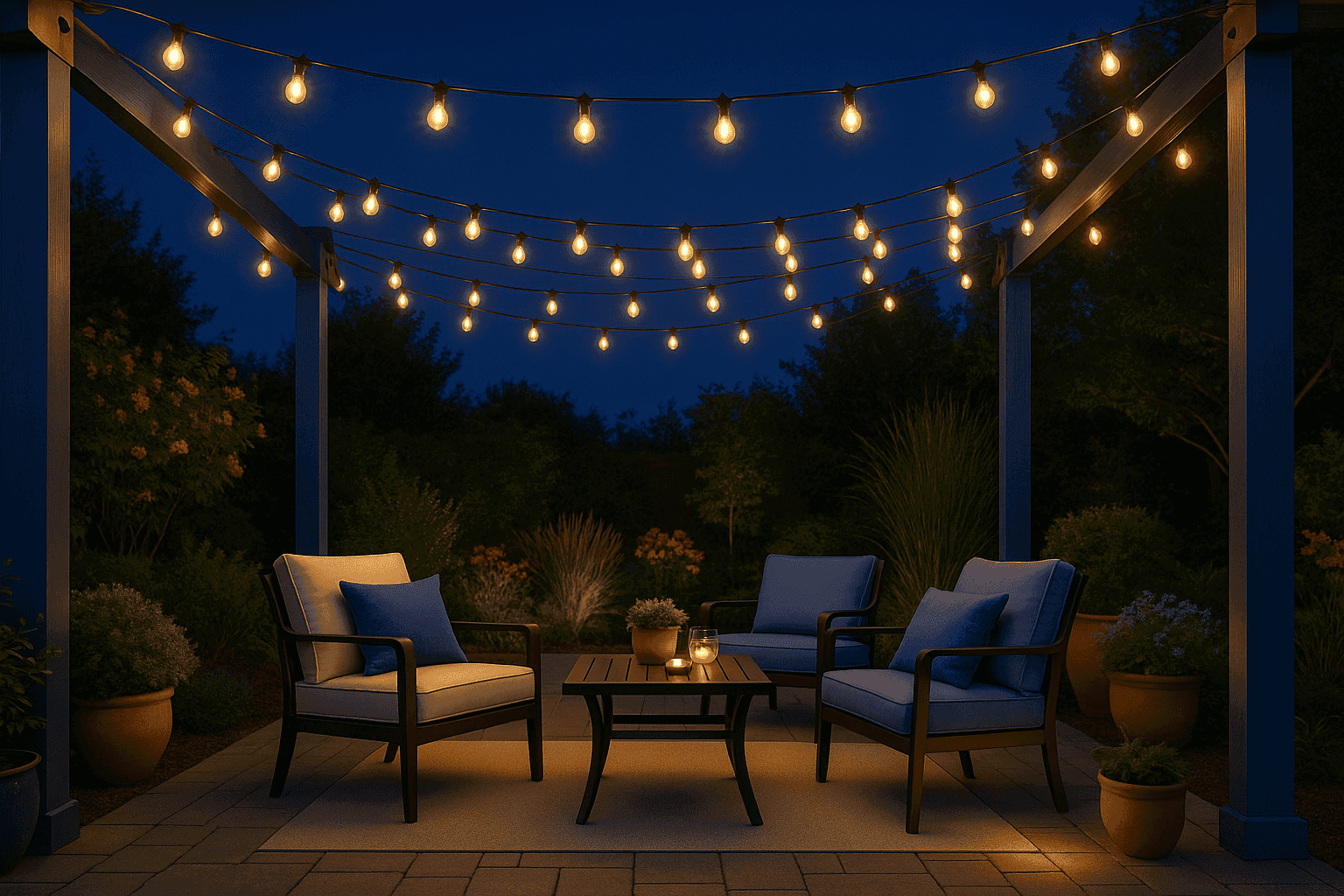
String lights have the remarkable ability to transform any outdoor space into a magical retreat. Their warm glow creates an inviting atmosphere that extends your living area into the evening hours, making patios, decks, and gardens feel cozy and enchanting. With proper installation techniques, your string lights will look professionally done, stay secure in all weather conditions, and provide beautiful ambient lighting for years of outdoor enjoyment.
What You'll Need
| • Outdoor-rated LED string lights (commercial grade) |
• Support poles (if needed):
|
• Mounting hardware:
|
• Tools:
|
| • Outdoor-rated extension cord |
| • Timer or smart plug (optional) |
| • Concrete and forms (if installing posts) |
How To Do It
- Plan your layout: Sketch your outdoor space and plan where lights will be strung. Measure the area to determine how many light strings you'll need, adding 10% extra for dips and curves.
- Choose attachment points: Identify sturdy attachment points such as trees, fence posts, your home's exterior, or pergola. For areas without natural anchor points, you'll need to install support poles.
- Install support poles (if needed):
- For permanent wooden posts: Dig holes 1/3 the height of your post, place post in hole, level it, and fill with concrete.
- For removable conduit poles: Sink a 12" PVC sleeve in concrete, allowing conduit to slip in and out.
- Space poles 8-12 feet apart for good tension without excessive drooping.
- Install mounting hardware: Attach eye hooks or cup hooks to your anchor points. For masonry or vinyl siding, use appropriate anchors or adhesive hooks designed for outdoor use.
- Create a support system for long spans: For distances over 15 feet, install a guide wire first. Use 1/16" aircraft cable or galvanized wire attached to sturdy anchors, pulled tight with turnbuckles.
- Hang the lights with proper tension: Starting at the power source, secure lights to each mounting point, allowing some slack for wind movement and thermal expansion (about 6" of droop between posts). Use zip ties or hooks to attach lights to guide wire for long spans.
- Create patterns: For a professional look, choose one of these patterns:
- Straight parallel lines across a patio
- Crisscross or zigzag for more concentrated light
- Perimeter outline along fence or railing edges
- Starburst pattern radiating from a central pole
- Secure power connections: Wrap connection points with electrical tape and place them in weatherproof junction boxes or cord protectors if exposed to direct rain.
- Install a timer or smart control: Add a weather-resistant timer or smart plug to automate your lighting, saving energy and extending bulb life.
- Test and adjust: Turn on lights during daytime first to check all connections, then view at night to ensure proper spacing and aesthetic appeal.
For truly professional-looking string light installations, concentrate on how your lights look both day and night. During daylight hours, black cords nearly disappear against the sky, while white cords are more visible but blend with light-colored structures. Consider painting conduit poles or posts to match your home exterior or garden elements, making them blend into the background rather than stand out. For a magical effect, try layering different heights of lights—perhaps a higher canopy over dining areas and lower strands around the perimeter—creating depth and dimension when illuminated. Finally, select bulbs with a color temperature between 2700-3000K (warm white) for the most flattering, atmospheric glow that enhances outdoor gatherings without harsh illumination.