Leaf Mandalas: Building Outward, Not Filling Space
Starting from a single center point and building rings outward is what actually creates the calming, symmetrical rhythm this practice is known for — filling in random spots as you go turns the same materials into clutter instead of a mandala.
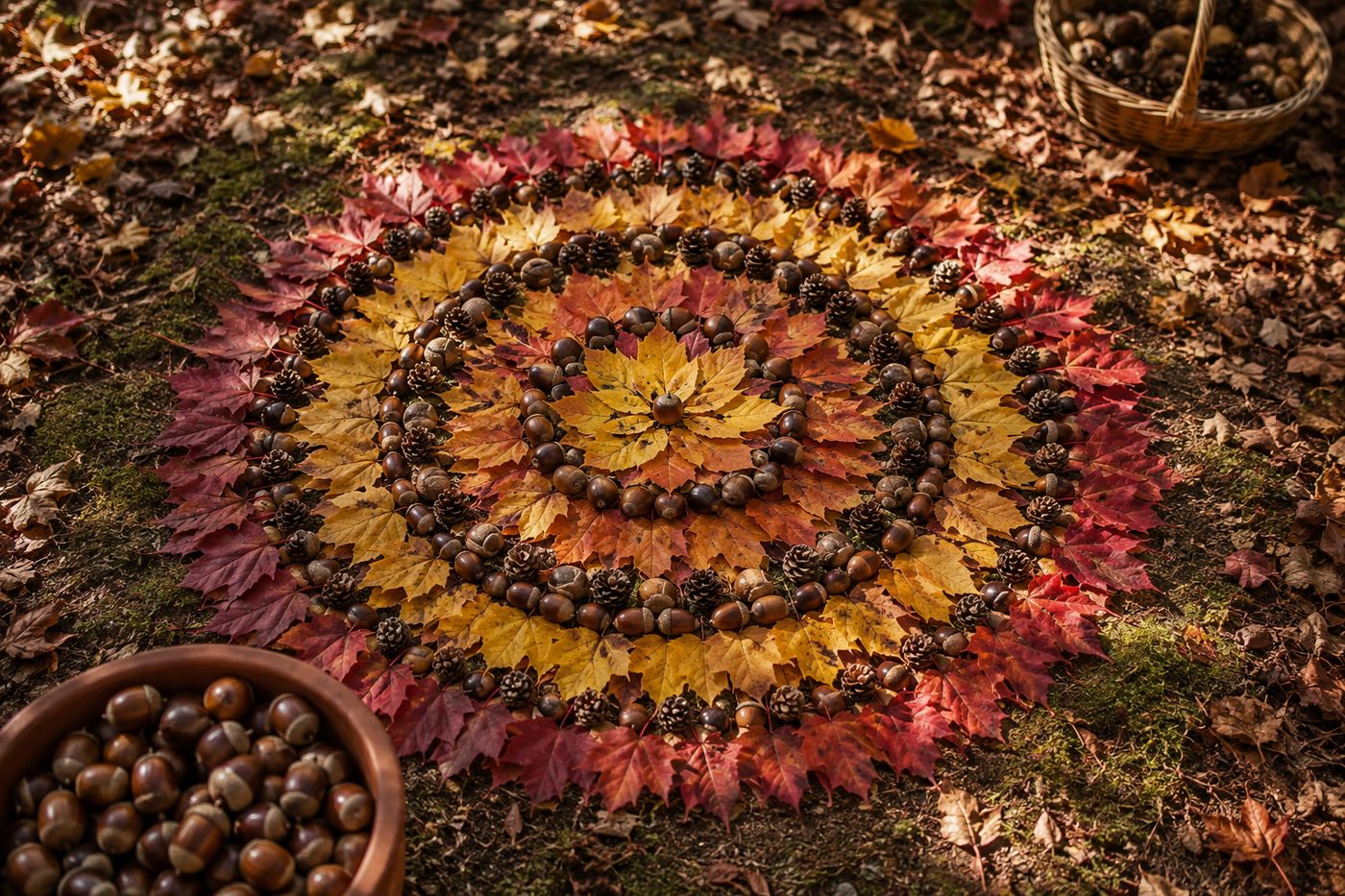
A pile of beautiful autumn leaves and acorns arranged randomly, without a clear structure, still just reads as a nice pile — the actual mandala effect, the calming visual rhythm and sense of order, comes specifically from radial symmetry built outward from a single center point in defined rings. Placing one special item at the center first, then adding a complete ring of one material before moving to the next ring, is what creates that structure; filling in gaps wherever they appear as you go produces something more scattered and less meditative, since your attention jumps around the whole piece instead of settling into the repetitive rhythm of completing one ring at a time. That repetitive, ring-by-ring placement is also the actual mechanism behind why this practice quiets the mind, the same way any predictable, repeating motion does. The gathering walk beforehand is genuinely part of the practice too, not just material collection, since it's the first slowing-down moment before the arranging becomes the second. The whole practice costs nothing and takes about 45 minutes total, and its temporary nature, letting it return to the ground when you're done, is built into what makes it meaningful.
What You'll Need
- Fallen leaves, in a variety of colors
- Acorns, seed pods, and small twigs
- Pinecones
- Any other interesting natural materials found along your walk
- A flat surface — a table, tray, or patch of ground outdoors
- A camera or phone (optional), for photographing the finished piece
How to Do It
- Take a slow, mindful walk, noticing the colors and textures of the season as you gather fallen leaves, acorns, seed pods, twigs, and pinecones — this gathering phase is its own slowing-down moment, not just a shopping trip for materials.
- Find a flat surface to work on, whether a table, a tray, or a patch of ground outdoors.
- Place a single special leaf or acorn at the very center of your workspace as the starting point for the whole design.
- Build your first complete ring around that center point using one material, such as a circle of red leaves, before moving on to the next ring — completing one full ring at a time, rather than filling gaps randomly across the whole piece, is what actually creates the meditative rhythm this practice is known for.
- Add a second ring using a different material, like acorns, keeping the spacing as even as feels natural rather than aiming for mathematical precision.
- Continue adding rings outward, alternating materials and colors, adjusting placement as you go until the whole arrangement feels balanced.
- Step back periodically to view the full mandala from a distance, since symmetry and balance are easier to judge from a few feet away than up close.
- Photograph the finished piece if you'd like to keep a record of it, then let it return to nature rather than trying to preserve it — the impermanence is part of the practice.
Nature-based art facilitators who lead group mandala sessions often encourage participants to sort their gathered materials by color and type before beginning to arrange anything, laying them out in small separate piles nearby. Having each material already grouped and visible means less searching mid-arrangement, which keeps the placement itself unbroken and meditative instead of interrupted by hunting through a mixed pile for the right leaf.