Make Homemade Fire Cider in 20 Minutes for $15
The difference between fire cider that actually packs a punch and a jar of sad vinegar comes down to how finely you grate the aromatics before they steep.
![[#~image_alt_1~#]](/_next/image?url=https%3A%2F%2Fd3klpa3rfwubzz.cloudfront.net%2Fmedia%2FAPI%20Uploads%2FDIY%2Faf82f88dcf07ed09e494a282381feda1_c83300371e.jpg&w=1920&q=75)
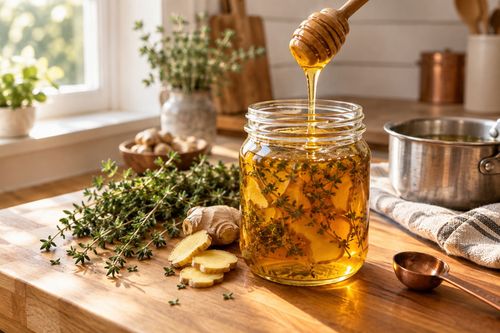
Every October my grandmother started a new jar of fire cider the same week the first frost hit, and she swore by a spoonful whenever anyone in the house started sniffling. The trick isn't the ingredient list—it's surface area. Finely grating your horseradish, ginger, garlic, and onion (instead of roughly chopping them) exposes far more plant tissue to the vinegar, which pulls out the volatile compounds that give fire cider its kick and its supposed immune benefits. Skip that step and you'll get a mild, watery vinegar that barely tingles. This whole project takes about 20 minutes of active prep for around $15 in ingredients, then it sits in your pantry doing the real work for four weeks.
What You'll Need
- Materials (~$15 total):
- 1 quart-size mason jar with a plastic (non-metal) lid, $2
- 2 cups raw unfiltered apple cider vinegar with the mother, $5
- 1/2 cup fresh horseradish root, peeled and grated, $3
- 1/2 cup fresh ginger root, grated, $2
- 1 whole bulb garlic, cloves smashed, $1
- 1 medium yellow onion, roughly chopped, $1
- 1 organic orange, sliced with peel on, $1
- 1-2 tablespoons raw honey (added after straining), optional, $1
- Pinch of cayenne pepper
- Tools:
- Box grater or food processor
- Cheesecloth or fine-mesh strainer
- Wax paper (if using a metal lid)
How to Do It
- Grate the horseradish and ginger finely rather than chopping—this maximizes the surface area in contact with vinegar, which is what actually extracts their sharp, active compounds instead of leaving them dormant inside intact cell walls.
- Smash the garlic cloves with the flat of a knife instead of leaving them whole, since crushing ruptures the cells and releases allicin, the compound responsible for garlic's pungent immune-supporting reputation.
- Layer the horseradish, ginger, garlic, onion, orange slices, and cayenne into your clean mason jar, packing them down gently so they'll stay fully submerged once the vinegar goes in.
- Pour the apple cider vinegar over the solids until everything is completely covered by at least an inch, because any exposed plant matter above the liquid line can mold during the long steep.
- Cover the jar with wax paper before screwing on a metal lid, or use a plastic lid outright, since vinegar corrodes bare metal over a four-week soak and can leach off-flavors into your tonic.
- Shake the jar daily for the first week to redistribute the settling solids and keep every ingredient in contact with the vinegar rather than clumped at the bottom.
- Store the jar in a cool, dark cabinet for 3-4 weeks, since steady room temperature (not warmth or direct light) is what lets the extraction happen slowly and thoroughly without degrading the vinegar's acidity.
- Strain the solids out through cheesecloth once the steep is done, then stir in raw honey to taste before bottling—adding honey now instead of during the steep keeps its beneficial enzymes intact.
Herbalists at community apothecary co-ops often add a tablespoon of dried turmeric to the jar for extra color and anti-inflammatory punch, but they always pair it with a few cracks of black pepper, since piperine in black pepper dramatically increases how much curcumin the body actually absorbs from turmeric alone.