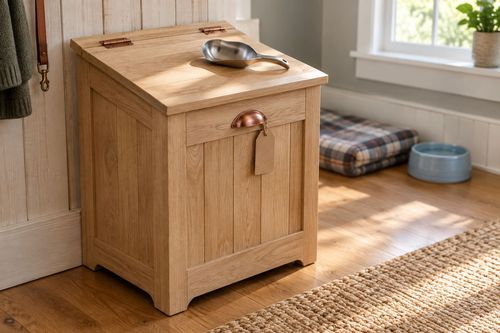
Nightstand to Litter Box Cabinet: The Vent Cut That Saves It
Skip the airflow cutouts and you've built a sealed odor box instead of a hidden litter station.
![[#~image_alt_1~#]](/_next/image?url=https%3A%2F%2Fd3klpa3rfwubzz.cloudfront.net%2Fmedia%2FAPI%20Uploads%2FDIY%2F032bfb56da414e31d321feafe43bc3f5_55398f950b.jpg&w=1920&q=75)
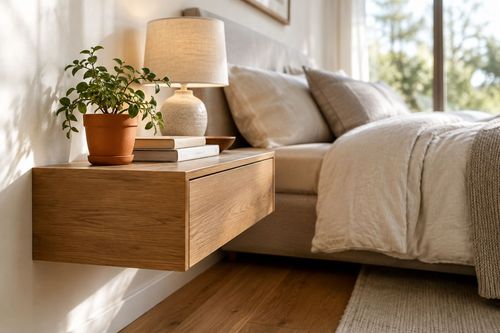
A thrifted nightstand looks like the perfect litter box hideaway, but the single detail that determines whether it works or reeks is airflow. Litter boxes need cross-ventilation to let ammonia gas escape, and a nightstand's solid sides and back trap it instead, turning the cabinet into a concentrated odor chamber every time you open the door. The fix is cutting two opposing vent holes — one low, one high — before you ever cut the entry hole, so air actually moves through the box instead of pooling. Get that airflow path right and the cabinet disappears into your laundry room or bathroom without anyone knowing what's inside.
What You'll Need
- Thrifted nightstand, with a door or open front, $15-25
- Jigsaw, for cutting the entry hole and vents, $30 if you don't own one
- Hole saw bits, 2-inch size for vent holes, $8
- Mesh vent covers, self-adhesive, $6 for a pack
- Wood filler and sandpaper, for smoothing cut edges, $5
- Paint or stain, to match your room, $12
- Removable felt pads, to protect flooring, $4
How to Build It
- Measure your litter box's width, depth, and height, then confirm the nightstand's interior clears it by at least 2 inches on every side.
- Mark two vent hole locations on opposite sides of the cabinet — one near the bottom, one near the top — so air flows diagonally through instead of stagnating.
- Drill the vent holes with a hole saw bit and cover both openings with mesh so litter dust stays contained while air still passes through.
- Cut the entry hole on the front or side panel, sized so your cat can enter comfortably but low enough that litter doesn't spill over the lip.
- Sand every cut edge smooth and fill any rough jigsaw chatter with wood filler before it dries and cures.
- Remove any interior shelves or drawers that would block the litter box from sliding in and out easily for scooping.
- Paint or stain the exterior to match your room, letting it cure fully before the litter box goes back inside.
- Slide the litter box into place and test airflow by watching for lingering odor after 24 hours — if it's still strong, add a third vent hole.
Position the entry hole on the side facing away from the room's main sightline, so guests see a normal nightstand from the doorway and the litter access stays your cat's private entrance.