Olive Oil Wood Polish: The Direction Matters
Silicone-based commercial polish sits on top of wood as a slick film — olive oil actually penetrates the fibers, which is why applying it against the grain instead of with it undoes half the benefit.
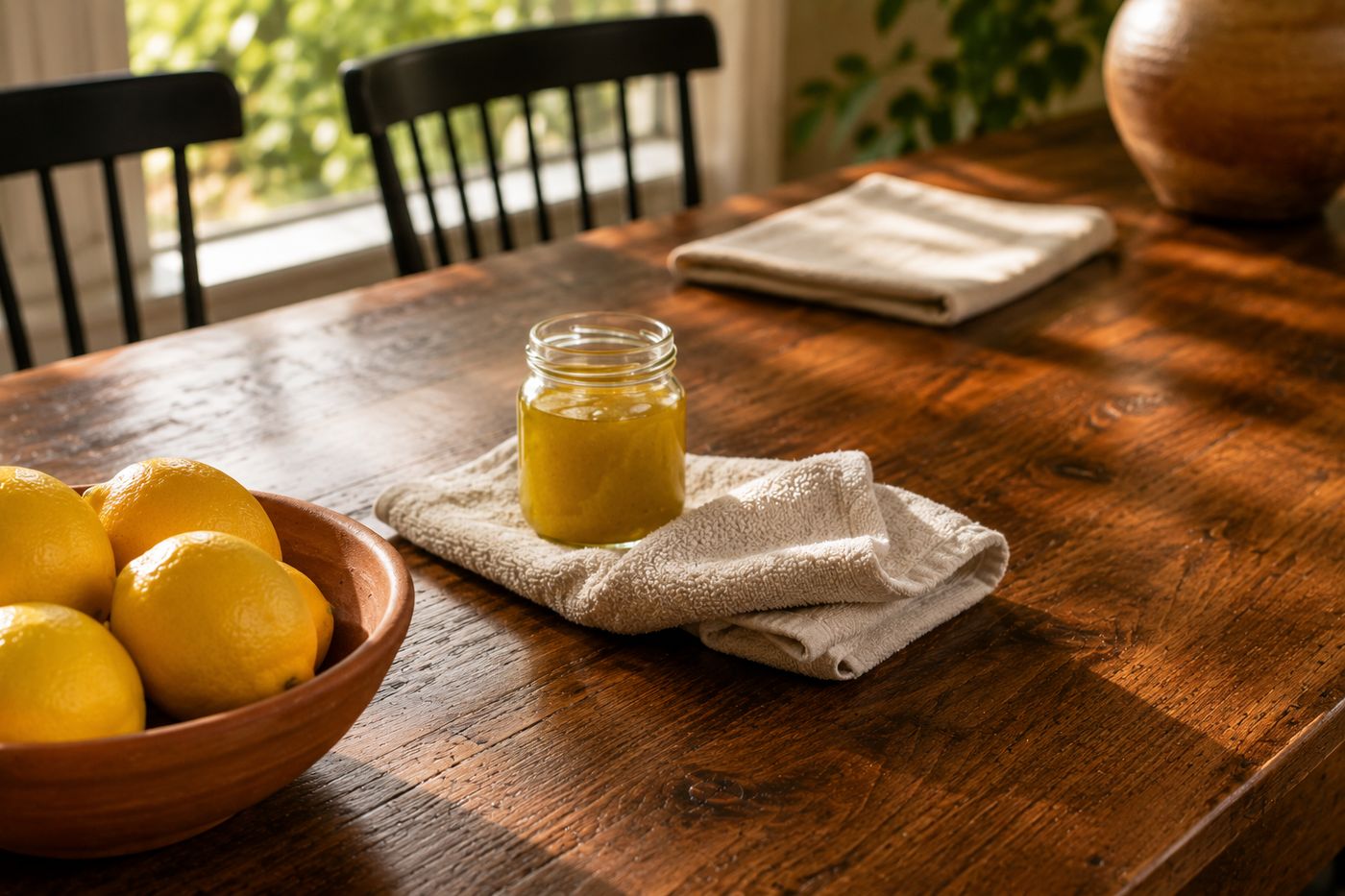
Most commercial furniture polish relies on silicone and petroleum-based ingredients that sit on top of the wood as a slick, shiny film without actually penetrating anything underneath, which is why the shine fades quickly and the wood itself never feels genuinely nourished. Olive oil works completely differently — it actually absorbs into dry wood fibers, which is the real reason a homemade polish can make a tabletop feel warmer and deeper under your hand rather than just glossier on the surface. That absorption is also why application direction matters here in a way it doesn't with a surface-level spray: wiping with the grain follows the wood's natural fiber structure and lets oil work into the grain lines evenly, while wiping against the grain fights that structure and leaves the oil sitting unevenly on the surface instead of soaking in properly. Lemon juice adds a second function beyond scent — its acidity cuts through old built-up polish residue and slightly brightens the wood tone as the mixture goes on. Get the direction right, and $3 in pantry ingredients treats every wood surface in a home in about 30 minutes.
What You'll Need
- Olive oil, two parts — about $2, likely already on hand
- Fresh lemon juice, one part — about $1 for one lemon
- Small jar, for mixing and storing
- Soft, clean cloths, one for application and a second for buffing
How to Do It
- Combine two parts olive oil with one part fresh lemon juice in a small jar, whisking or shaking until fully combined.
- Dust the wood surface first with a dry cloth, removing loose debris before applying any polish.
- Dip a soft cloth into the mixture, wringing out any excess so the cloth is lightly saturated rather than dripping.
- Apply the polish in the direction of the wood grain specifically, not across or against it — this is the detail that actually determines whether the oil absorbs evenly into the fibers or just sits unevenly on the surface.
- Work in manageable sections, covering the full surface with an even, thin layer rather than saturating one spot heavily.
- Let the polish sit for a few minutes so the oil has time to begin absorbing into the wood.
- Buff the surface with a clean, dry cloth, again working with the grain, until the wood feels smooth and any excess oil is removed.
- Store any leftover mixture in the sealed jar for future use, giving it a quick shake before the next application since the oil and lemon juice will naturally separate over time.
Furniture restorers who work with antique and vintage wood pieces often test any new polish, including natural ones, on a small hidden area first, like the underside of a tabletop, before treating a full visible surface. Different finishes and wood types absorb oil at different rates, and a small test avoids discovering an uneven or overly dark result on the piece's most visible surface.