Pillow Talk: The Art of Styling with Throw Pillows for Instant Room Refresh
Master the mix of colors, patterns, and textures for a designer-worthy look on any budget
Throw pillows are the jewelry of interior design—the finishing touch that can completely transform a space without major investment or commitment. With strategic selection and arrangement, these versatile accents add color, pattern, texture, and personality to sofas, beds, and even dining areas. Best of all, they offer one of the easiest ways to refresh your décor seasonally or when you're craving a change. Understanding a few designer principles can help you create pillow combinations that look collected and intentional rather than chaotic.
Pillow Selection Guide
| • Variety of sizes (22", 20", 18", lumbar) |
| • Mix of patterns (large-scale, small-scale, solid) |
| • Range of textures (velvet, linen, knit, embroidered) |
| • Complementary color palette |
| • Quality inserts (down or high-grade foam) |
| • Seasonal accent pillows |
| • Statement or central pillow |
| • Pillow covers for easy changes |
Styling Strategy
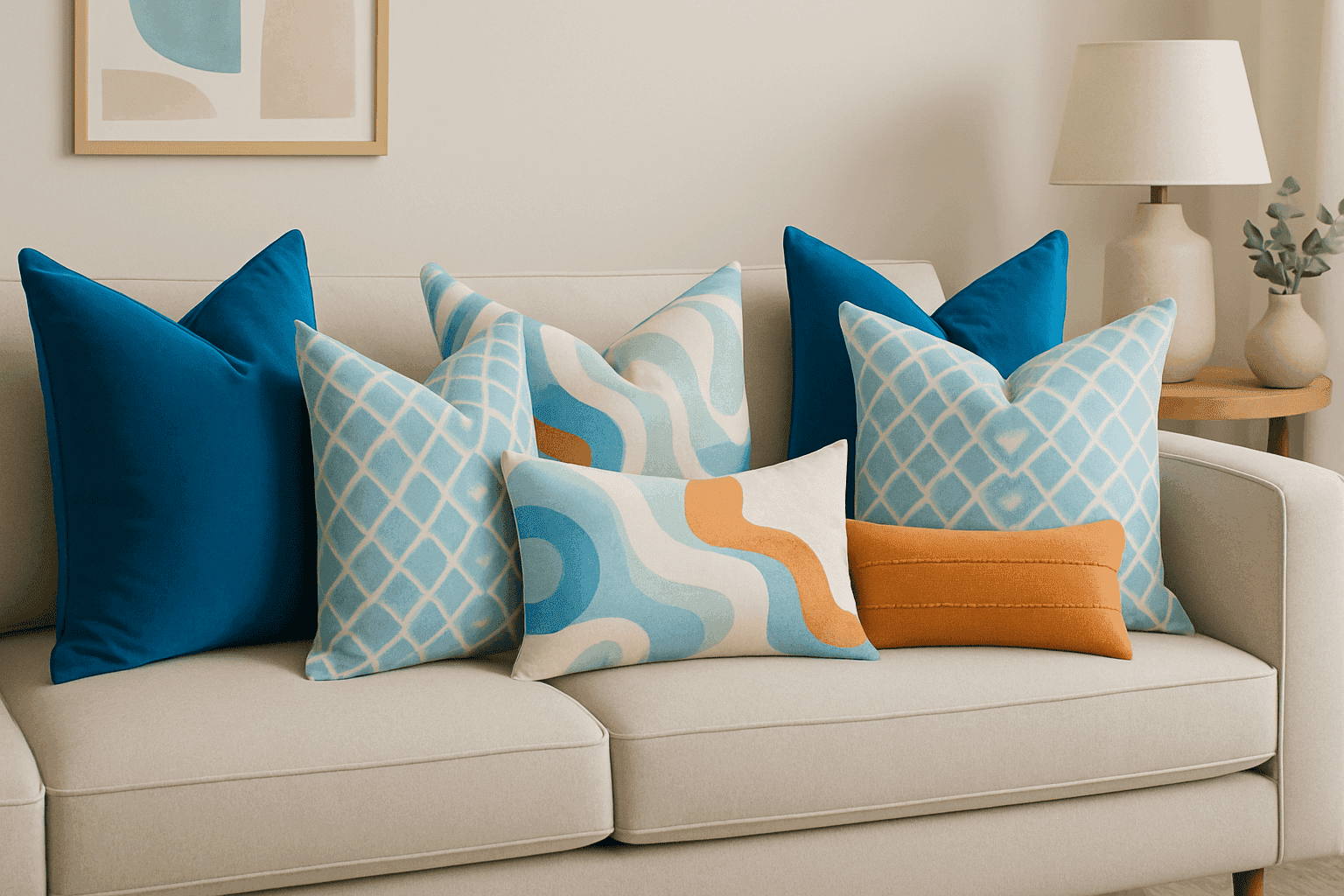
- Start with a plan: Select a color palette that complements your existing decor. Pull colors from artwork, rugs, or window treatments to create cohesion across the room.
- Follow the odd-number rule: Arrange pillows in groups of three or five for a balanced, designer-approved look. Even numbers can appear too symmetrical and formal.
- Create a pattern hierarchy: Combine different pattern scales—one large-scale pattern, one medium geometric or stripe, and one small-scale pattern or solid—to create visual interest without competition.
- Layer by size: Position larger pillows (22-24") at the outer corners, medium pillows (20") next, and smaller accents (18" or lumbar) in front. This creates depth and dimension.
- Mix textures thoughtfully: Incorporate different tactile elements—plush velvet, nubby linen, smooth cotton—to add richness and invitation to the arrangement.
For budget-friendly pillow styling, invest in high-quality pillow inserts that are one size larger than your covers (use a 20" insert for an 18" cover) for a plump, luxurious look. Then collect pillow covers you can swap seasonally—lighter fabrics and colors for spring/summer, richer textures and tones for fall/winter. The "karate chop" at the top center of each pillow is a designer secret that creates a more casual, lived-in appearance. Don't forget to consider maintenance—if your household includes children, pets, or frequent entertaining, opt for covers with hidden zippers that can be easily removed and washed.