Restore Scratched Leather Furniture with Shoe Polish in 20 Minutes
Transform worn leather from shabby to sharp using supplies you already own
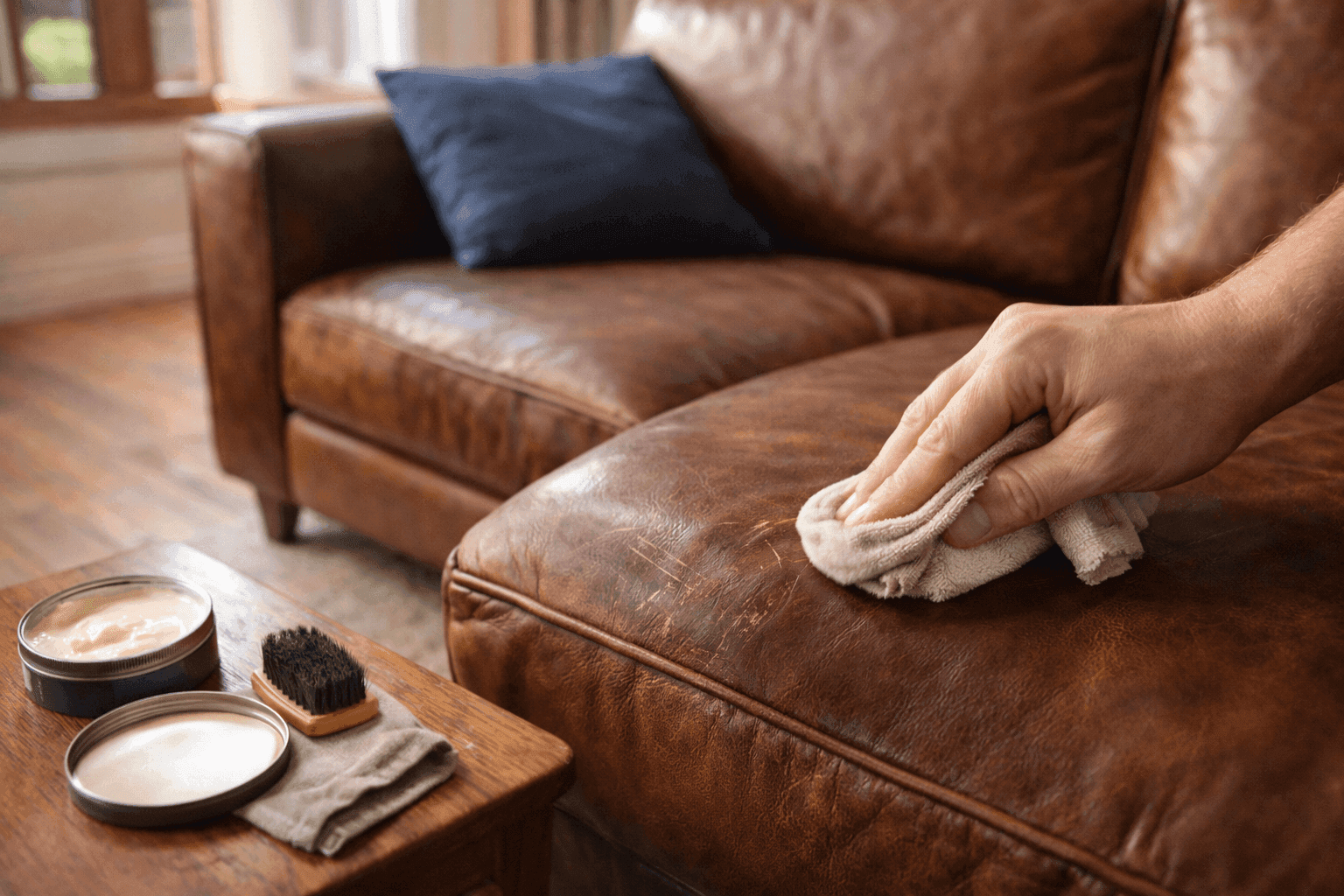
That gorgeous leather couch you spent good money on shouldn't look shabby just because of a few scratches from daily use, pet claws, or the inevitable wear that comes with actually living in your space. Professional leather repair services charge hundreds of dollars for work you can do yourself in twenty minutes using shoe polish that costs less than ten bucks and probably matches your furniture perfectly. I discovered this trick after my cat decided my leather chair was her personal scratching post, and I was shocked at how completely the scratches disappeared when I carefully worked matching brown shoe polish into the damaged areas. The key is understanding that leather and shoe leather are essentially the same material, so the same products that restore and protect your expensive dress shoes work beautifully on furniture—it's not a hack, it's just using materials for their intended purpose in a slightly different application. You'll spend less than $15 on supplies and about twenty minutes per piece of furniture, and suddenly that worn leather looks intentionally distressed rather than just neglected.
What You'll Need
- Shoe polish: Cream or paste type in color matching your leather—bring a photo of your furniture to the store for accurate matching ($6-10)
- Leather cleaner or mild soap: For cleaning surface before repair ($5-8, or use gentle dish soap you own)
- Soft cloths: Several clean, lint-free cloths for cleaning and buffing (old t-shirts work perfectly)
- Cotton swabs or small brush: For precise application in scratches
- Leather conditioner (optional): For finishing and protection after polish application ($8-12)
- Warm water: For diluting cleaner and rinsing cloths
- Small bowl: For mixing cleaning solution
- Old toothbrush (optional): For working polish into deep scratches
Step-by-Step Instructions
- Clean the damaged area by wiping with a cloth dampened with leather cleaner or mild soapy water, removing dirt, oils, and surface grime that would prevent polish from adhering properly—let dry completely
- Test in hidden spot by applying a small amount of shoe polish to an inconspicuous area like the back or underside to verify color match and ensure the polish doesn't darken the leather too much
- Apply polish to scratches using a cotton swab or soft cloth to work a small amount of shoe polish directly into the damaged areas with gentle circular motions—less is more, you can always add more
- Work polish into deeper damage by using an old toothbrush or your fingertip to really press the polish into scratches and scuffs, filling the damaged leather fibers with color that blends seamlessly
- Let polish penetrate for 10-15 minutes, allowing the waxy formula to absorb into the leather and the color to settle—this is when the magic happens as scratches seemingly disappear
- Buff to blend using a clean, dry cloth to buff the treated areas in circular motions, blending the edges where polished areas meet untreated leather so repairs are invisible
- Apply second coat if needed for stubborn scratches or deep scuffs, repeating the application and buffing process until the damage is no longer noticeable from normal viewing distance
- Condition and protect by applying leather conditioner to the entire piece of furniture once repairs are complete, which restores moisture and creates a protective barrier against future damage
Professional furniture restorers often mix multiple shoe polish colors to achieve perfect matches for complex leather tones—most brown leather furniture has warm and cool undertones that require blending two shades. Apply the lighter color first, let it dry, then add the darker shade only where needed for depth. For black leather, use black shoe polish sparingly as it can make furniture look artificially dark; instead, consider dark brown polish which creates more natural-looking repairs on most black leather pieces. The biggest mistake people make is using liquid shoe polish instead of cream or paste—liquid formulas are too thin and don't fill scratches effectively. For pet scratches that have removed leather entirely rather than just scuffing the surface, you'll need a leather filler product before polish, but most everyday scratches respond beautifully to shoe polish alone. Keep the matching shoe polish on hand for quick touch-ups every few months, treating leather furniture maintenance like you would fine leather shoes—a little regular care prevents major damage. Cream polish works better than paste for most furniture applications because it's easier to blend and less likely to leave visible edges around repair areas.