Road Ready: Build a Winter Emergency Car Kit That Saves Lives
Pack essential supplies now so you're prepared when winter weather strikes unexpectedly
Winter driving conditions can turn dangerous in minutes, and the difference between an inconvenient delay and a life-threatening situation often comes down to whether you have basic emergency supplies readily available in your vehicle. I learned this lesson the hard way years ago when my car broke down on a rural highway during a snowstorm, and I spent two cold hours waiting for help with nothing but the light jacket I happened to be wearing that day—never again. A properly stocked winter car emergency kit isn't about paranoia or worst-case thinking; it's about practical preparedness that lets you stay safe and reasonably comfortable if you're stranded by mechanical failure, weather delays, or accidents that close roads unexpectedly. The beauty of assembling this kit now, before you need it, is that most items you probably already own or can acquire inexpensively, and once it's packed and stored in your trunk, you can literally forget about it until the moment you're incredibly grateful it's there. This isn't just about your own safety either—having jumper cables, a flashlight, and basic supplies means you can also help other stranded motorists, turning a frightening situation into a moment of community support that reminds us we're all looking out for each other on these winter roads.
Essential Kit Contents
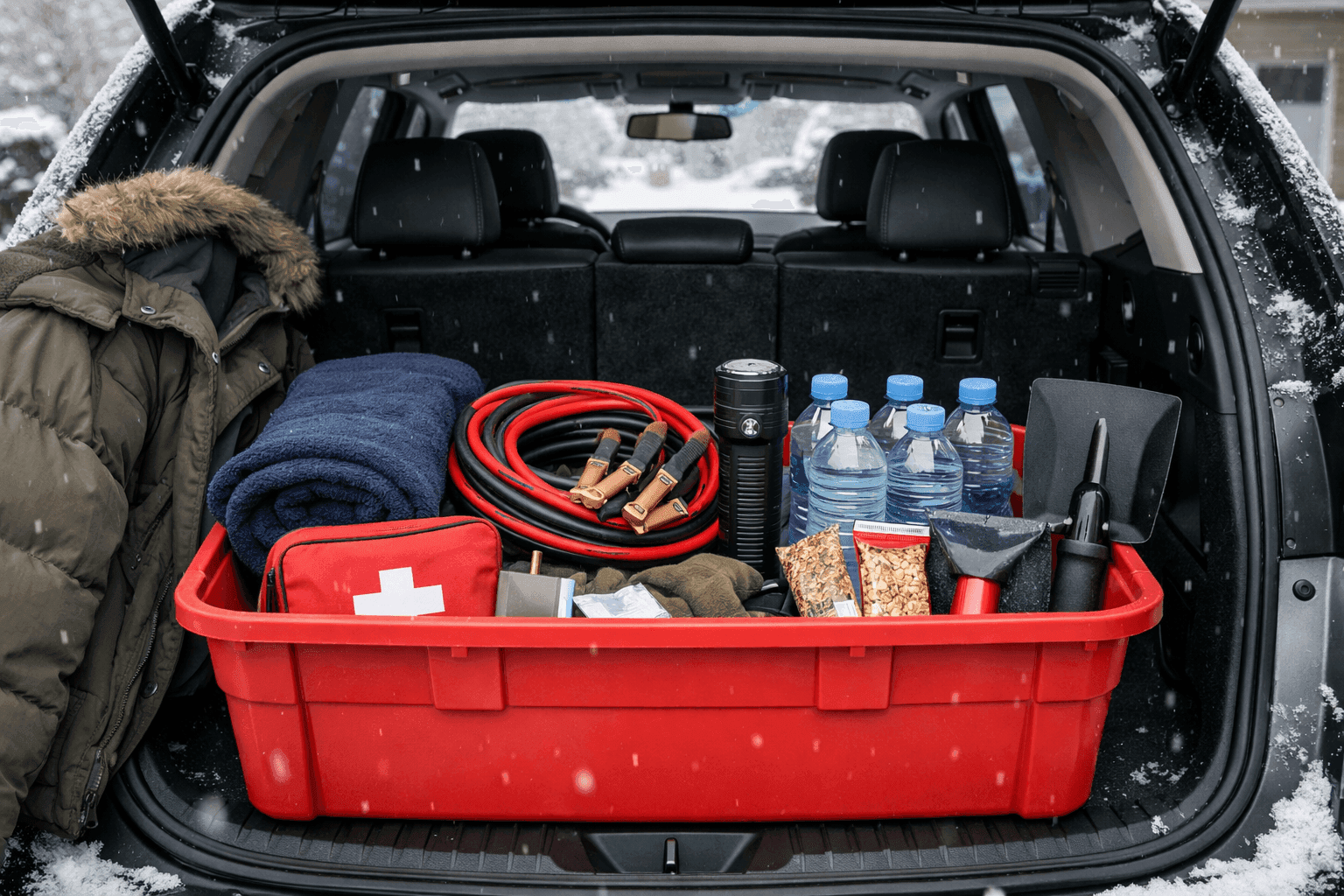
- Warm Blankets: At least two fleece or wool blankets for body warmth if heating fails (thrift store blankets work perfectly and cost $3-5 each)
- Flashlight & Batteries: LED flashlight with extra batteries stored separately, or hand-crank emergency flashlight that never needs batteries ($8-15)
- Jumper Cables: Heavy-duty 12-foot cables for jump-starting your battery or helping other stranded drivers (essential $20-30 investment)
- Non-Perishable Snacks: Granola bars, nuts, dried fruit, crackers—foods with long shelf life that provide energy and comfort during delays
- Water Bottles: At least two sealed bottles (rotate seasonally to prevent freezing, replace every 6 months)
- First Aid Kit: Basic supplies including bandages, pain relievers, antiseptic, any personal medications you need daily
- Phone Charger: Car charger or portable power bank to keep your phone working for emergency calls and GPS navigation
- Ice Scraper & Snow Brush: Heavy-duty versions that won't break when you need them most
- Small Shovel: Collapsible camping shovel for digging out tires from snow or creating traction paths
- Cat Litter or Sand: Provides traction under stuck tires on ice (keep in sealed container to prevent moisture absorption)
Additional Smart Additions
- Extra Warm Clothing: Hat, gloves, warm socks, old winter coat stored in the trunk year-round regardless of weather when you leave home
- Road Flares or Reflectors: Make your vehicle visible to other drivers if you're stopped on the roadside, especially crucial at night
- Multi-Tool or Knife: Swiss Army knife or Leatherman for unexpected repairs, cutting seatbelts, or opening packages
- Duct Tape: The universal fix-it solution for temporary repairs to nearly anything that breaks or leaks
- Paper Towels & Wet Wipes: For cleaning hands, wiping windshields, or managing spills without needing running water
- Emergency Contact Card: Laminated card with important phone numbers in case your phone dies—roadside assistance, family contacts, medical information
- Whistle: Sounds absurd until you need to signal for help when your voice won't carry or phone is dead
- Hand Warmers: Chemical heat packs that activate instantly, providing hours of warmth for freezing hands and feet (replace annually)
- Tire Pressure Gauge: Check tire pressure regularly as cold weather causes pressure drops that affect handling and fuel economy
Here's the critical organizational strategy that emergency preparedness experts recommend: store everything in a clear plastic bin with a secure lid rather than throwing items loosely in your trunk. This keeps supplies clean, dry, and organized so you can actually find what you need during a stressful emergency rather than frantically digging through a jumbled mess in the dark. Use a brightly colored bin—red, orange, or yellow—so it's immediately visible even if other items get piled on top of it throughout the year. Label the outside clearly: "WINTER EMERGENCY KIT" with a permanent marker or printed label. Professional emergency responders know that visibility and organization during a crisis can mean the difference between a quick resolution and a dangerous delay. Take this one step further by attaching a laminated checklist to the inside of the lid listing all contents, so you can quickly verify nothing is missing when you do your seasonal check-up. Set a phone reminder twice a year—beginning of winter and beginning of summer—to inspect your kit, replace expired items like food and medications, swap out water bottles, test your flashlight batteries, and ensure everything is still in working order. This 15-minute twice-yearly maintenance keeps your emergency kit genuinely ready when you need it most.