Rustic Elegance: Installing Faux Wood Beams
Transform ordinary ceilings into architectural showpieces with the warmth of wood
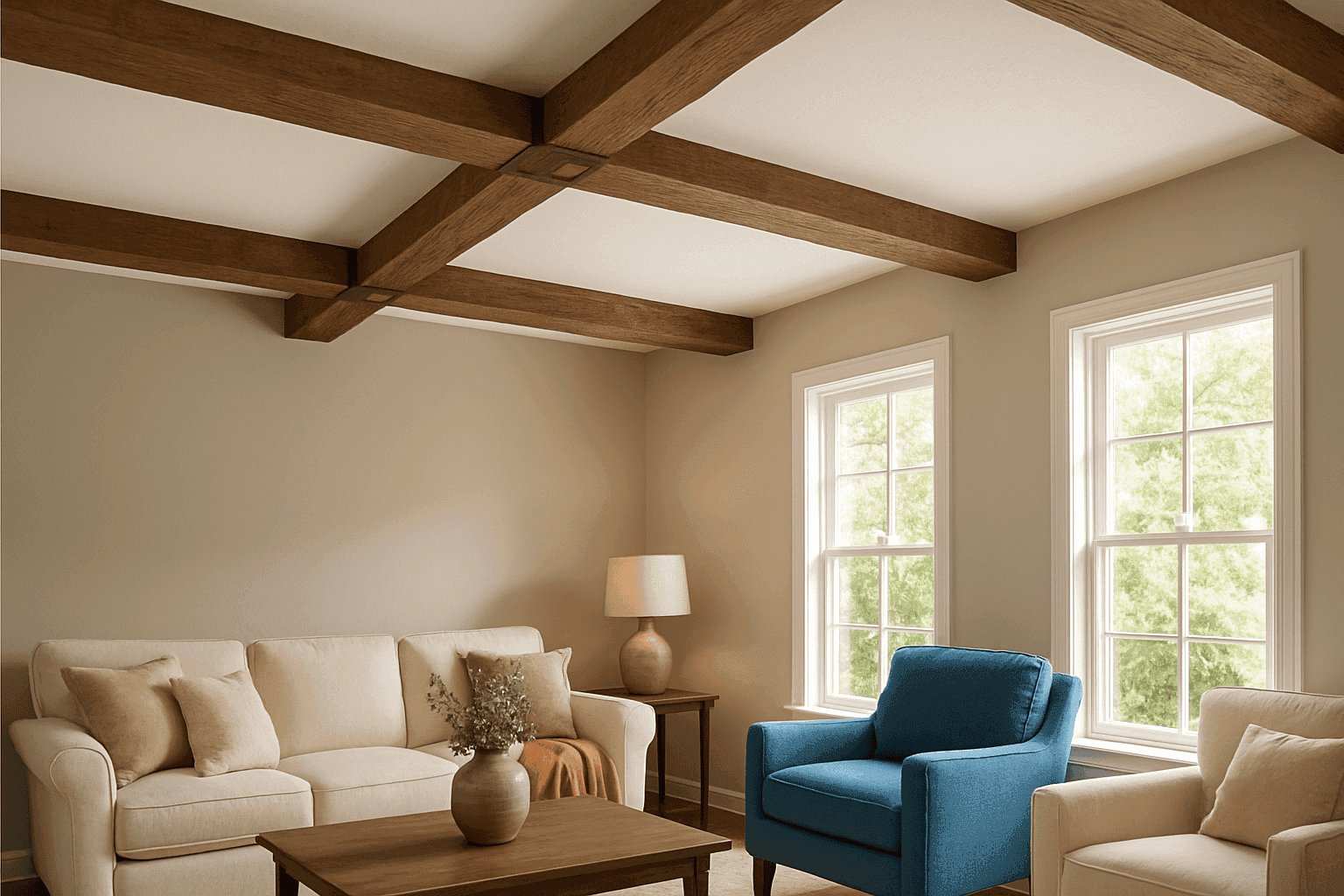
Wood beam ceilings instantly transform ordinary rooms into architectural standouts, adding warmth, character, and visual interest to any space. While authentic solid beams can be prohibitively heavy and expensive, today's lightweight faux wood options make this classic feature accessible to DIY enthusiasts. By following a strategic installation process, you can achieve the rustic charm of exposed beams without structural reinforcement or specialized carpentry skills.
Materials & Tools
| • Faux Beam Options: Polyurethane, reclaimed wood veneer, or hollow cedar box beams |
| • Support Materials: 2x4 lumber for mounting boards |
| • Fasteners: Construction adhesive, wood screws, finish nails |
| • Tools: Stud finder, level, tape measure, miter saw |
| • Finishing Supplies: Wood stain, wood filler, sandpaper |
| • Safety Gear: Safety glasses, dust mask, gloves |
| • Helpers: Extra hands for mounting long beams |
| • Optional: Decorative beam straps, iron bolts, antiquing glaze |
Installation Process
- Plan your beam layout. Create a scale drawing of your ceiling with proposed beam locations. Popular patterns include parallel lines, a central beam with perpendicular cross beams, or a grid pattern. Space beams 2-4 feet apart for optimal visual impact.
- Locate ceiling joists. Use a stud finder to identify and mark all ceiling joists in your installation area. These will provide solid anchoring points for your mounting boards.
- Install mounting boards. Attach 2x4 lumber to the ceiling along your marked joists where beams will be placed. These provide a secure surface for attaching hollow beams. Use 3-inch wood screws, ensuring they penetrate at least 1.5 inches into ceiling joists.
- Measure and cut beams. Carefully measure the required lengths for each beam, accounting for any angles at corners or intersections. Cut your faux beams using a miter saw for clean, precise ends.
- Prepare beam intersections. For grid patterns, determine whether beams will butt against each other or interlock. For interlocking configurations, cut notches in the appropriate beams to create seamless joints.
- Pre-finish beams if needed. Apply stain, paint, or distressing techniques before installation for easier finishing. This is particularly important for hard-to-reach areas after mounting.
- Install beams. With a helper, position each hollow beam over its mounting board. Secure in place using finish nails and construction adhesive. For solid beams, follow manufacturer's specific mounting instructions.
- Hide fasteners and joints. Fill nail holes with wood filler matched to your beam color. Touch up any joint areas with stain or paint to ensure a seamless appearance.
- Add decorative elements. Install metal straps, faux bolts, or other decorative hardware to enhance the authentic appearance of your beams.
For the most authentic appearance, choose beam dimensions that suit your ceiling height—wider, chunkier beams for high ceilings and narrower profiles for standard-height rooms. Consider painting your ceiling a shade lighter than your wall color before installing beams to create depth and contrast that highlights the architectural feature. If you're hesitant to commit to a full grid pattern, start with a single statement beam in a central location, such as defining the transition between living and dining areas.