Stop Major Heat Loss Through Your Attic Access Hatch
Add weatherstripping and rigid foam to seal the overlooked gap causing 15% heat loss
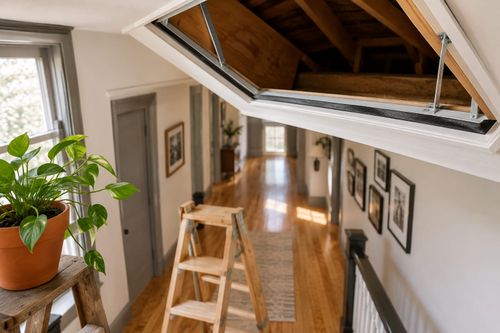
While most homeowners obsess over wall insulation and window efficiency, the attic access hatch remains the most overlooked energy leak in typical homes, often accounting for a shocking 15% of total heat loss despite representing less than 1% of your ceiling area. This thin wooden panel connecting your conditioned living space to an unconditioned attic creates a thermal bridge where expensive heated air escapes directly into cold attic space, while frigid attic air infiltrates downward creating uncomfortable drafts and forcing your heating system to work overtime compensating for continuous loss. The insulation upgrade costs under $30 in weatherstripping and rigid foam board materials, takes about an hour to complete, and immediately reduces heating bills while eliminating that noticeable cold draft you feel standing beneath the hatch location. What makes this project so satisfying is the dramatic before-and-after difference you can literally feel with your hand—run your palm beneath an uninsulated hatch and you'll feel cold air pouring down, then after proper insulation that cold draft completely disappears proving your intervention worked. The energy audit companies that charge hundreds of dollars to assess home efficiency always flag attic hatches as critical issues, yet this is one fix you can absolutely handle yourself without specialized knowledge or tools, making it the perfect weekend project that delivers professional-level energy savings for DIY-level investment and effort.
Insulation Materials
- Weatherstripping:
- Self-adhesive foam weatherstrip tape (1/2 inch wide, $5-8)
- Or rubber bulb weatherstripping for better seal ($8-12)
- Choose thickness that compresses to create airtight seal
- Get enough to go around entire hatch perimeter
- Rigid Foam Insulation:
- Rigid foam board (1-2 inch thick, R-5 to R-10, $12-20)
- Foil-faced insulation reflects radiant heat (best option)
- Must be sized to fit hatch dimensions
- Thicker provides better insulation value
- Attachment Materials:
- Construction adhesive for bonding foam to hatch ($4-6)
- Or mechanical fasteners if preferred ($3-5)
- Aluminum foil tape to seal foam edges ($5-8)
- Caulk for sealing frame gaps (optional, $3-5)
- Optional Upgrades:
- Attic tent or insulated cover ($40-80 for pre-made)
- Hook and eye latch to ensure tight closure ($3-5)
- Reflective radiant barrier material ($8-15)
- Insulated hatch replacement panel ($50-150)
- Tools Required:
- Utility knife for cutting foam board
- Measuring tape for accurate sizing
- Straightedge or T-square for straight cuts
- Scissors for weatherstripping
- Clean rags for surface preparation
Insulation Process
- Clean Contact Surfaces: Thoroughly clean the attic hatch panel and the frame where weatherstripping will be applied, removing all dust, cobwebs, and debris that prevent adhesive from bonding properly—weatherstripping stuck to dirty surfaces fails within weeks as adhesive loses grip and gaps reopen allowing continued air leakage.
- Measure Hatch Dimensions: Carefully measure your attic hatch panel's length and width, then measure the rigid foam insulation board and mark cutting lines—foam should be cut slightly smaller than the hatch (about 1/4 inch on each side) so it doesn't interfere with hatch closing or create binding that prevents proper sealing.
- Cut Rigid Foam Board: Using a utility knife and straightedge, score the foam insulation along your marked lines, then snap it cleanly along the scored line—multiple light passes with the knife work better than trying to cut through in one heavy stroke that creates ragged edges and uneven insulation thickness.
- Attach Foam to Hatch: Apply construction adhesive in zigzag pattern across the attic-facing side of your hatch panel, then press the cut rigid foam board firmly into place, positioning it centered with even margins on all sides—the foam should be on the attic side of the hatch so it faces the cold space you're trying to insulate against.
- Seal Foam Edges: Use aluminum foil tape to seal all edges where rigid foam meets the hatch panel, creating an airtight perimeter that prevents air from flowing around the insulation edges—this tape also adds reflective properties that bounce radiant heat back, increasing overall thermal performance beyond just foam R-value alone.
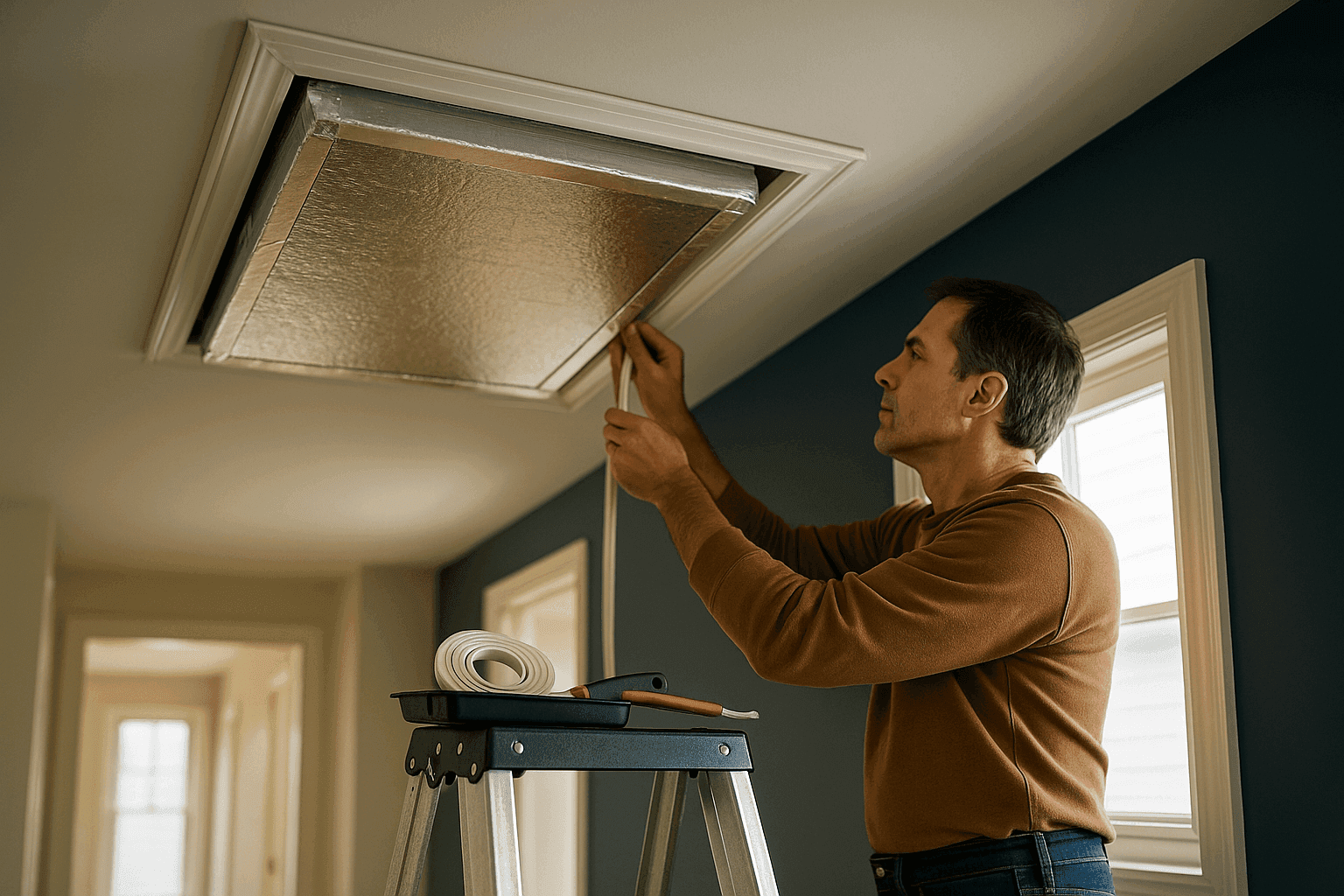
- Apply Weatherstripping: Peel backing from self-adhesive weatherstrip tape and carefully apply it around the entire perimeter of the hatch opening frame (not the hatch itself), ensuring continuous coverage without gaps at corners—when hatch closes, it should compress this weatherstripping creating an airtight seal that eliminates air infiltration completely.
- Test Seal Quality: Close the hatch and check that it compresses weatherstripping evenly around entire perimeter without binding or leaving visible gaps—if compression is uneven, add additional weatherstripping layers to low spots or trim if it's preventing hatch from closing flush, since proper compression is essential for effective air sealing.
- Add Closure Hardware: Install a hook-and-eye latch or similar closure mechanism that pulls hatch tight against weatherstripping, ensuring consistent compression rather than relying on gravity alone—positive closure prevents the hatch from settling away from the seal over time due to house movement or repeated opening and closing that loosens fit.
Professional energy auditors emphasize that attic hatch insulation is only part of the solution—the frame where the hatch sits also needs attention to achieve maximum energy savings. Before installing weatherstripping, inspect the gap between the hatch frame and the ceiling drywall, which often has visible spaces where air flows freely. Fill these gaps with expanding foam spray or caulk to seal the frame-to-ceiling junction before addressing the hatch-to-frame seal with weatherstripping. This two-stage sealing approach addresses both the obvious hatch gap and the hidden structural gap that many DIYers miss entirely. For pull-down attic stairs (a different type of attic access), consider installing a commercially available insulated attic stair cover that creates a tent-like structure over the entire staircase opening, providing R-10+ insulation plus weatherstripping in one integrated product. These covers cost $40-80 but deliver far better results than trying to insulate the complex geometry of folding stairs with rigid foam. The inspection technique that reveals whether your insulation efforts succeeded is conducting a simple visual check during winter—go into your attic on a cold day and look at the back of your insulated hatch. If you see frost or condensation forming on the attic side, warm air is still leaking through and you need additional sealing. A properly insulated hatch should show no temperature differential, remaining as cold as the surrounding attic space because no warm air is reaching it. For homes where the attic hatch is located in a hallway or other high-visibility area, consider the aesthetic upgrade of building a simple trim frame around the hatch opening that both improves the finished appearance and provides a solid surface for weatherstripping attachment that's superior to trying to seal against textured ceiling paint that prevents good adhesive contact.