Textured Elegance: Creating Fabric Wall Panels
Transform your walls with custom fabric panels that add style, texture, and sound absorption
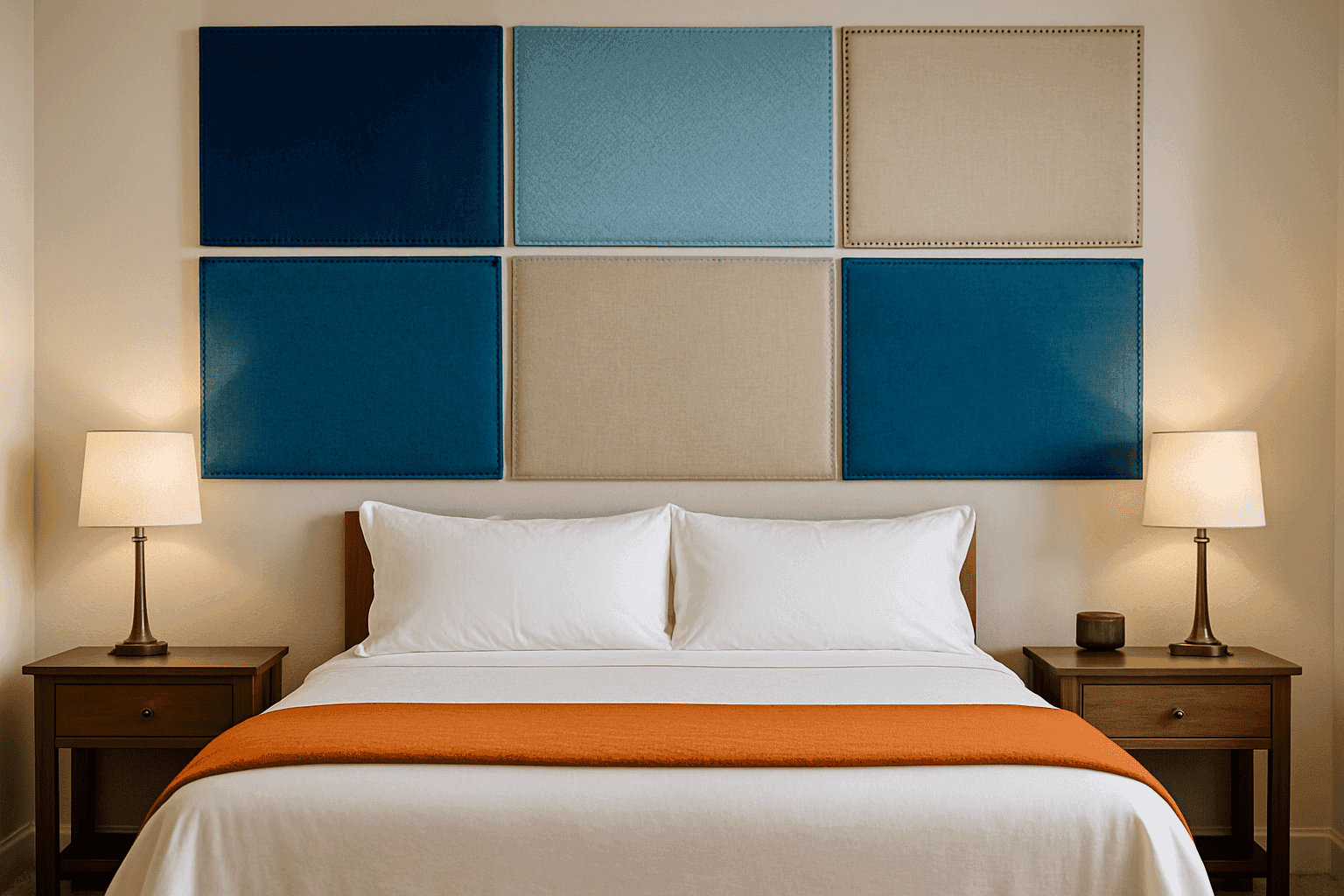
Fabric wall panels offer a perfect blend of aesthetics and functionality, adding visual warmth while improving a room's acoustics. These customizable panels can transform bland walls into sophisticated design statements, allowing you to incorporate favorite textiles and create a unified design theme. Whether installed as a full wall treatment or as individual decorative elements, fabric panels add dimension and texture that paint alone cannot achieve.
Materials & Tools
| • Backing Materials: Plywood, MDF, or rigid insulation boards |
| • Acoustic Option: Acoustic insulation or foam padding |
| • Fabric: Upholstery fabric, linen, velvet, or patterned textiles |
| • Batting: Polyester quilt batting or foam padding |
| • Adhesives: Spray adhesive, fabric glue, staple gun |
| • Trim Options: Decorative nail heads, ribbon, piping, wood trim |
| • Tools: Scissors, measuring tape, staple gun, iron |
| • Mounting Hardware: Picture hangers, Z-clips, or Velcro strips |
Creation Process
- Plan your design. Decide whether you want a grid of identical panels, varying sizes, or a custom-shaped installation. Draw your layout on paper, considering the wall dimensions and furniture placement.
- Prepare your boards. Cut backing boards to your desired panel sizes. For acoustic benefits, use 1" or thicker boards; for purely decorative panels, thinner boards will suffice.
- Add padding layer. For a plush, upholstered look, cut batting or foam slightly larger than your boards. Attach with spray adhesive or staples around the edges on the back.
- Prepare your fabric. Iron fabric to remove wrinkles. Cut pieces approximately 3-4" larger than your boards on all sides to allow for wrapping around edges.
- Wrap and secure fabric. Center the board on wrong side of fabric. Pull fabric taut and staple to the back of the board, working from the center of each side outward. Create neat corners by folding excess fabric like wrapping a present.
- Add decorative details. For enhanced style, add nail head trim, decorative ribbon, or wood trim around panel edges. Secure with appropriate adhesive or small nails.
- Create mounting system. Attach picture hangers to the back for lighter panels. For heavier panels or grid installations, use Z-clips or French cleats for secure wall mounting.
- Install on wall. Mark wall locations carefully, ensuring panels are level and evenly spaced. For grid installations, use a laser level to maintain alignment across multiple panels.
Create visual interest by varying the textures and patterns within a cohesive color scheme. Try combining solid velvet panels with subtle geometric prints and textured weaves—all within the same color family—for a sophisticated look with rich dimension. For bedrooms or media rooms, consider extending panels from floor to ceiling behind key furniture pieces to create a dramatic focal wall with significant acoustic benefits. To prevent fabric from sagging over time, spray a light coat of fabric stiffener before wrapping your panels, especially when using lighter-weight textiles.