Toy Bin Reset: The Bin Depth That Stops Overflow
Skip the deep catch-all bins — shallow, single-layer bins are the only thing that keeps toys from becoming an unsortable pile by Tuesday.
![[#~image_alt_1~#]](/_next/image?url=https%3A%2F%2Fd3klpa3rfwubzz.cloudfront.net%2Fmedia%2FAPI%20Uploads%2FDIY%2F238b0b5489ccdf0c43f96ee1043a67b8_55bdada189.jpg&w=1920&q=75)
That toy bin looks tidy for exactly one day before it turns into a bottomless pit of loose Legos, missing puzzle pieces, and stuffed animals nobody can find. The real problem isn't your kid's habits — it's bin depth. Anything deeper than about 8-10 inches lets toys stack three and four layers deep, which means whatever's on the bottom is effectively gone until you dump the whole bin out. Shallow bins force a single visible layer, so kids can actually see what's in there and put pieces back where they found them. Swap depth, not just labels, and this reset actually holds.
What You'll Need
- Shallow bins, 8-10 inches deep, one per toy category, already owned or under $6 each
- Trash bag, for broken pieces and giveaways
- Donation box, for outgrown toys
- Painter's tape, for temporary category labels
- Marker, for labeling
- Picture labels or printed icons, optional, for pre-readers, under $5
How to Build It
- Dump every toy from the deep bin onto the floor so you can see the true volume you're working with.
- Sort into quick piles: broken/missing pieces, outgrown, and keepers by category (blocks, cars, dolls, art supplies).
- Toss the broken pile immediately and set the outgrown pile in the donation box — don't second-guess this step.
- Measure your keeper piles against bin depth — if a pile is taller than 8-10 inches, split it into two shallow bins instead of one deep one.
- Fill each shallow bin no more than three-quarters full so there's room to see and grab without digging.
- Label each bin with a word and a picture icon so pre-readers can match toys to the right home.
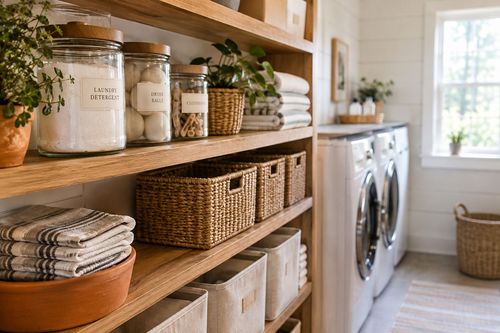
- Place the bins on open shelving at kid height, not stacked inside a toy chest, so every bin stays visible.
- Test it with your kid right away — have them put one toy back to confirm the system makes sense to them, not just you.
Clear bins beat solid-color ones every time because kids can spot the right home for a toy without pulling anything out to check — it's the difference between a bin that gets used and one that gets ignored.