Up & Growing: Repurpose a Ladder into a Garden Display
Turn a forgotten old ladder into a stunning tiered plant display that adds dramatic height and personality to any patio or garden
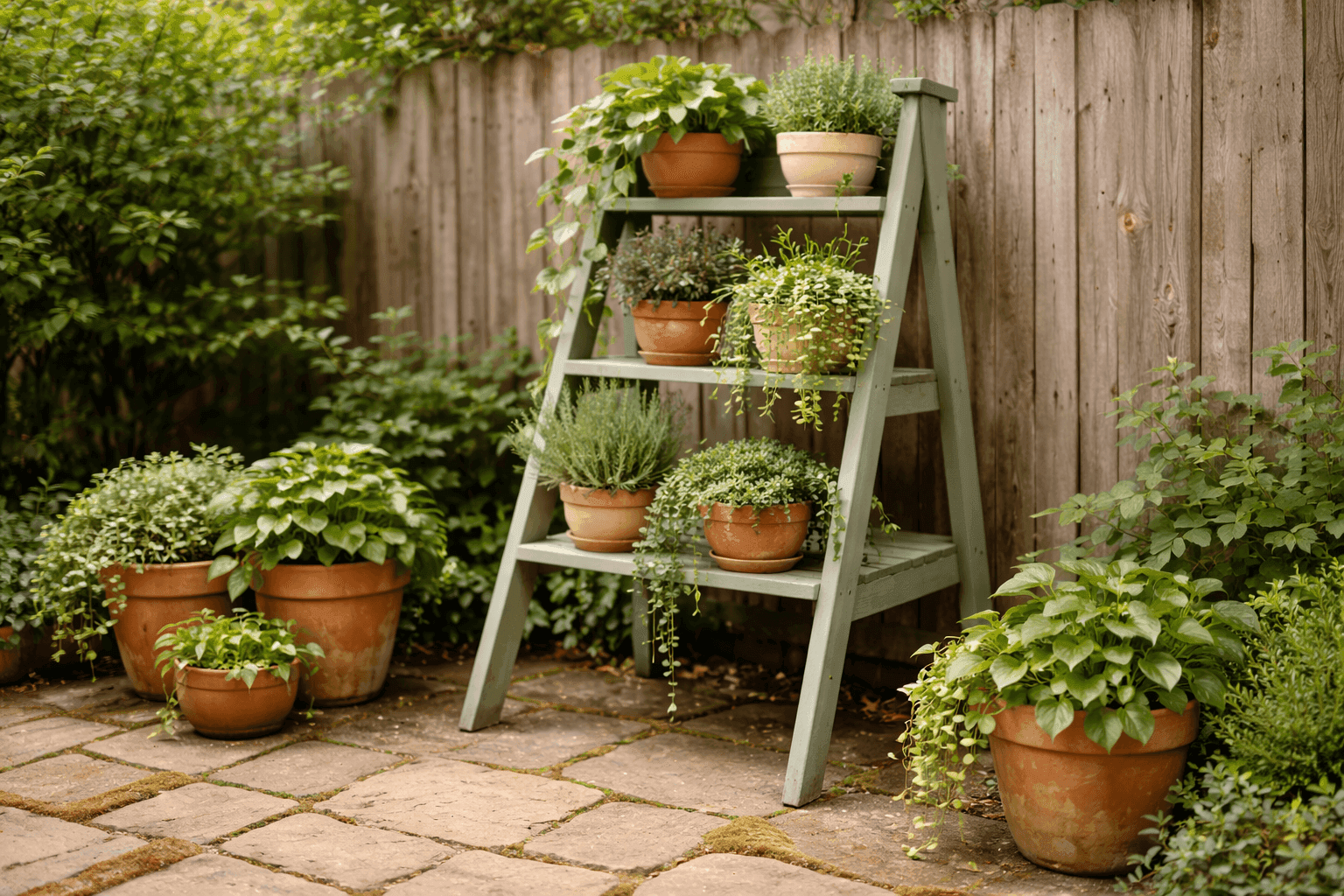
There's something deeply satisfying about giving a forgotten object a second life — and an old wooden stepladder might be the most versatile repurposing canvas in the DIY world. Propped open on a patio, painted in a color that makes your plants pop, and loaded with tiered pots of trailing vines, herbs, or seasonal blooms, a ladder garden display creates the kind of layered vertical interest that landscape designers charge serious money to achieve. The whole project costs next to nothing if you already have a ladder gathering dust in the garage, and even sourcing one from a thrift store or yard sale rarely runs more than $10–$20. Beyond the visuals, the tiered structure is genuinely practical — each rung becomes its own micro-display where you can group plants by sunlight needs, mix textures and pot sizes, and swap things in and out as seasons change. This is the kind of project that looks like it belongs in a garden magazine and takes a single afternoon to pull off.
What You'll Need
- The Ladder
- Wooden stepladder — 4 to 6 feet tall works best (check garage, thrift stores, or Facebook Marketplace for $0–$20)
- Avoid metal ladders for this project — paint adhesion and rust make them more trouble than they're worth outdoors
- Paint & Prep
- Medium-grit sandpaper (120 grit) for surface prep — ~$4–$6
- Exterior wood primer — one small can covers a full ladder — ~$8–$10
- Exterior latex paint in your chosen color — one quart is plenty — ~$12–$18
- 2-inch angled paintbrush for rungs and a 3-inch flat brush for flat surfaces
- Drop cloth or old newspapers
- Stability & Weather Protection
- Exterior polyurethane or outdoor sealant for a topcoat — ~$10–$14
- Non-slip rubber feet or furniture pads for ladder legs — ~$4–$6
- Heavy-duty zip ties or S-hooks for securing pots to rungs (optional but smart in windy spots)
- Plants & Pots
- 6–8 potted plants in a mix of sizes — trailing plants for upper rungs, fuller plants for lower ones
- Terracotta, ceramic, or lightweight plastic pots that fit within rung width
- Small drip trays to protect wooden rungs from water damage
How to Build It
- Inspect and repair the ladder before anything else — check every rung for cracks, test the hinge hardware, and wiggle each side rail to make sure the structure is solid. A wobbly ladder loaded with heavy pots is a tipping risk, so tighten any loose screws and wood-glue any hairline cracks now while the ladder is still bare.
- Sand the entire ladder with 120-grit sandpaper, working with the wood grain to rough up the surface so primer and paint have something to grip. Pay extra attention to any areas with old paint, varnish, or rough splintering — you don't need to strip it completely, just break the surface sheen so the new finish bonds properly.
- Prime the whole ladder with exterior wood primer and let it dry fully according to the can instructions — usually 1–2 hours — before touching it. Skipping primer is the number one reason painted outdoor wood looks chalky and peeling within a single season, especially on pieces that will hold wet plant pots.
- Paint in thin, even coats starting with the rungs and working outward to the rails so you don't drag the brush over wet surfaces you've already finished. Two coats almost always looks better than one heavy coat — let each coat dry completely before applying the next, and lightly sand between coats with 220-grit paper for an ultra-smooth finish.
- Seal the finished paint with a coat of exterior polyurethane once the final paint layer is fully cured — this is the step that separates a ladder that looks great for one season from one that holds up for five or more. Apply with a clean brush in long, even strokes and let it cure for a full 24 hours before loading any pots onto the rungs.
- Position the ladder in its display spot before adding any plants — lean it against a wall or fence for extra stability, or open it fully as a freestanding display and attach the rubber feet to the legs so it doesn't shift on hard surfaces. Deciding on location first saves you from carrying a fully loaded, heavy ladder across the patio after the fact.
- Style the rungs by placing your largest, fullest plants on the bottom rungs and working up to trailing or cascading plants on the upper rungs, where their vines can drape down dramatically over the lower levels. Set each pot on a small drip tray to protect the wood from standing water, and use S-hooks or zip ties through pot drainage holes to keep pots secure on rungs in breezy spots.
- Step back and adjust — move pots around until the overall silhouette feels balanced, mixing pot colors, textures, and plant heights for a display that looks curated rather than crowded. Odd numbers of plants per rung (one or three) and varying pot sizes at each level will give the finished display that effortlessly styled look you see in garden design inspiration photos.
The color you paint your ladder does more design work than most people realize — it's essentially the backdrop against which every plant and pot will be displayed, so choosing intentionally matters. Muted, earthy tones like sage green, warm white, dusty blue, or soft terracotta let plants stay the visual star while giving the ladder a collected, vintage feel. Bold colors like deep navy or charcoal make a strong architectural statement and work especially well against light-colored fences or walls. Whatever color you choose, pick up one or two accent pots in a complementary or contrasting tone and repeat that color in at least two spots on the ladder — that repetition is what makes a styled display feel intentional rather than randomly assembled. If you're using the ladder indoors or on a covered porch, chalk-style paint gives a gorgeous matte finish with almost no prep work required and skips the need for primer entirely.