Vertical Beauty: Enhancing Gardens with Trellises
Create dramatic visual impact and maximize growing space with elegant climbing structures
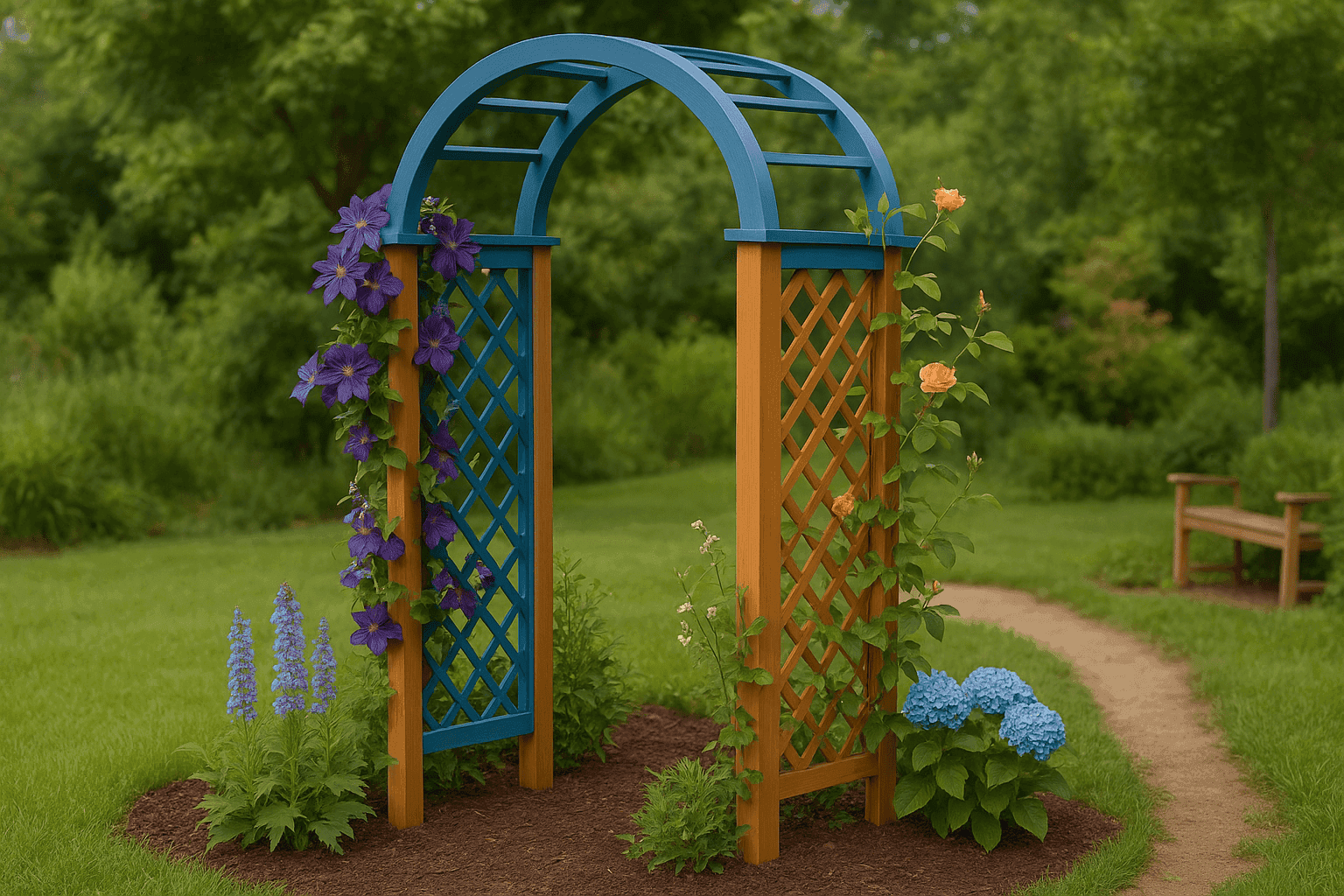
Garden trellises transform the ordinary into the extraordinary, adding vertical dimension that draws the eye upward and maximizes growing space in even the smallest gardens. These practical structures support climbing plants while serving as architectural elements that create visual interest throughout the seasons. Whether you choose a classic lattice design, rustic branch construction, or modern geometric pattern, a well-placed trellis becomes both a foundation for botanical beauty and a stunning garden feature in its own right.
Trellis Options & Materials
| • Wood Options: Cedar, redwood, bamboo, pressure-treated |
| • Metal Choices: Wrought iron, steel, copper, rebar |
| • Natural Materials: Branches, willow, reed, bamboo |
| • Upcycled Options: Old gates, headboards, windows |
| • Hardware: Galvanized screws, wire, zip ties, hooks |
| • Installation Materials: Post-hole digger, concrete |
| • Tools: Saw, drill, level, measuring tape, square |
| • Finishing Supplies: Exterior paint, stain, sealant |
| • Plant Support: Garden twine, plant ties, clips |
Installation & Design Ideas
- Determine your trellis purpose. Consider your primary goal:
- Supporting flowering vines for visual display
- Growing vertical vegetables like cucumbers, beans, or peas
- Creating privacy screens or garden room dividers
- Hiding unsightly areas like utility boxes or compost bins
- Providing shade for seating areas or heat-sensitive plants
- Choose appropriate trellis style and materials. Match your garden aesthetic:
- Classic lattice patterns for traditional gardens
- Sleek metal grids or cables for contemporary spaces
- Rustic branch structures for cottage or natural gardens
- Decorative panels with cutout designs for artistic impact
- Arched or curved shapes for romantic, cottage-style gardens
- Select ideal placement and orientation. Position for maximum impact:
- North-south orientation allows equal sun exposure on both sides
- East-west placement creates distinct sun/shade zones for different plants
- Place at least 6-12 inches from walls to allow air circulation
- Consider visibility from key viewing points (windows, seating areas)
- Account for mature plant size and potential weight when fully grown
- Ensure proper installation for stability. Options include:
- Freestanding installation:
- Dig post holes at least 18-24 inches deep
- Set posts in concrete for maximum stability
- Ensure vertical alignment using a level during installation
- Allow concrete to cure completely before attaching plants
- Wall-mounted approach:
- Use masonry anchors for brick or concrete walls
- Locate studs for secure attachment to wood siding
- Install spacers to maintain air gap between trellis and wall
- Consider removable systems for rental properties
- Container-based option:
- Use large, heavy pots (at least 18-24 inches diameter)
- Secure trellis in pot with concrete or heavy rocks
- Ensure pot has drainage and sufficient soil volume
- Freestanding installation:
- Select appropriate climbing plants. Match plants to your structure:
- For lightweight trellises: Annual vines like morning glory, sweet peas, black-eyed Susan vine
- For medium-strength supports: Clematis, jasmine, honeysuckle, passion flower
- For sturdy structures: Climbing roses, wisteria, kiwi vine, grape
- For vegetables: Cucumbers, pole beans, peas, small-fruited melons
- For shade creation: Fast-growing annuals like hyacinth bean, moonflower
- Provide proper plant support and training. Help plants find their way:
- Different climbers have different attachment methods:
- Twiners (beans, wisteria) wrap stems around supports
- Tendrils (peas, grapes) grab onto thin supports
- Scramblers (roses, bougainvillea) need to be tied in place
- Adhesive climbers (ivy) attach directly to surfaces
- Initially train young plants by gently tying stems to the structure
- Use soft plant ties, garden twine, or strips of fabric
- Check and adjust ties regularly as plants grow to prevent strangling
- Different climbers have different attachment methods:
- Maintain your vertical garden. Ensure long-term success:
- Prune regularly to control growth and encourage flowering
- Remove dead or tangled growth to maintain air circulation
- Provide adequate water, especially for container-grown climbers
- Check trellis stability periodically, especially after storms
- Apply slow-release fertilizer appropriate for your climbing plants
- Perform structural repairs and maintenance during dormant season
For truly spectacular trellis displays, consider creating "living sculptures" by combining different types of climbers with complementary blooming periods. For example, pair spring-flowering clematis with summer-blooming annual vines and fall-coloring grape or ivy for year-round interest. When designing multiple trellises throughout your landscape, vary their heights but maintain consistent materials or shapes to create a unified design language. For edible landscapes, maximize productivity by installing trellises with removable panels that allow you to rotate crops annually—this prevents disease buildup while maintaining your garden's structured appearance.