Wildlife Welcome: DIY Bird Feeder & Butterfly Bar
Create enchanting garden stations that bring nature's most beautiful visitors right to your doorstep!
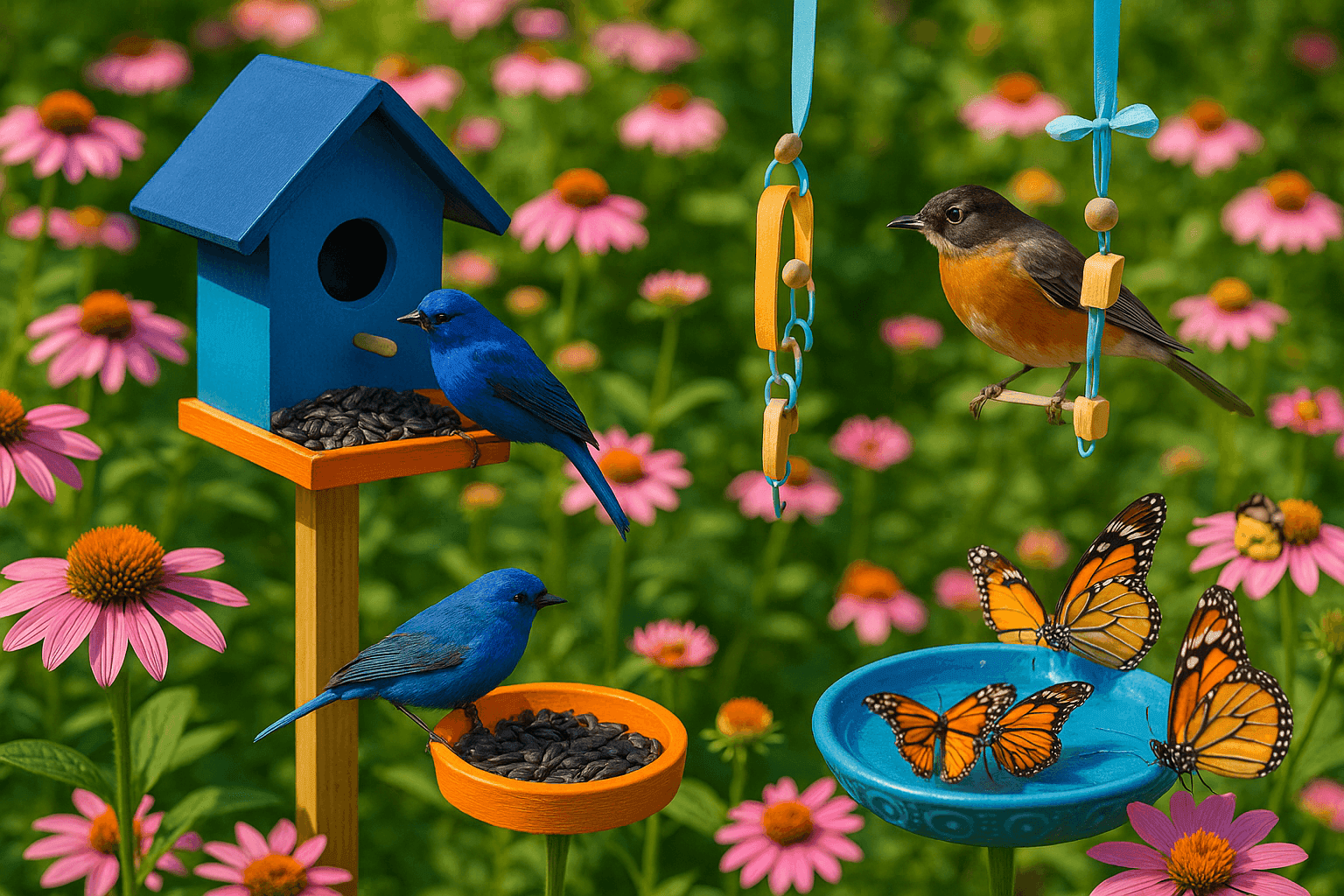
The morning I first spotted a cardinal at my homemade bottle feeder was like discovering I had a secret superpower – I could literally invite wildlife into my world with something I'd crafted from recycled materials. Within weeks, my simple setup had attracted an entire neighborhood of birds, and the butterfly bar brought clouds of monarchs and swallowtails that turned my garden into a living kaleidoscope. These projects cost under $15 each but create ongoing entertainment that's better than any nature documentary – because you're not just watching wildlife, you're actively supporting it while turning your yard into a vibrant ecosystem. Plus, they make fantastic family projects where kids learn about conservation while creating functional art that gives back to nature.
What You'll Need
- Bird Feeder Base: Large plastic bottles, vintage teacups, or wooden pieces (~$5)
- Butterfly Station: Shallow ceramic dishes, flat stones, sponges for landing spots (~$8)
- Decoration Supplies: Outdoor acrylic paints, waterproof markers, colorful ribbons (~$10)
- Hardware: Strong twine or wire for hanging, small drainage holes, weather sealant
- Food & Nectar: Birdseed variety, sugar for butterfly nectar, fresh fruit slices
- Installation: Shepherd's hooks, mounting brackets, or tree branch hangers
Step-by-Step Method
- Design your feeders by cleaning containers and planning colorful decoration schemes
- Cut feeding holes in bottles at appropriate sizes for different bird species
- Paint and decorate using weather-resistant materials that won't harm wildlife
- Create butterfly nectar stations with shallow dishes and sugar water (1:10 ratio)
- Install feeders at varying heights and distances from windows to prevent collisions
- Add landing perches and drainage holes to keep food fresh and accessible
- Position near natural cover where birds feel safe while feeding
- Maintain by cleaning regularly and refilling with fresh food and nectar
Wildlife experts recommend creating "feeding zones" at different heights and locations to attract various species without overcrowding. Place butterfly bars in sunny, sheltered spots with flat stones for basking, while bird feeders work best with nearby shrubs for quick escape routes. Use native plants around your stations to provide natural food sources and nesting materials. Also, establish a regular cleaning schedule – dirty feeders can spread disease, but well-maintained stations become essential stops on local wildlife's daily routes!