Window Dressing: Create Polished Perfection with Trim
Transform plain windows into architectural features with custom molding and trim
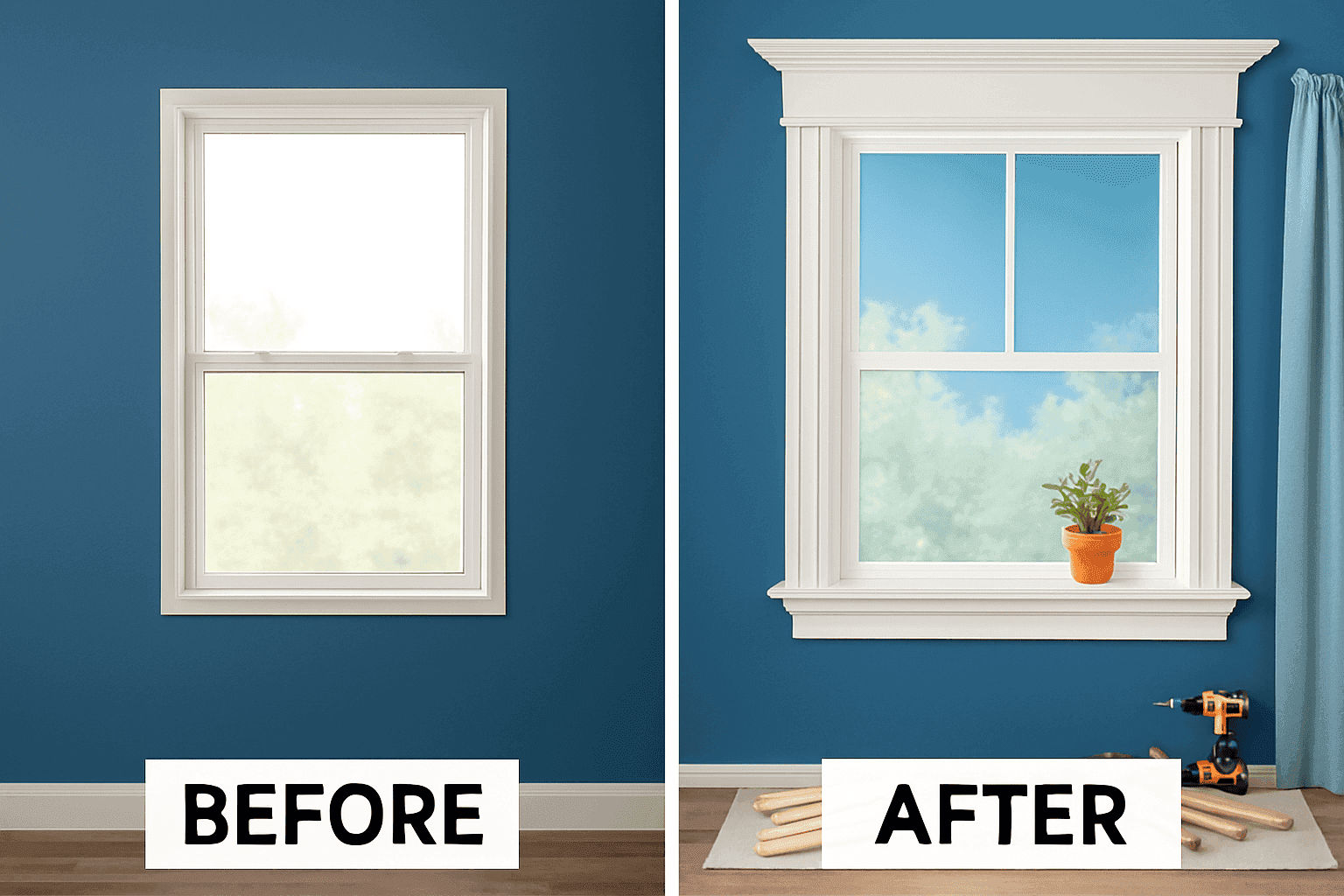
Bare, unadorned windows can make even the most beautiful room feel unfinished. Adding custom trim transforms these functional openings into architectural features that enhance your home's character and style. Whether you prefer simple, clean-lined frames or elaborate molding assemblies, window trim provides a polished, intentional look that elevates your entire space. This medium-difficulty weekend project delivers significant visual impact while requiring only basic carpentry skills and tools.
Materials & Tools
| • Trim Materials: MDF, pine, hardwood, or PVC boards |
| • Molding Options: Casing, sill, stool, apron, rosettes |
| • Fasteners: Finish nails, construction adhesive |
| • Measuring Tools: Tape measure, combination square |
| • Cutting Tools: Miter saw, coping saw |
| • Installation Tools: Hammer, nail set, level |
| • Finishing Supplies: Wood filler, caulk, sandpaper |
| • Paint: Primer, semi-gloss or satin paint |
| • Safety Gear: Safety glasses, ear protection |
Installation Process
- Select your trim style. Choose molding profiles that complement your home's architectural style—simple, flat casing for modern homes; more ornate profiles for traditional spaces. Consider standard sizes like 2½" to 3½" wide casing for average rooms, wider for larger spaces or dramatic effect.
- Measure precisely. For side casings, measure from the windowsill to approximately ⅛" above the window. For the header piece, measure the distance between the outside edges of both side casings. Add a 3/16" reveal (setback) from the edge of the jamb for a professional look.
- Create a cutting list. Plan all cuts before starting to ensure efficient use of materials. For standard windows, you'll need two side casings, one header casing, one sill, one stool (the horizontal piece at the window bottom), and one apron (below the stool).
- Cut your trim pieces. For side casings, make straight cuts at the bottom and 45° miter cuts at the top. For the header, cut 45° miters on both ends to join with side casings. For the stool, allow 2-3" overhang on each side of the window and cut returns (small pieces that turn back to the wall) for a finished look.
- Prepare the window area. Remove any existing trim carefully. Clean surfaces thoroughly and repair any damage to surrounding drywall. Fill gaps around the window frame with low-expansion foam for energy efficiency.
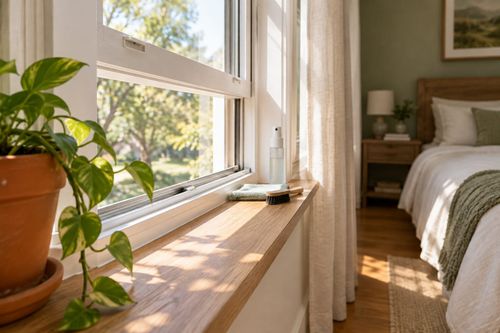
- Install the sill and stool first. The stool sits on the windowsill with a small overhang into the room. Secure with finish nails into the window frame and wall studs, using a level to ensure it's perfectly horizontal.
- Mount side casings next. Position against the jamb with your predetermined reveal, ensuring they're plumb (perfectly vertical). Start with one nail at the top, check for plumb, then secure with additional nails every 12-16 inches.
- Add the header casing. Place the mitered header piece on top, ensuring tight joints at the miters. Nail through the header into the window frame and surrounding framing.
- Install the apron. Center this piece below the stool with a ½" to ¾" drop below the stool edge. Secure with finish nails into wall studs.
- Finish with detail work. Set all nails below the surface using a nail set. Fill holes with wood filler and caulk all joints and seams. Sand smooth when dry, then prime and paint with at least two coats for a polished look.
For a truly custom look that adds architectural significance to your windows, consider layering multiple molding profiles. Start with a flat 1×4 board against the wall, then add decorative casing on top, set back approximately ¼" to create shadow lines and dimension. For traditional spaces, add rosette blocks at the corners of the window instead of mitered joints—they're not only decorative but also easier to install since they eliminate the need for precise miters. In contemporary homes, paint trim the same color as walls for subtle sophistication, or go bold with a contrasting color to create a dramatic frame for your view.