Workspace Upgrade: Creating a Custom Built-In Desk
Transform an underutilized nook into a stylish and functional home office
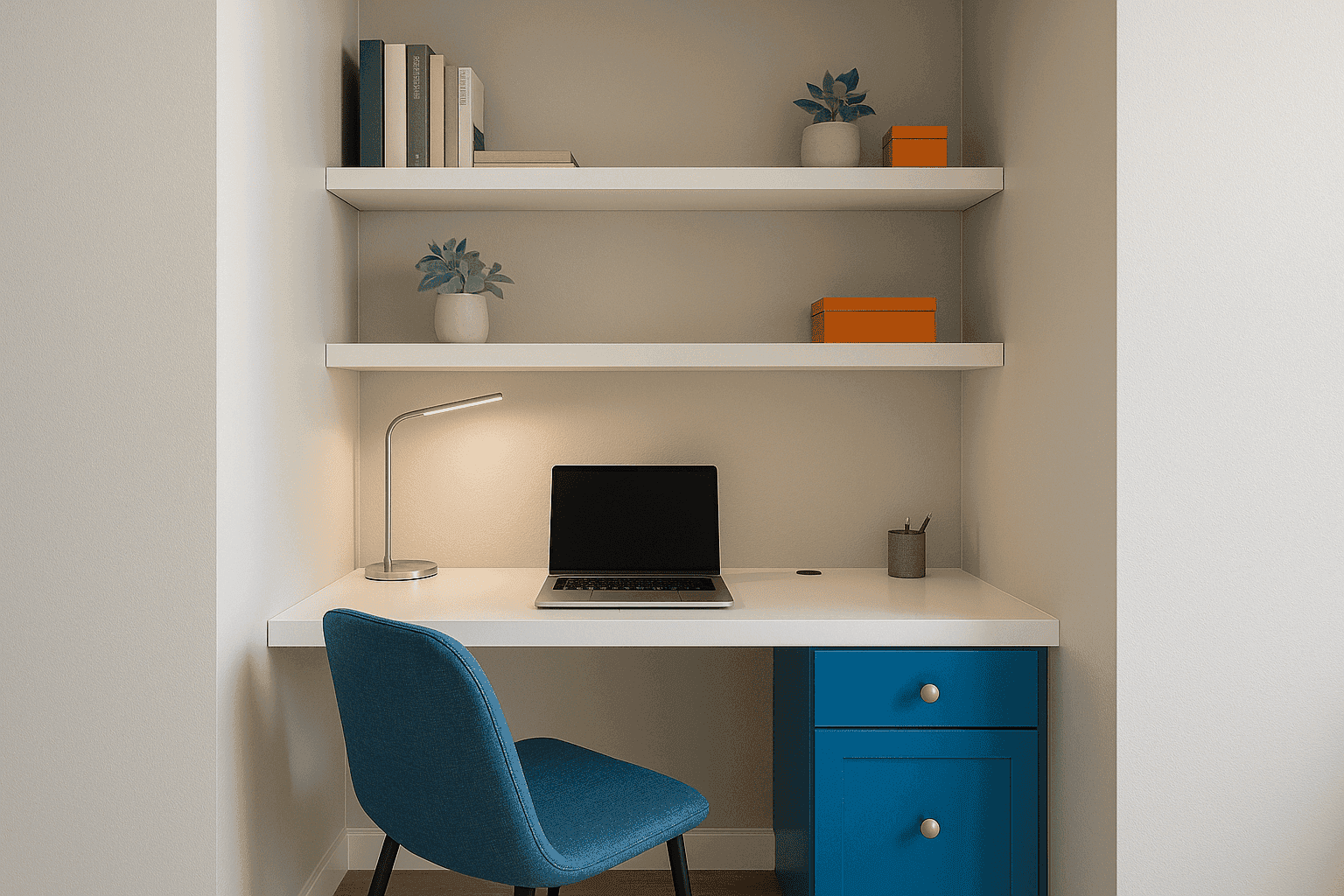
Built-in desks maximize efficiency in any home, transforming awkward nooks, underutilized closets, or empty wall space into functional work areas. Unlike freestanding furniture, these custom workspaces integrate seamlessly with your home's architecture while providing tailored storage solutions. With remote work becoming increasingly common, this weekend project delivers both immediate functionality and long-term value.
What You'll Need
| 3/4" plywood for desk surface |
| 2x4 lumber for wall cleats |
| 1x2 lumber for edge banding (optional) |
| Cabinet-grade plywood for shelving |
| Shelf brackets or floating shelf hardware |
| Pre-made cabinets or drawer units (optional) |
| Circular saw or table saw |
| Drill and screws |
| Level |
| Stud finder |
| Sandpaper (120 and 220 grit) |
| Paint or wood stain |
| Grommet kit for cord management (optional) |
How To Build It
- Measure and plan - Carefully measure your space and determine the ideal desk height (typically 29-30 inches) and depth (minimum 24 inches for comfort).
- Design your configuration - Sketch your workspace, including desk surface, storage needs, and any shelving. Consider electrical outlet locations.
- Locate wall studs - Use a stud finder to mark all wall studs in your work area. These will provide essential support for your desk.
- Install support cleats - Cut 2x4s to length and mount them level along the walls at your desired desk height, securing into studs with 3-inch screws.
- Add cabinet bases - If using pre-made cabinets or drawer units for support, position these at the correct height and depth, ensuring they're level.
- Cut the desktop - Measure and cut your plywood to create the desktop surface. Sand all edges smooth.
- Finish the desktop edge - Apply edge banding or attach 1x2 boards along the front and exposed sides of the desktop for a finished look.
- Install the desktop - Place the desktop onto the wall cleats and cabinet bases, securing with screws from underneath. Ensure it's level.
- Add shelving - Install wall-mounted shelves above the desk for additional storage, making sure they're securely anchored to studs.
- Finish and paint - Sand all surfaces smooth, then prime and paint or stain to match your home's décor. Add any final touches like cord grommets or cabinet hardware.
For a truly custom look, consider adding under-cabinet lighting to illuminate your work surface. LED strip lights are inexpensive, energy-efficient, and easy to install without professional help. If your desk is in a high-traffic area, consider adding a sliding keyboard tray to keep technology hidden when not in use. For a design-forward approach, paint the wall behind your desk in a contrasting color or add peel-and-stick wallpaper to create a focal point. Finally, plan your cord management from the beginning—drill holes for cables before the desk is fully mounted for a cleaner, more professional result.