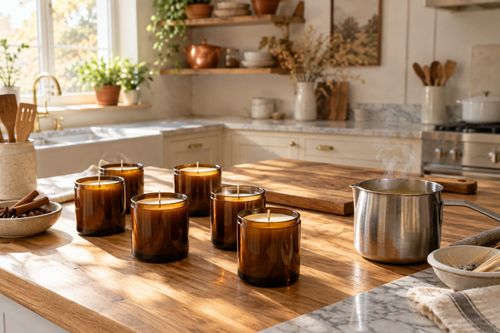
Aromatic Ambiance: Create Handcrafted Spring Scented Candles
Fill your home with fresh, seasonal fragrances in beautiful custom containers
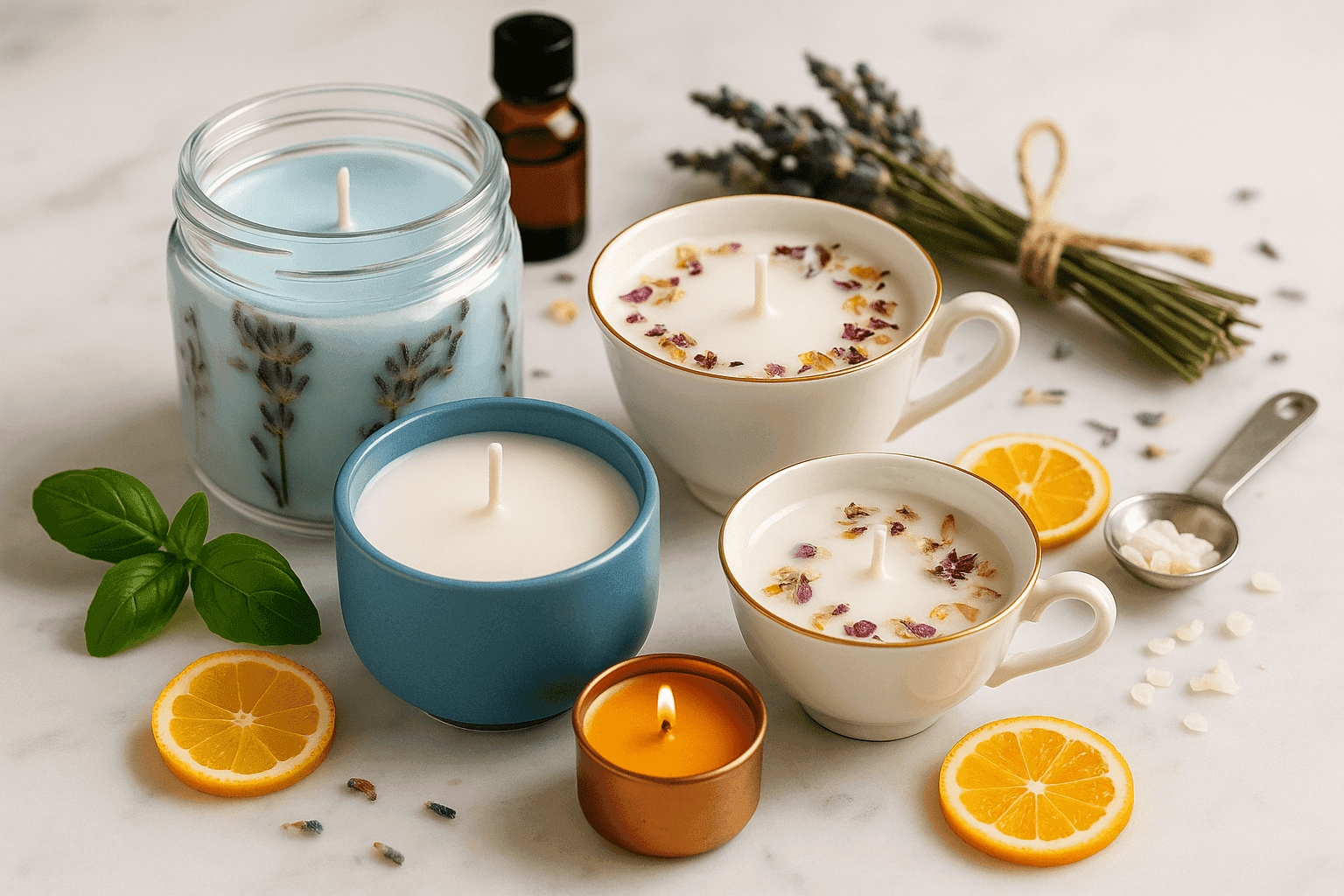
Handcrafted candles infused with springtime scents bring the essence of the season into your home while adding a warm, inviting glow. Making your own candles allows you to customize fragrances, colors, and containers to perfectly complement your decor. Unlike mass-produced options, DIY candles can be made with natural ingredients, personalized touches, and unique vessels that reflect your style. This satisfying craft produces beautiful results that make thoughtful gifts or special additions to your own living spaces.
What You'll Need
| Basic Candle Making Supplies: |
| • Candle wax (soy, beeswax, or paraffin) |
| • Wicks with metal sustainers (appropriate size for your containers) |
| • Fragrance oils or essential oils |
| • Candle containers (jars, vintage teacups, etc.) |
| • Candle dye blocks or liquid dye (optional) |
| Equipment: |
| • Double boiler or large pot with pouring pitcher |
| • Thermometer (specific for candle making) |
| • Kitchen scale for measuring |
| • Wooden skewers or chopsticks |
| • Heat-resistant gloves |
| • Scissors |
| • Pencil or pen |
| • Newspapers or drop cloth |
| Spring Fragrance Options: |
| • Lavender |
| • Fresh linen |
| • Citrus blends (lemon, orange, grapefruit) |
| • Floral scents (lilac, jasmine, rose) |
| • Herbal fragrances (mint, basil, rosemary) |
| Decorative Elements (Optional): |
| • Dried flower petals |
| • Herbs (lavender buds, rosemary sprigs) |
| • Citrus zest |
| • Decorative labels |
| • Ribbon or twine |
How To Do It
- Prepare your workspace: Cover your work area with newspapers or a drop cloth. Gather all materials and equipment before starting. Work in a well-ventilated area away from flammable items.
- Prepare your containers: Clean and thoroughly dry your chosen containers. For thrifted or vintage vessels, wash with warm soapy water and ensure they're completely dry before use. Check that containers are heat-resistant and don't have cracks.
- Measure your wax: Using your kitchen scale, measure the amount of wax needed. As a rule of thumb, you'll need about twice as much wax by weight as your container can hold in water (e.g., if a jar holds 8 oz of water, use 16 oz of wax flakes).
- Melt the wax: Set up your double boiler by placing a heat-resistant pouring pitcher in a pot of water. Add wax to the pitcher and heat gently until completely melted, stirring occasionally. Use your thermometer to monitor temperature—ideal melting temperatures are:
- Soy wax: 120-140°F (49-60°C)
- Beeswax: 145-175°F (63-79°C)
- Paraffin: 130-160°F (54-71°C)
- Add color (optional): Once wax is fully melted, add small amounts of candle dye and stir until completely incorporated. For spring colors, consider soft pastels like pale blue, lavender, mint green, or gentle yellow. Add dye gradually until desired shade is achieved.
- Cool slightly and add fragrance: Remove from heat and allow wax to cool to the manufacturer's recommended temperature for adding fragrance (typically around 120-140°F or 49-60°C). Add fragrance oil or essential oils according to manufacturer's recommendations (usually 1 oz per pound of wax) and stir gently for 1-2 minutes to fully incorporate.
- Prepare wicks: While wax cools slightly, attach wick sustainers to the bottom of your wicks if not pre-attached. Place a small amount of hot glue or wick sticker on the bottom of the sustainer and press firmly to the center bottom of your container. Hold for a few seconds until secure.
- Add decorative elements (optional): For container sides, add dried flowers, herbs, or citrus zest now by gently pressing them against the interior walls of your container with a wooden skewer.
- Pour the wax: Carefully pour wax into your prepared containers, leaving about ½ inch of space at the top. Pour slowly to avoid air bubbles and to prevent disturbing any decorative elements on container sides.
- Center and secure wicks: Place a wooden skewer or pencil across the top of each container and wrap the excess wick around it to keep the wick centered while the wax solidifies. For multiple wicks in larger containers, maintain even spacing.
- Allow to cool and cure: Let candles cool completely at room temperature for at least 24 hours. Avoid moving them during this time to prevent sinkholes or uneven surfaces.
- Trim wicks and finish: Once fully hardened, trim wicks to ¼ inch above the wax surface. Add decorative labels, ribbon, or twine for a finished look. For best scent development, allow candles to cure for an additional 3-7 days before burning.
- Proper burning instructions: When first burning your candle, allow the wax pool to reach the edges of the container (usually 3-4 hours) to prevent tunneling. Never leave burning candles unattended.
For professional-looking candles that double as decor, focus on creating a coordinated collection using complementary vessels rather than identical containers. Try grouping vintage teacups in similar color families, clear glass containers in varying heights, or ceramic vessels with coordinating patterns. For a sophisticated layered scent experience, consider creating a "fragrance story" with related but distinct candles that can be burned individually or together—perhaps a citrus collection with separate candles featuring lemon, orange, and grapefruit, or a spring garden set with lavender, rose, and fresh herb candles. For gift-giving, package sets of three mini candles with a beautiful matchbox and care instructions. Remember that the container will remain visible throughout the candle's life, so choose vessels that will enhance your decor even when the candle isn't burning.