Bloom & Dine: Handcrafted Floral Table Runners That Elevate Every Meal
Create personalized fabric statements that transform everyday dining into special occasions
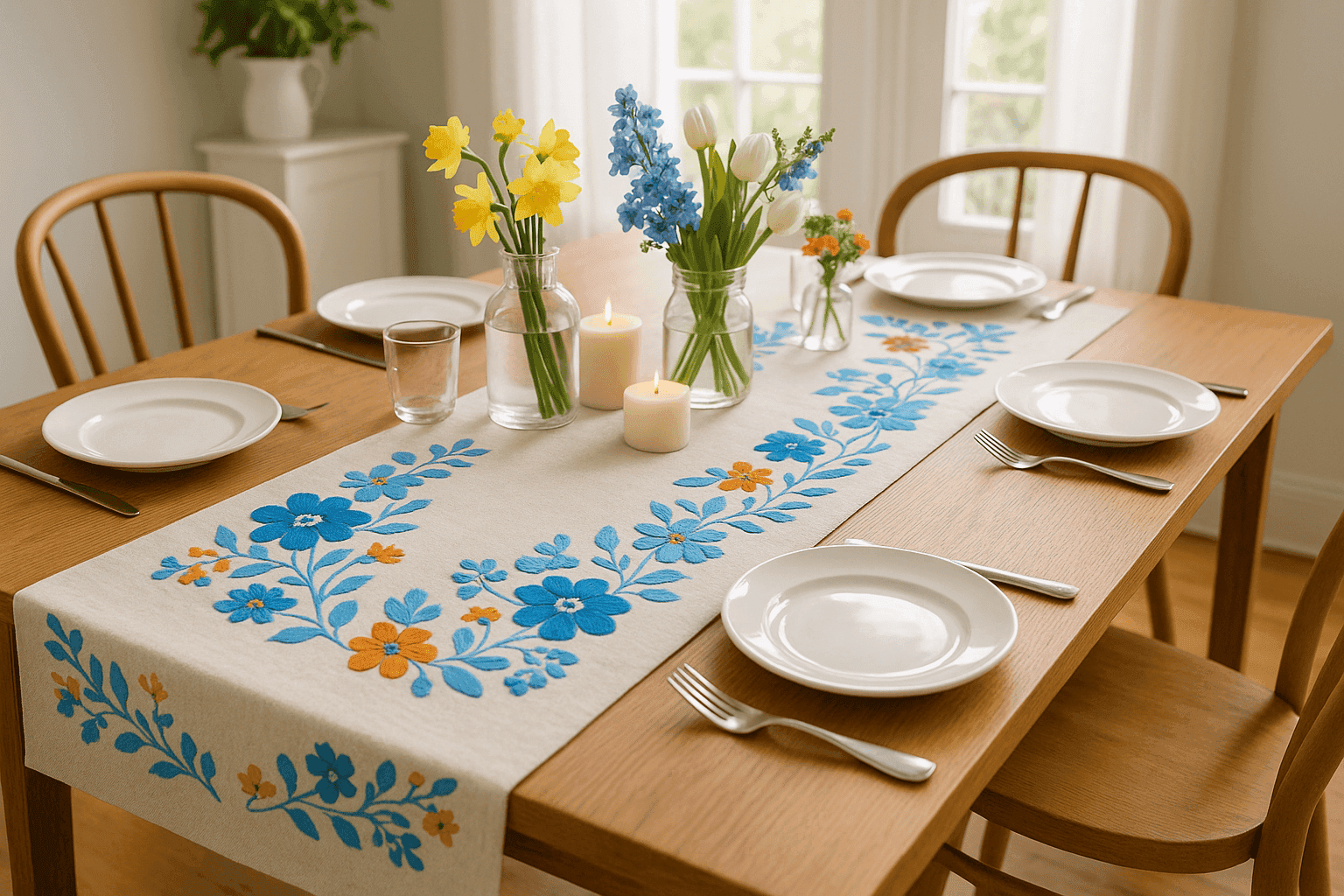
A handcrafted floral table runner instantly transforms your dining experience, serving as both a practical table protection and an artistic statement that celebrates spring's return. Unlike store-bought versions, DIY runners reflect your personal aesthetic through custom fabric choices, thoughtfully selected patterns, and details that complement your existing decor. Whether created through straightforward sewing, simple stenciling, or no-sew techniques, these bespoke textiles establish a foundation for beautiful tablescapes that elevate everyday meals and special gatherings alike. The textural addition of a runner also creates a layered dimension that makes even the simplest table setting feel more considered and complete—an accessible way to refresh your dining area without replacing furniture or dishware.
What You'll Need
| Basic Materials: |
| • 1-2 yards of base fabric (linen, cotton, or canvas) |
| • Coordinating thread |
| • Fabric scissors |
| • Measuring tape or ruler |
| • Iron and ironing board |
| For Sewn Runners: |
| • Sewing machine (or needle for hand-sewing) |
| • Straight pins |
| • Contrasting fabric for appliqués or borders |
| • Fabric marking pen or chalk |
| • Optional: decorative trim, rickrack, or fringe |
| For Stenciled Runners: |
| • Floral stencils (purchased or homemade) |
| • Fabric paint in spring colors |
| • Stencil brushes or sponges |
| • Painter's tape |
| • Cardboard to place under fabric |
| For Embroidered Runners: |
| • Embroidery hoop |
| • Embroidery floss in spring colors |
| • Embroidery needles |
| • Transfer paper or water-soluble pen |
| • Floral design templates |
| For No-Sew Options: |
| • Fusible hemming tape |
| • Fabric glue |
| • Iron-on floral appliqués |
| • Pinking shears for decorative edges |
| • Fabric markers or stamps |
| Embellishments: |
| • Decorative buttons or beads |
| • Fabric flowers |
| • Ribbon or lace trim |
| • Tassels for corners |
| • Sequins or rhinestones |
How To Do It
- Determine size and plan your design:
- Measure your table length and add 12-18 inches for overhang
- Standard width is 12-16 inches for dining tables
- Sketch your design idea before starting
- Choose a design approach: sewn fabric appliqué, stenciling, or embroidery
- Select a spring-inspired color palette (3-4 colors maximum)
- Prepare your base fabric:
- Pre-wash and iron fabric to prevent future shrinkage
- Cut base fabric to desired dimensions plus 1 inch on all sides for hemming
- Mark center and edges lightly with chalk or water-soluble pen
- For no-sew option, apply fusible hemming tape along all edges
- Consider backing with lightweight interfacing for structure
- For sewn appliqué method:
- Cut floral shapes from contrasting fabrics
- Apply lightweight fusible web to back of floral fabrics before cutting
- Arrange flower shapes on base fabric and pin or temporarily adhere
- Stitch around edges of appliqués with straight, zigzag, or blanket stitch
- Add fabric leaves, stems, or other details
- For stenciled method:
- Place cardboard beneath fabric to prevent bleed-through
- Secure stencil with painter's tape
- Apply fabric paint with dabbing motion using nearly dry brush
- Start with lighter colors and progress to darker shades
- Allow each color to dry before applying adjacent colors
- For embroidered method:
- Transfer floral design pattern onto fabric
- Place fabric in embroidery hoop, starting with center motifs
- Use basic embroidery stitches: French knots for flower centers, satin stitch for petals
- Create texture by varying stitch styles and thread thicknesses
- Work in small sections, moving hoop as needed
- For no-sew option:
- Fold edges over hemming tape and press with iron to secure
- Apply pre-made iron-on floral appliqués according to package directions
- Use fabric glue for additional embellishments
- Create decorative edges with pinking shears
- Allow all adhesives to dry completely before handling
- Finish the edges:
- For sewn version, fold edges under 1/4 inch, then another 1/4 inch
- Press folds with iron to create crisp edges
- Sew hems with straight stitch or decorative stitch
- Optional: Add decorative trim, tassels, or fringe to short ends
- For rounded corners, use a plate as a template and trim before hemming
- Add special details:
- Embellish with buttons, beads, or sequins for sparkle
- Add ribbon accents or decorative stitching
- Consider monogramming for a personalized touch
- Create layered effects with different materials
- Add dimensional elements like fabric flowers or tassels
- Protect your table runner:
- Apply fabric protector spray for stain resistance (test on scrap first)
- Press completed runner with medium heat iron
- Store rolled rather than folded to prevent creases
- For reversible options, finish both sides equally
- Consider making coordinating napkins for a complete set
- Style your table with the finished runner:
- Center on table with equal overhang on each end
- Layer with coordinating placemats for additional texture
- Add fresh flowers in colors that complement your design
- Arrange candles or other table décor to highlight floral elements
- Consider seasonal variations for year-round use
Professional textile designers use a technique called "negative space activation" when creating sophisticated floral runners. Instead of distributing patterns evenly across the entire surface, they concentrate floral elements strategically—typically along the edges or in clustered groupings—leaving intentional areas of the base fabric visible. This approach creates visual rhythm and prevents the design from feeling overwhelming or busy. Another designer secret is "scale variation," where they combine flowers of dramatically different sizes within the same pattern (some blooms might be 4-5 inches across while others are less than an inch). This mimics how flowers appear in nature and creates dynamic visual interest. For the most elevated look, top designers recommend limiting your color palette to three main hues plus a neutral base, and applying the 60-30-10 rule: 60% of your dominant color (often your base fabric), 30% of your secondary color, and 10% of your accent color. This restrained approach ensures your handcrafted runner looks sophisticated rather than craft-project obvious.