Blooming Beauty: DIY Floral Chandelier for Spring Celebrations
Create a stunning suspended arrangement that transforms your space with ethereal garden charm
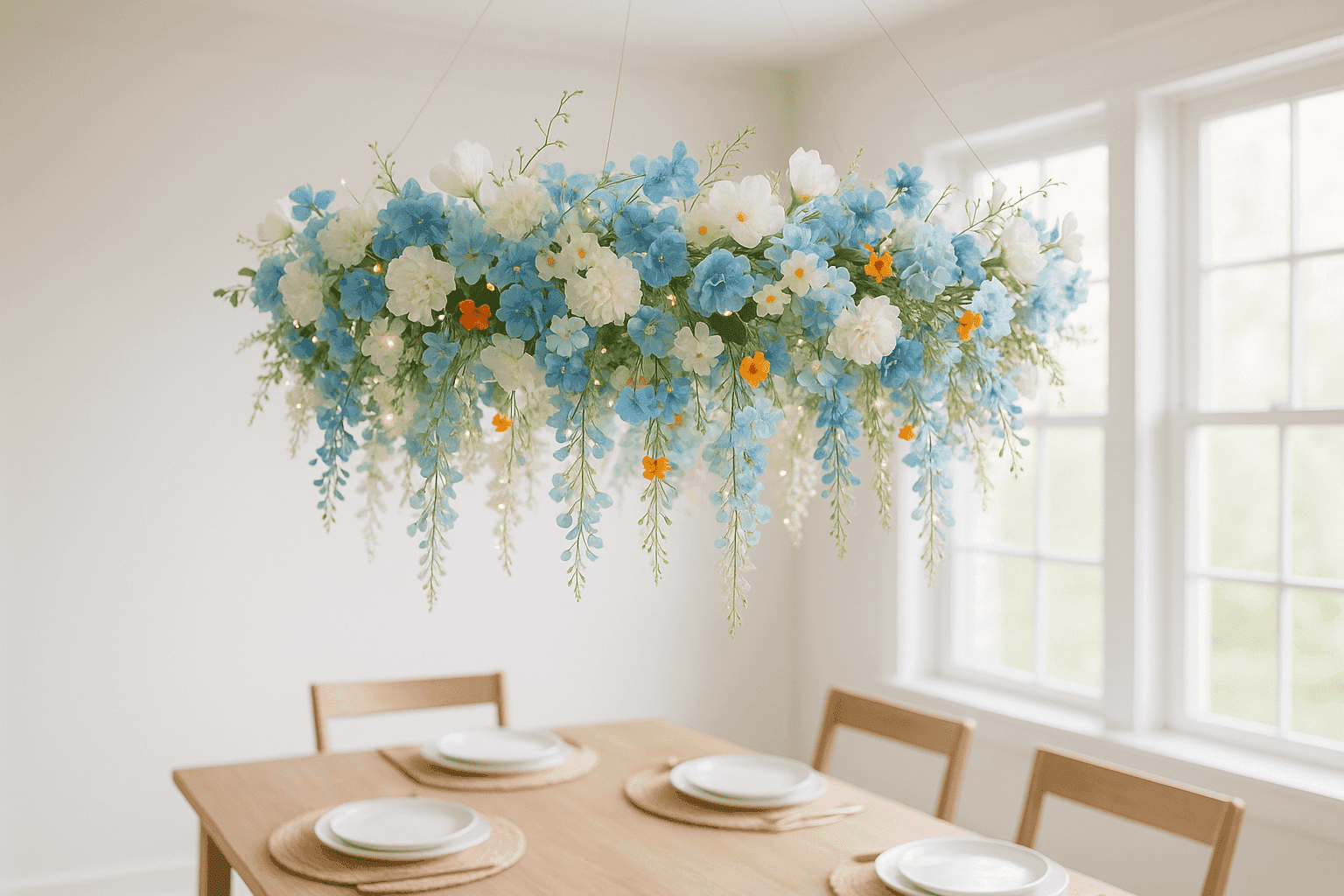
A floral chandelier creates an unforgettable focal point that seems to float magically overhead, bringing the garden inside in the most dramatic way possible. Perfect for spring gatherings, brunches, or simply elevating your everyday spaces, this suspended arrangement transforms an ordinary ceiling into a canopy of blooms. While it looks like a professional installation, this DIY project is surprisingly achievable with the right materials and techniques.
What You'll Need
| Base Structure (choose one): |
| • Embroidery hoop (10-24" diameter) |
| • Wire wreath frame |
| • Grapevine wreath |
| • Metal hanging planter basket |
| Floral Materials: |
| • Faux flowers with long stems (30-50 stems) |
| • Faux greenery and foliage |
| • Fresh flowers (optional, for special events) |
| • Dried flowers and grasses |
| Construction Materials: |
| • Floral wire (22 or 24 gauge) |
| • Fishing line or clear nylon thread |
| • Floral tape in green |
| • Wire cutters |
| • Scissors |
| Hanging Materials: |
| • Strong monofilament line or thin wire rope |
| • Ceiling hook or plant hanger hook |
| • Command hooks (for temporary installations) |
| Optional Enhancements: |
| • Fairy lights (battery operated) |
| • Ribbon in coordinating colors |
| • Small glass vials for fresh flowers |
| • Floral foam (if using fresh flowers) |
How To Do It
- Plan your design: Decide on a color scheme and flower types that complement your space. For spring, consider soft pastels, whites with greenery, or bright garden hues. Sketch a rough design, noting where different flowers and foliage will be placed.
- Prepare your base: If using an embroidery hoop, separate the inner and outer rings—you'll only need one. For added stability, wrap the hoop with floral tape or a layer of green moss secured with floral wire.
- Create hanging attachments: Determine how you'll hang your chandelier. For most bases, attach 3-4 equal lengths of fishing line or thin wire to evenly spaced points around your frame. Join these lines at the top to create a secure hanging point.
- Build your base layer: Starting with greenery, attach stems to your base using floral wire. Create a full, evenly distributed layer that extends both around and below the frame. For a traditional chandelier shape, focus more foliage toward the bottom, tapering as it goes down.
- Add primary flowers: Once your greenery foundation is secure, begin adding larger focal flowers. Attach securely with floral wire, positioning them at various depths and angles for a natural, garden-inspired look. Work your way around the frame to ensure balanced coverage.
- Fill in with secondary blooms: Add smaller flowers and filler elements between your focal flowers. These create depth and fullness. Consider using flowers with varying heights, textures, and shapes for visual interest.
- Create cascading elements: For a dramatic effect, attach longer stems or trailing elements that hang below the main structure. Vines, delicate flowers on long stems, or ribbons create beautiful movement.
- Add lighting (optional): If incorporating fairy lights, gently weave them through your arrangement, hiding the battery pack within the foliage. Ensure they're evenly distributed for a magical glow.
- For fresh flowers (optional): If incorporating fresh blooms for a special event, add them last using water tubes or small vials hidden within the arrangement. Alternatively, soak small pieces of floral foam in water and secure them to the frame, then insert fresh stems.
- Make final adjustments: View your chandelier from all angles, filling any sparse areas and trimming any overly dominant elements. Ensure the arrangement looks balanced from below—the perspective from which it will most often be viewed.
- Hang securely: Install a ceiling hook rated for the weight of your chandelier. If using Command hooks for temporary installation, ensure they can support the weight. Hang your chandelier at desired height, making sure all attachment points are secure.
- Maintenance: For faux and dried arrangements, dust occasionally with a hair dryer on cool setting. For fresh elements, mist lightly or replace as needed. If not in use, store covered in a dry location.
For a professional-looking floral chandelier, focus on creating asymmetrical balance rather than perfect symmetry. Allow some elements to extend further in certain areas while maintaining overall equilibrium—this creates a more natural, organic feel that mimics how flowers grow in nature. Consider the viewing height when designing; elements that will hang at eye level should be particularly beautiful focal points. For special occasions like spring brunches or garden parties, incorporate subtle seasonal elements—cherry blossoms or forsythia for early spring, peonies or ranunculus for late spring. If your chandelier will be a semi-permanent installation, invest in high-quality faux flowers that look realistic even upon close inspection, focusing on natural-looking stems and petal textures. Finally, consider how lighting will interact with your creation—hanging your chandelier where natural light can filter through it creates a magical, dappled effect that brings the arrangement to life.