Citrus Power: Transform Peels Into All-Purpose Cleaning Spray
Create effective natural cleaners from kitchen scraps by infusing vinegar with citrus oils
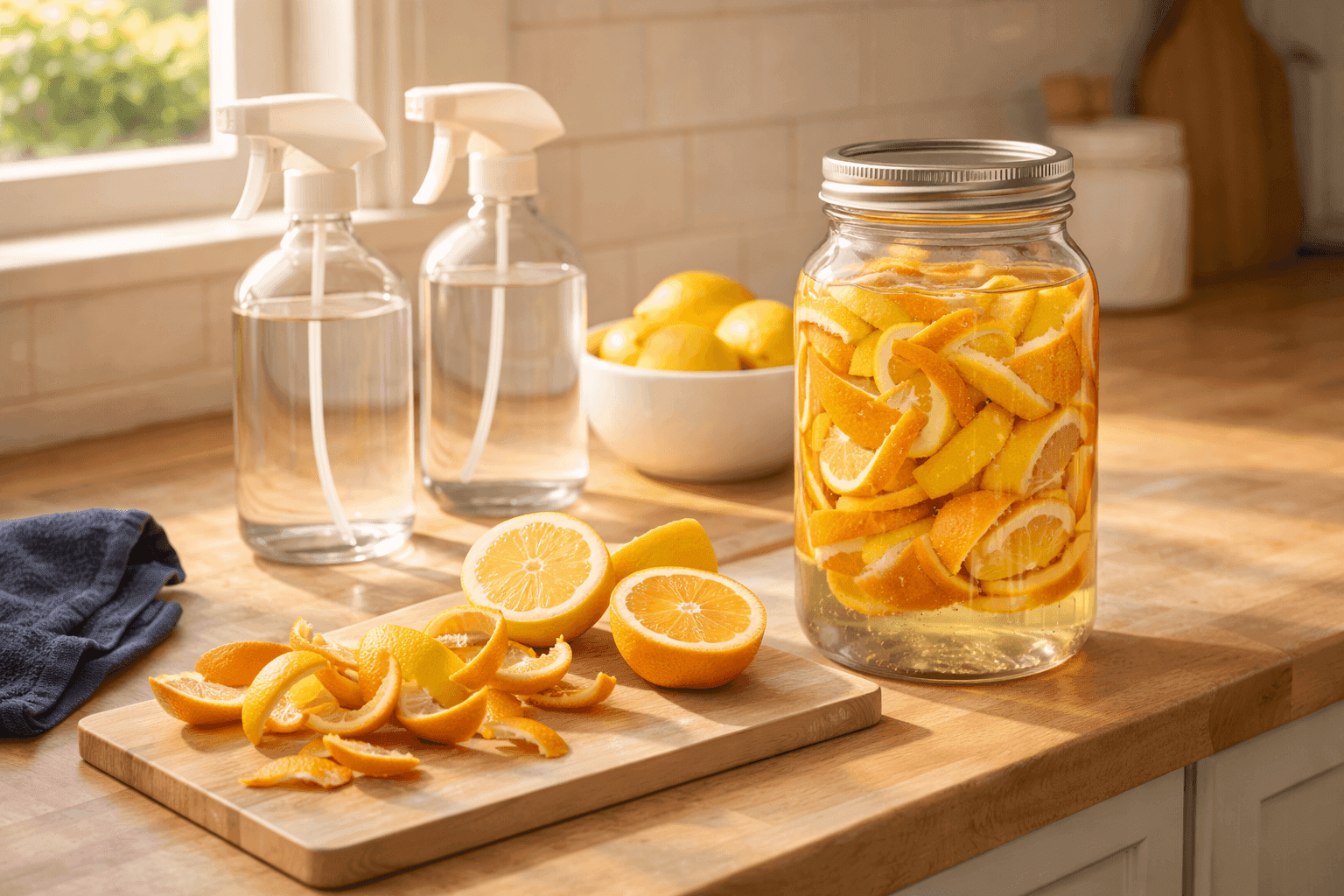
You throw away orange and lemon peels after juicing or cooking, not realizing those rinds contain powerful natural oils that could replace the $4-6 bottles of all-purpose cleaner you keep buying repeatedly. Commercial cleaners work fine but they cost money and contain chemicals you can't pronounce, while citrus-infused vinegar cleaner costs practically nothing since you're using kitchen scraps you'd otherwise trash. Making natural all-purpose cleaner takes about five minutes of active work plus two weeks of passive infusion time, creating effective cleaning spray that cuts grease, removes soap scum, and leaves surfaces streak-free with a fresh citrus scent instead of harsh chemical smell. This project combines zero-waste sustainability with genuine household utility, proving that effective cleaning doesn't require purchasing expensive products when you can create powerful solutions from materials you already have that would otherwise become garbage.
What You'll Need
- Citrus Peels: Orange, lemon, lime, or grapefruit peels from fruit you're already using
- White Vinegar: Distilled white vinegar for infusion base (gallon for $3-4)
- Glass Jar: Large mason jar or glass container with lid for infusing
- Spray Bottles: Clean spray bottles for finished cleaner ($2-3 each)
- Strainer: Fine mesh strainer or cheesecloth for filtering peels out
- Optional Additions: Essential oils for extra scent, though infused peels provide plenty
- Time Investment: 5 minutes active prep, 2 weeks passive infusion time
Step-by-Step Method
- Save citrus peels as you use fruit throughout the week, storing them in a container in the refrigerator until you have enough to fill a jar
- Fill a glass jar with saved citrus peels, packing them loosely rather than cramming—you want good surface area contact with vinegar
- Cover peels completely with white vinegar, ensuring all pieces are submerged to prevent mold growth on exposed portions
- Seal jar tightly and place in a cool, dark location like a pantry or under the sink away from direct sunlight
- Wait two weeks while citrus oils infuse into the vinegar, shaking the jar occasionally when you remember to distribute oils evenly
- Strain out peels after infusion period using fine mesh strainer or cheesecloth, discarding spent peels that have given up their oils
- Dilute infused vinegar with equal parts water in spray bottles for general cleaning, or use full strength for tough jobs like soap scum
- Label bottles clearly with contents and date made, storing finished cleaner under sinks or in cleaning caddies for easy access
Green cleaning experts recommend starting a continuous infusion jar where you add fresh peels and top off with vinegar as you use cleaner, creating an ongoing supply rather than batch production. Also, avoid using citrus cleaner on natural stone countertops like granite or marble because vinegar's acidity can etch the surface over time—save it for glass, tile, stainless steel, and sealed surfaces where it excels. The infusion time is flexible; two weeks produces good results but longer infusion up to four weeks creates even more concentrated cleaner with stronger citrus oils. Mix different citrus types in one jar for complex scent, or keep separate jars of lemon, orange, and grapefruit for variety in your cleaning arsenal. For extra cleaning power on particularly grimy surfaces, add a few drops of dish soap directly to your spray bottle—this creates a degreasing boost that tackles kitchen messes vinegar alone might struggle with. The beauty of this cleaner is it costs pennies per bottle versus $4-6 for commercial versions, and you're diverting kitchen waste from landfills while creating genuinely effective cleaning solutions that smell fresh instead of chemical-harsh.