Custom Drawer Dividers for $4: Dollar Store Foam Board Magic
Create perfectly fitted organizer inserts for any drawer using foam board and duct tape instead of expensive pre-made systems
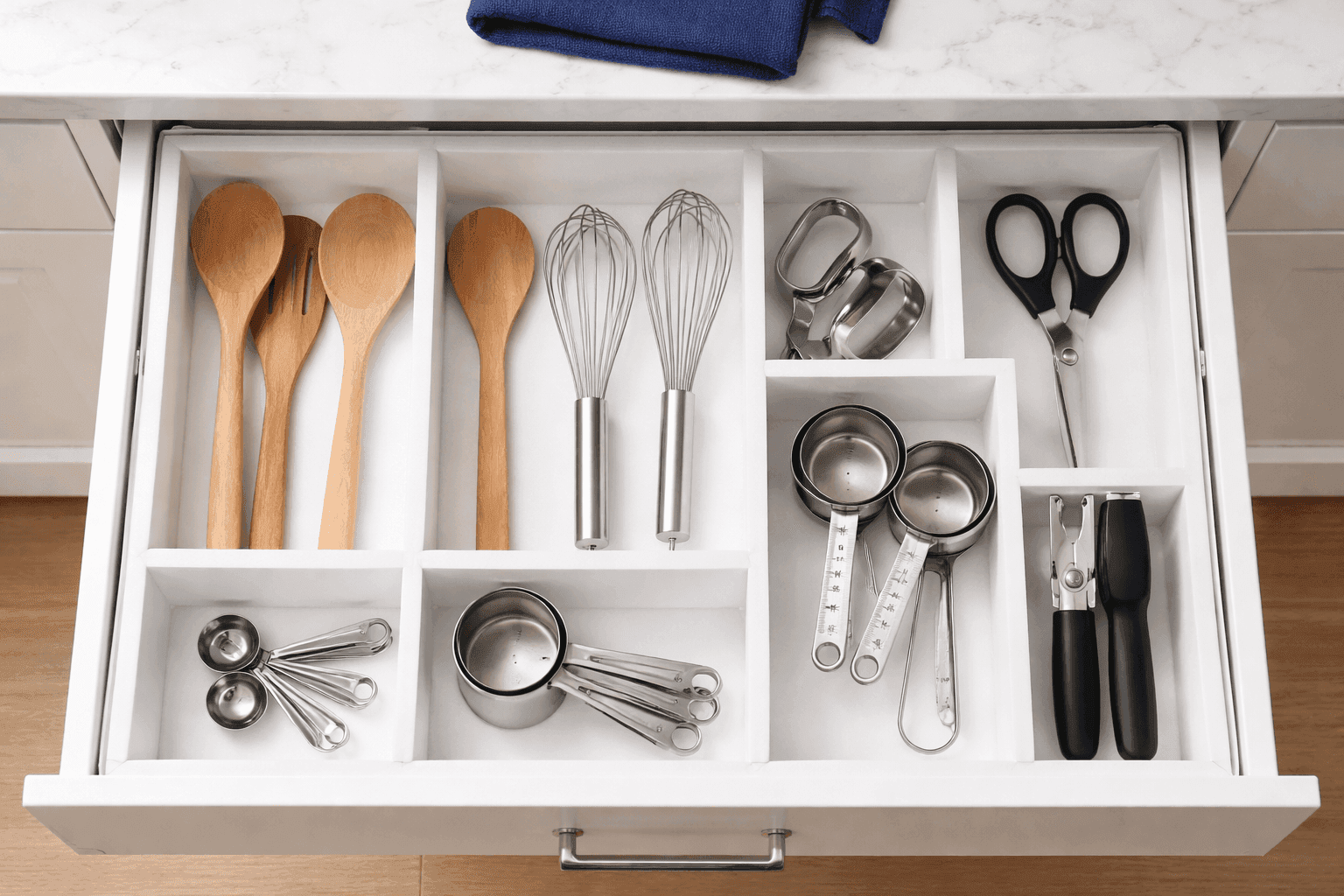
If you've ever priced custom drawer organizers, you know that tidy drawers can cost a shocking amount of money—$20, $30, even $50 for a single drawer insert that might not even fit your specific dimensions perfectly. Meanwhile, dollar store foam board and duct tape can create custom-fitted dividers for $3-5 per drawer that work exactly the way you need them to. I discovered this hack after buying yet another "universal" organizer that didn't actually fit my kitchen drawers, and I've since organized everything from utensil drawers to bathroom vanities to craft supply storage using this simple method. The beauty is in the customization—you decide exactly where divisions go based on what you're actually storing, creating small squares for jewelry, long rectangles for cooking utensils, or varied compartment sizes for office supplies. The foam board is surprisingly sturdy once you create the grid structure with duct tape reinforcing the joints, but it's light enough to lift out when you need to clean the drawer. This is one of those solutions that feels almost too simple to work as well as it does, but once you make your first organizer and drop it into place, you'll be planning which drawer to tackle next.
What You'll Need ($3-5 Per Drawer)
- Main Materials:
- White foam board from dollar store ($1-2 per sheet)
- Strong duct tape ($1-2)
- Decorative washi tape for visible edges (optional, $1)
- Tools:
- Measuring tape or ruler
- Craft knife or box cutter with sharp blade
- Metal ruler or straight edge for cutting guide
- Cutting mat or cardboard to protect work surface
- Pencil for marking measurements
- Grid Planning Examples:
- Small equal squares for jewelry or office supplies
- Long rectangles for kitchen utensils or tools
- Varied sizes for mixed bathroom items
- Large sections with smaller subdivisions for craft supplies
Construction Steps
- Measure your drawer's interior dimensions carefully—length, width, and height—since custom fit is what makes this system work better than store-bought organizers.
- Plan your grid pattern by sketching it on paper first, considering what you'll store in each section and how many divisions you need front-to-back versus side-to-side.
- Cut foam board strips to match your drawer's interior height using a craft knife and metal ruler, making multiple passes rather than trying to cut through in one stroke for cleaner edges.
- Mark where perpendicular pieces will intersect by laying out your grid pattern outside the drawer first, ensuring measurements account for foam board thickness at joints.
- Create notches where pieces will cross by cutting halfway through the height of each strip at marked intersection points—this allows pieces to slot together for extra stability.
- Connect all perpendicular pieces at joints using strong duct tape on both sides, wrapping tape around edges to create reinforced connections that won't pull apart with use.
- Cover visible duct tape edges with decorative washi tape if the organizer will be seen when the drawer is open, transforming functional into attractive with minimal extra effort.
- Insert your completed grid into the drawer where it should fit snugly enough to stay in place but remain removable for periodic drawer cleaning.
Before cutting any foam board, lay out the actual items you'll be storing and measure them to inform your compartment sizes—nothing's more frustrating than finishing a custom organizer only to discover your largest spatula doesn't fit. For drawers that will be frequently opened and seen, take the extra step to cover the foam board with contact paper or fabric before assembly, creating a completely custom look that rivals expensive professional organizers. If you have deep drawers, consider creating a two-tier system by making one organizer that sits on the drawer bottom and another that rests on small foam board risers above it, doubling your organized storage capacity. The notching technique where strips slot together creates surprising structural integrity—don't skip this step even though it adds a few minutes to construction. For kitchen junk drawers where you need many varied compartment sizes, start with larger divisions first, then add smaller subdivisions within those sections rather than trying to create one complex grid all at once.