
Desktop Essential: Build a Custom Phone Stand in 45 Minutes
Transform a simple wood block into an elegant desktop essential with basic tools
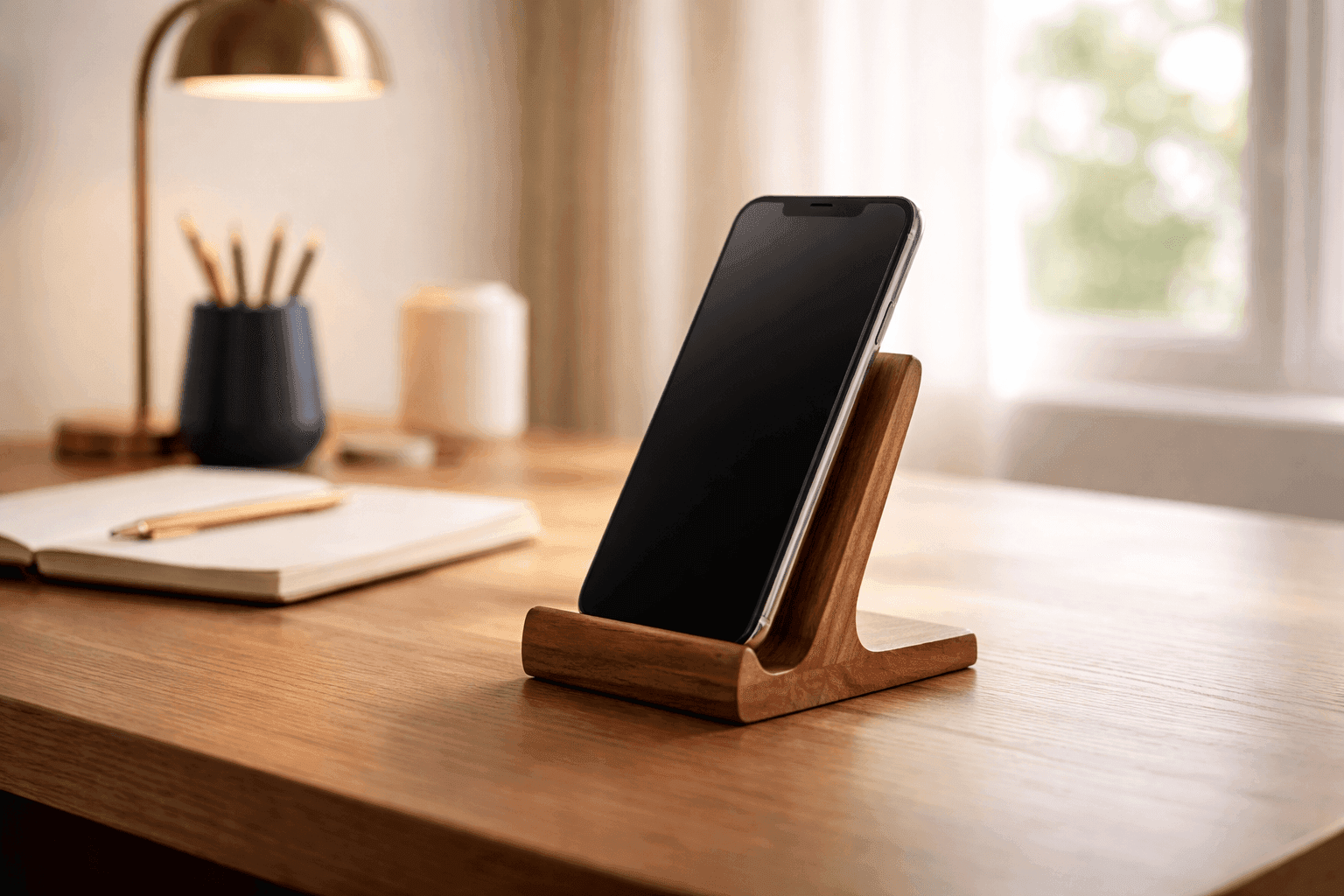
There's something incredibly satisfying about building functional everyday items with your own hands, especially when they solve real problems in your workspace. This wooden phone stand project is perfect for beginners looking to create something genuinely useful while practicing fundamental woodworking techniques like measuring, sawing, and finishing. For less than $5 in materials and about 45 minutes of your time, you'll have a beautiful desktop accessory that holds your phone at the perfect angle for video calls, following recipes, or just keeping notifications visible while you work. The best part? Each stand you make develops its own character based on the wood grain you choose, making every piece truly one-of-a-kind. Plus, these make fantastic gifts that people actually use daily, which means your handiwork gets appreciated every single day.
What You'll Need
- Wood Block: One piece of quality hardwood (walnut, oak, maple, or cherry) measuring approximately 3" x 4" x 1" thick (under $5 at hardwood specialty stores or use scrap)
- Cutting Tools: Miter saw, hand saw, or Japanese pull saw for making precise angled cuts
- Chiseling Tools: 1/2" or 3/4" wood chisel for removing waste material from the phone slot
- Measuring & Marking: Pencil, ruler or combination square, protractor or angle finder for 60-70 degree marking
- Sanding Supplies: 120-grit, 220-grit, and 320-grit sandpaper for progressive smoothing
- Finishing Options: Food-safe mineral oil, beeswax furniture polish, or water-based polyurethane
- Optional: Drill with 1/4" bit for charging cable pass-through hole
Step-by-Step Instructions
- Measure and mark your wood block to ensure it's at least 3" wide and 4" tall, then measure your phone's thickness and add 1/16" to determine your slot width (typically 1/2" works for most phones with cases).
- Mark the slot angle at 60-70 degrees from the base using a protractor—this angle keeps your phone visible without tipping backward, and lets you easily insert and remove it with one hand.
- Make two parallel cuts along your marked lines using a miter saw or hand saw, cutting about 2-3" deep into the block to create the boundaries of your phone slot.
- Chisel out the waste between your two cuts by working from both sides toward the middle, taking light passes to avoid splitting the wood and keeping your chisel sharp for clean results.
- Test fit your phone frequently as you work, ensuring the slot is wide enough for easy insertion but snug enough to hold the phone securely without wobbling.
- Sand everything smooth starting with 120-grit to remove tool marks, progressing to 220-grit for smoothness, and finishing with 320-grit for that silky-smooth feel that won't scratch your phone.
- Round over all edges with sandpaper to create soft, comfortable corners that look professionally finished and won't catch on anything on your desk.
- Apply your chosen finish in thin coats—mineral oil for a natural matte look, wax for soft sheen protection, or polyurethane for maximum durability if the stand will see heavy daily use.
Here's a pro technique that elevates this project from good to exceptional: before you make your slot cuts, drill a 1/4" hole at an angle through the back of where your slot will be, angling it to exit near the base. This creates a hidden channel for your charging cable to pass through, so your phone can charge while displayed without messy cables cluttering your desk. Mark this hole placement carefully by laying your phone on the block at the desired angle and noting where the charging port sits. This single upgrade transforms a simple stand into a true charging station that looks intentional and thoughtfully designed rather than like an afterthought. Professional furniture makers call these "cable management solutions," and they're what separate amateur projects from pieces that look store-bought.