Dream It, See It, Build It: Craft Your 2026 Vision Board
Map your aspirations into a powerful visual reminder that keeps your biggest goals front and center all year
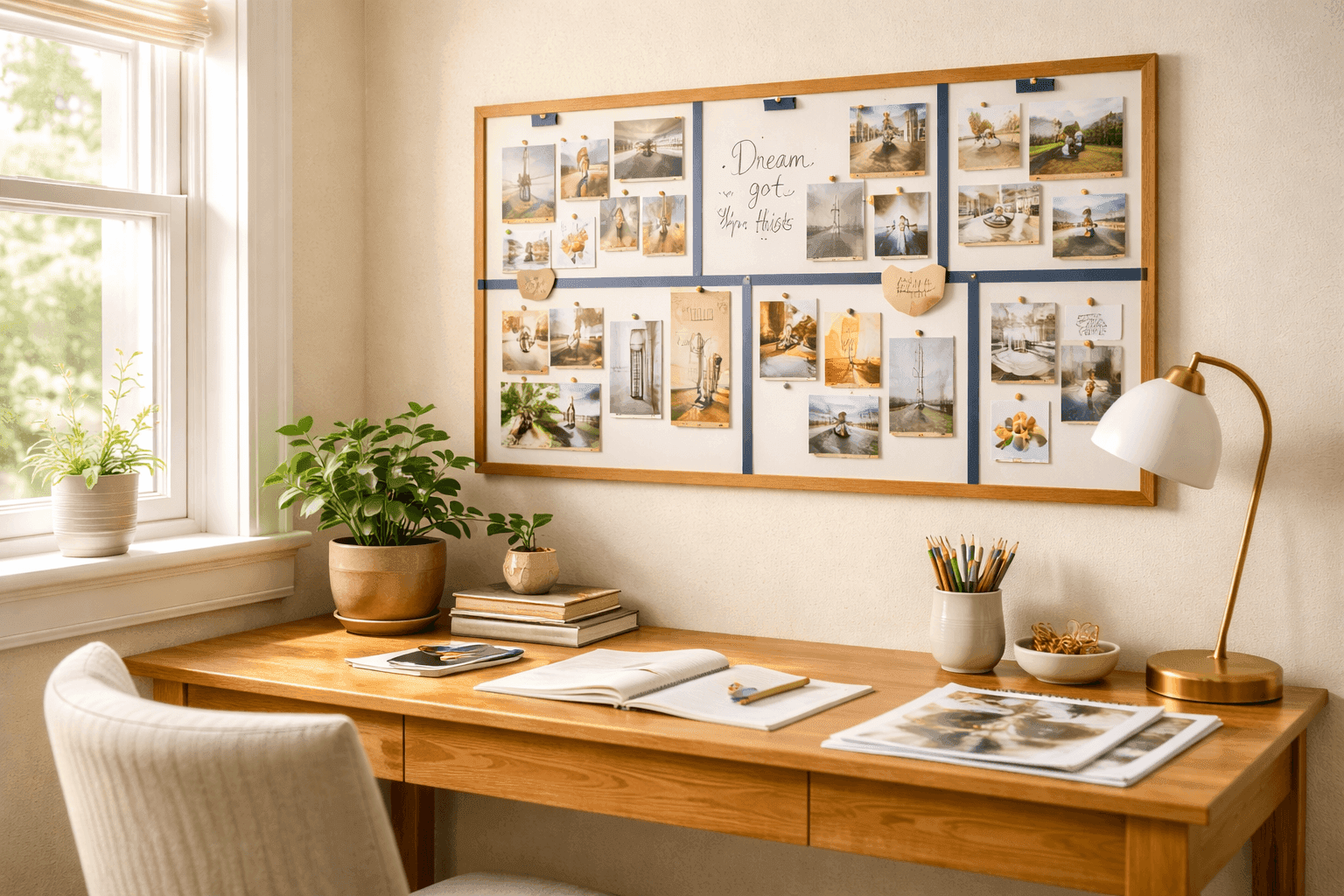
New Year's resolutions scribbled in a notebook have a way of disappearing into drawers by February, forgotten until next December when you find them and realize you accomplished exactly none of what you intended. A vision board transforms abstract goals into a tangible, visual representation that you see every single day, which keeps your aspirations present in your mind rather than buried in forgotten lists. This creative project costs under $30 and takes about two hours, but it creates something far more valuable than craft supplies arranged on poster board—it builds a constant visual reminder of where you're headed and why it matters. Creating a vision board isn't just arts and crafts therapy; it's strategic goal-setting that engages your creative brain while keeping your biggest dreams literally in front of your face where they can actually influence your daily decisions.
What You'll Need
- Base Surface: Cork board, foam board, or poster board (20x30 inches works well, $8-12)
- Visual Materials: Magazines, printed photos, postcards, fabric scraps, or downloaded images
- Adhesives: Glue stick, double-sided tape, or push pins depending on your base ($3-5)
- Writing Tools: Colored markers, gel pens, or letter stickers for personal messages
- Cutting Tools: Scissors and/or craft knife for precise trimming
- Optional: Decorative elements like washi tape, ribbons, stickers, or metallic markers ($5-10)
- Time Investment: 2-3 hours for thoughtful creation and arrangement
Step-by-Step Method
- Reflect on what you actually want from 2026 before touching any materials—spend 20 minutes writing down specific goals for health, career, relationships, creativity, and personal growth so you're creating with intention
- Gather images, quotes, and words that resonate with your goals, looking for visuals that evoke the feeling you want to experience, not just literal representations of achievements
- Organize your collected materials by theme or life area, which helps you see if you're over-representing one goal while neglecting others that also matter to you
- Arrange elements on your board without gluing anything yet, playing with composition until it feels balanced and your eye naturally flows across the entire surface
- Layer different sizes and textures for visual interest—overlap images, add dimension with foam tape, or create focal points with larger centerpiece elements that represent your biggest priorities
- Include specific details that make goals feel real: actual photos from trips you want to take, numbers representing financial targets, or images that show the lifestyle changes you're working toward
- Secure everything in place once you're satisfied with the arrangement, working from the background forward and pressing firmly to ensure longevity through the entire year
- Display your finished vision board somewhere you'll see it daily—not tucked away in a closet, but in your workspace, bedroom, or wherever you start your mornings
Interior designers who create vision boards for client projects recommend dividing your board into clear quadrants or sections for different life areas rather than creating random collage chaos. Dedicate specific zones to career, health, relationships, and personal growth so you can quickly assess at a glance whether you're making progress across all areas or hyperfocusing on just one aspect of life. Also, leave one small section completely blank labeled "Surprises 2026"—this acknowledges that the best things coming your way might be opportunities you can't even imagine yet, and it prevents your vision board from becoming a rigid checklist that makes you feel like a failure if life takes unexpected turns. The goal is inspiration and direction, not a contract that locks you into plans made before the year even begins.