Eco-Savvy: Turn Old Sweaters Into Reusable Dryer Balls
Transform thrift store wool into laundry helpers that reduce static, speed drying, and skip the chemicals
If you've ever felt guilty about using single-use dryer sheets loaded with synthetic fragrances and chemicals that coat your clothes and vent into your home, wool dryer balls offer a genuinely better alternative that actually works—and making them yourself from thrift store sweaters costs practically nothing while keeping textile waste out of landfills. The science behind wool dryer balls is beautifully simple: as they tumble with your wet laundry, they physically separate clothes to allow better air circulation, which speeds drying time by 25-40% and reduces wrinkles through constant gentle agitation. The wool naturally absorbs moisture and releases it gradually, creating steam that further softens fabrics without any chemical fabric softeners, and the friction reduces static cling through a process that's entirely mechanical rather than chemical. I've been using homemade wool dryer balls for years, and honestly, I'll never go back to dryer sheets—my clothes come out softer, my energy bills are lower from shorter drying cycles, and I love knowing that I'm not coating my family's clothing in synthetic fragrance compounds that irritate sensitive skin. The best part is that each set of dryer balls lasts for 1,000+ loads, meaning this one-afternoon project delivers years of laundry benefits while costing maybe $5-10 in thrift store wool sweaters.
What You'll Need
- 100% Wool Sweaters: Must be actual wool, not acrylic or blends—check thrift stores for $3-5 sweaters (you need about 2-3 sweaters to make 6 dryer balls)
- Sharp Scissors: For cutting sweaters into long strips that you'll wind into balls
- Pantyhose or Tights: Old knee-highs or tights to hold balls during the felting process (cut into individual sections, one per ball)
- Cotton String or Yarn: For tying off pantyhose sections securely during washing
- Washing Machine Access: Hot water cycle for felting the wool balls into solid, cohesive spheres
- Dryer Access: High heat cycle to complete the felting process and set the wool fibers permanently
- Optional Additions: Essential oils (lavender, lemon, eucalyptus) to add natural fragrance—just 2-3 drops per ball before each load
Step-by-Step Instructions
- Verify your wool by checking garment labels for "100% wool" or performing a burn test on a small snip—real wool smells like burning hair and leaves crumbly ash, while synthetics smell like plastic and melt.
- Cut sweaters into strips about 2-3 inches wide, cutting along the natural seams when possible to create long continuous strips that will wind smoothly without bulk.
- Start winding tightly by wrapping a strip around two fingers several times to create a small core, then continue wrapping while rotating the ball to maintain a round shape rather than letting it become oblong.
- Add strips as needed by tucking new strip ends under previous wraps to secure them, continuing until each ball reaches tennis ball size (about 3-4 inches diameter)—this is crucial because they'll shrink during felting.
- Tuck the final end securely under several layers of wound wool using a crochet hook or blunt needle to prevent unraveling before the felting process begins.
- Secure in pantyhose by placing each ball into a separate section of pantyhose leg, tying tightly between balls with cotton string to keep them separated and prevent them from felting together during washing.
- Wash in hot water on the longest, most agitated cycle your machine offers—the combination of hot water, agitation, and friction causes wool fibers to lock together in the felting process that creates solid balls.
- Dry on high heat while still in pantyhose, running through 2-3 complete dryer cycles to fully felt and set the wool—balls should feel firm, dense, and almost rock-hard when fully felted and ready to use.
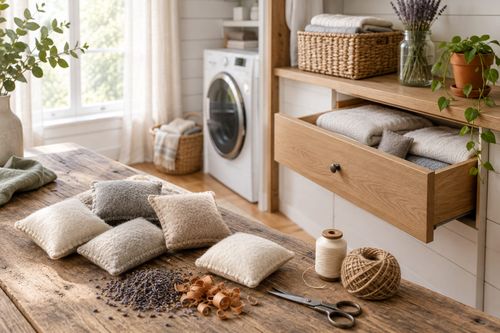
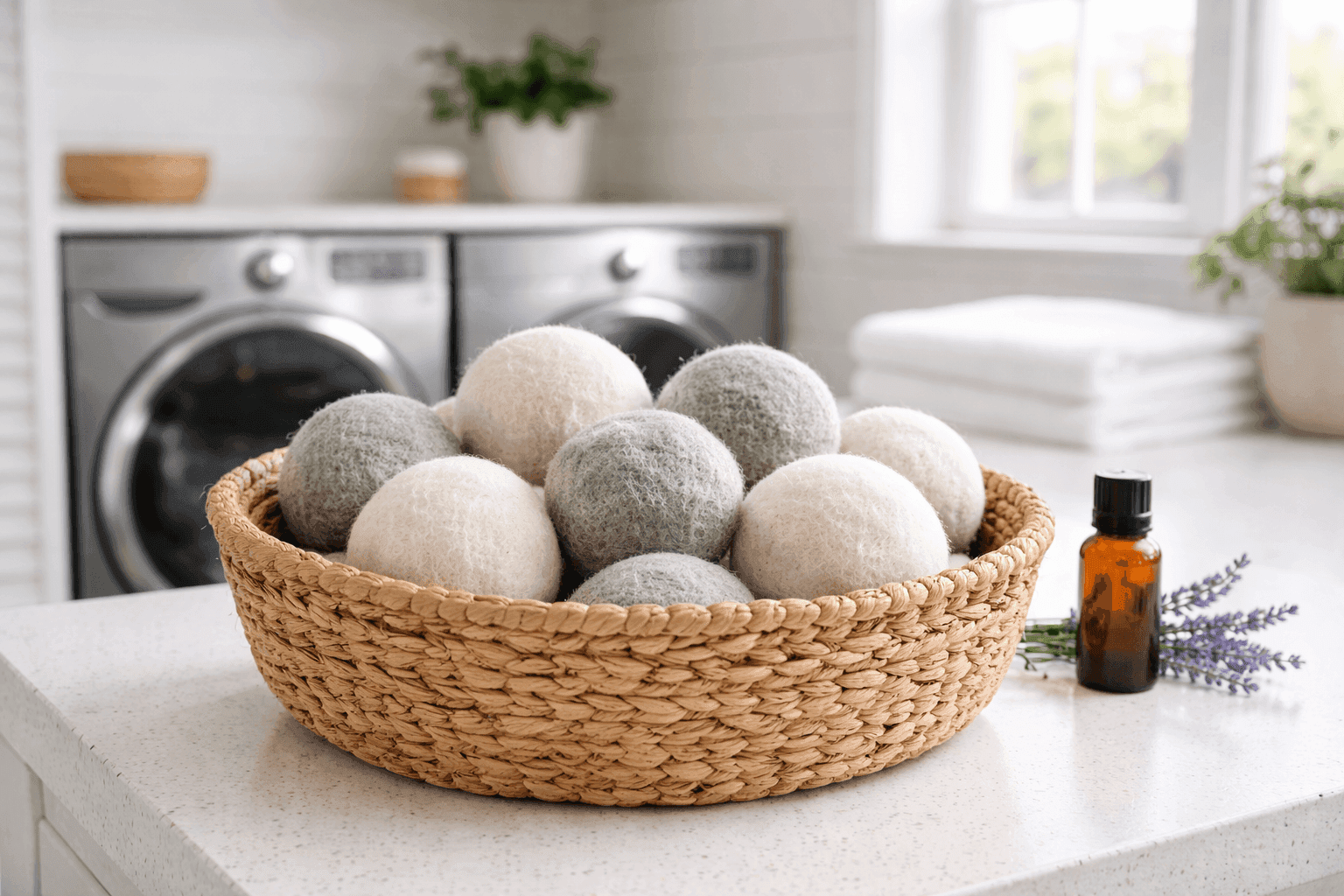
Here's the game-changing strategy that takes homemade dryer balls from functional to truly exceptional: create a set of 6-8 balls in coordinating neutral colors (creams, grays, soft browns from natural wool) and store them in a beautiful woven basket on your laundry room counter instead of hiding them away. This transforms utilitarian laundry supplies into attractive décor that reminds you to actually use them consistently, which is when you'll see real energy savings and fabric benefits. Professional home organizers know that visible, beautiful storage increases usage dramatically compared to items hidden in closets or drawers. Take this concept further by adding 2-3 drops of your favorite essential oil to one or two balls before each load—lavender for bedding, eucalyptus for towels, lemon for kitchen linens—creating custom natural fragrance without any synthetic chemicals. The wool absorbs the oil and releases it gradually during drying, scenting your clothes subtly and naturally. Rotate which balls get the oil each time to prevent buildup, and refresh the scent as desired. This elevates basic dryer balls into a personalized aromatherapy laundry experience that makes doing laundry genuinely more pleasant while delivering all the practical benefits of reduced drying time, softer clothes, and zero chemical residue.