Fall Closet Swap: Why Sweaters Go in Folded, Not Hung
A hanger holds all a garment's weight at two small shoulder points — for a heavy knit, that concentrated weight stretches the fabric permanently over a season, which is why folding isn't just a space-saver, it's what keeps sweaters actually fitting.
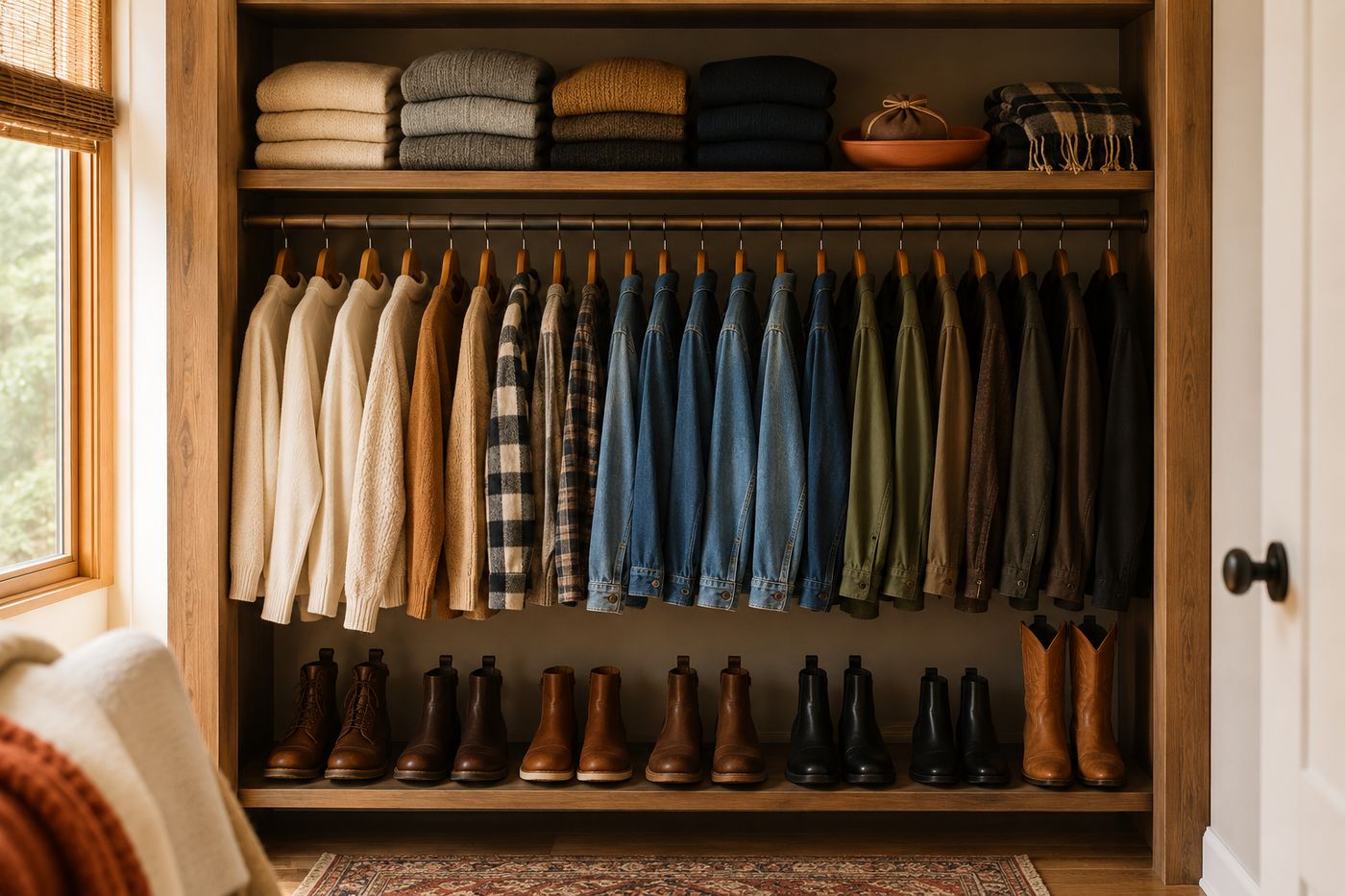
A hanger supports a garment's entire weight from two small points at the shoulders, which works fine for lightweight fabric that doesn't have enough mass to stretch under its own weight — but a heavy knit sweater is dense enough that hanging it for months lets gravity slowly pull the shoulder area out of shape, permanently distorting the fit in a way that never fully recovers even once the sweater is worn again. That's the actual reason folding matters for this specific category of clothing rather than just being a space-saving suggestion: it distributes the sweater's weight evenly across a flat surface instead of concentrating it at two stress points. The rest of the fall swap is really just visibility and access — bringing forward what you'll actually wear and moving out what you won't, so mornings default to grabbing something weather-appropriate rather than digging past summer clothes to find it. Get the folding detail right for knits, and the whole seasonal reset takes about 25 minutes.
What You'll Need
- Under-bed bins or storage boxes, for off-season summer clothes
- Cedar blocks or sachets, for stored items — about $6
- A donation box
- Cleaning cloth, for wiping down shelves
- Vacuum or handheld attachment, for the closet floor
- Shelf space or drawer space, for folded knits
How to Do It
- Pull out clearly summer-only items — tanks, shorts, sundresses, sandals — that won't get worn again for months.
- Edit each piece as you handle it, being honest about anything unworn all summer or too worn out to keep, and set those aside for donation rather than storing them.
- Store the summer keepers in under-bed bins, a top shelf, or a spare closet to free up the closet's prime, easy-reach space for fall clothes.
- Bring forward fall pieces — sweaters, long-sleeve tops, jeans, jackets, boots — from wherever they've been stored into the closet's most accessible spots.
- Fold heavy knit sweaters rather than hanging them, stacking them on a shelf or in a drawer — this single choice is what keeps the shoulders from stretching out permanently over the season, unlike lighter fabrics that can safely hang without distorting.
- Hang jeans, jackets, and other structured pieces by category and color, so the closet reads as organized and easy to scan at a glance.
- Pair up and line up boots and shoes neatly, rather than leaving them scattered on the closet floor.
- Add cedar blocks or sachets to the stored summer bins to keep them fresh, then wipe down shelves and vacuum the closet floor to finish the reset.
Professional closet organizers who do seasonal swaps for clients often fold sweaters using a specific technique that places the fold line at the side seams rather than straight across the chest or shoulders, since a fold along the natural side seam is far less likely to leave a visible crease line across the front of the sweater once it's worn, compared to a fold made anywhere else on the garment.