Neon Side Table: Why the Primer Coat Comes First
Skip the bonding primer and bright paint peels off slick laminate in sheets within weeks, so the primer is the one step you can't skip.

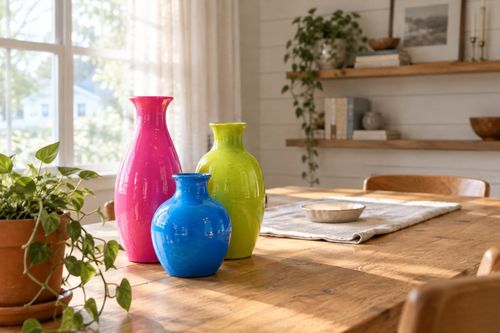
Bright paint is unforgiving on a glossy thrifted side table, because the slick finish gives color nothing to grip. Skip the bonding primer and your hot pink or electric teal will scratch off at the first coaster, leaving ugly bare patches. A thin coat of bonding primer over a light scuff-sand creates a rough, grippy surface that locks every later coat down. Do that one step right and a $15 thrift find becomes a color-blocked statement piece that wears like store-bought furniture.
What You'll Need
- Thrifted side table, wood or laminate, about $10-15
- Bonding primer, spray or brush-on, about $9
- Acrylic craft or cabinet paint, 3 bold colors in small sizes, about $8
- Painter's tape, low-tack, about $4
- Fine-grit sandpaper, 220 grit, about $2
- Clear water-based polyurethane, satin or gloss, about $8
- Small foam roller and brush, about $4
How to Build It
- Clean the table with warm soapy water and let it dry completely so no grease blocks the primer.
- Scuff every surface with 220-grit sandpaper until the shine is gone, then wipe off the dust with a damp cloth.
- Prime the whole table with one thin coat of bonding primer, working in light even strokes, and let it dry per the can, usually about an hour.
- Paint the base color across the entire table with the foam roller, then let it dry for at least two hours.
- Tape off your color-block shapes, pressing the edges down firmly with a fingernail so paint can't creep underneath.
- Color the taped sections with your second and third colors in thin coats, peeling the tape while the paint is still slightly tacky for crisp lines.
- Seal the whole piece with two thin coats of water-based polyurethane, letting each dry fully, then wait 24 hours before using the table.
Stick to a maximum of three colors and pick one to repeat on the legs, so the maximalist look reads as intentional. Put your boldest shade on the tabletop's edge, since that's the line your eye follows across a room.