Fall Ready: Build Your Ultimate Firewood Storage Rack
Get organized before delivery season with weatherproof storage that keeps logs perfectly dry
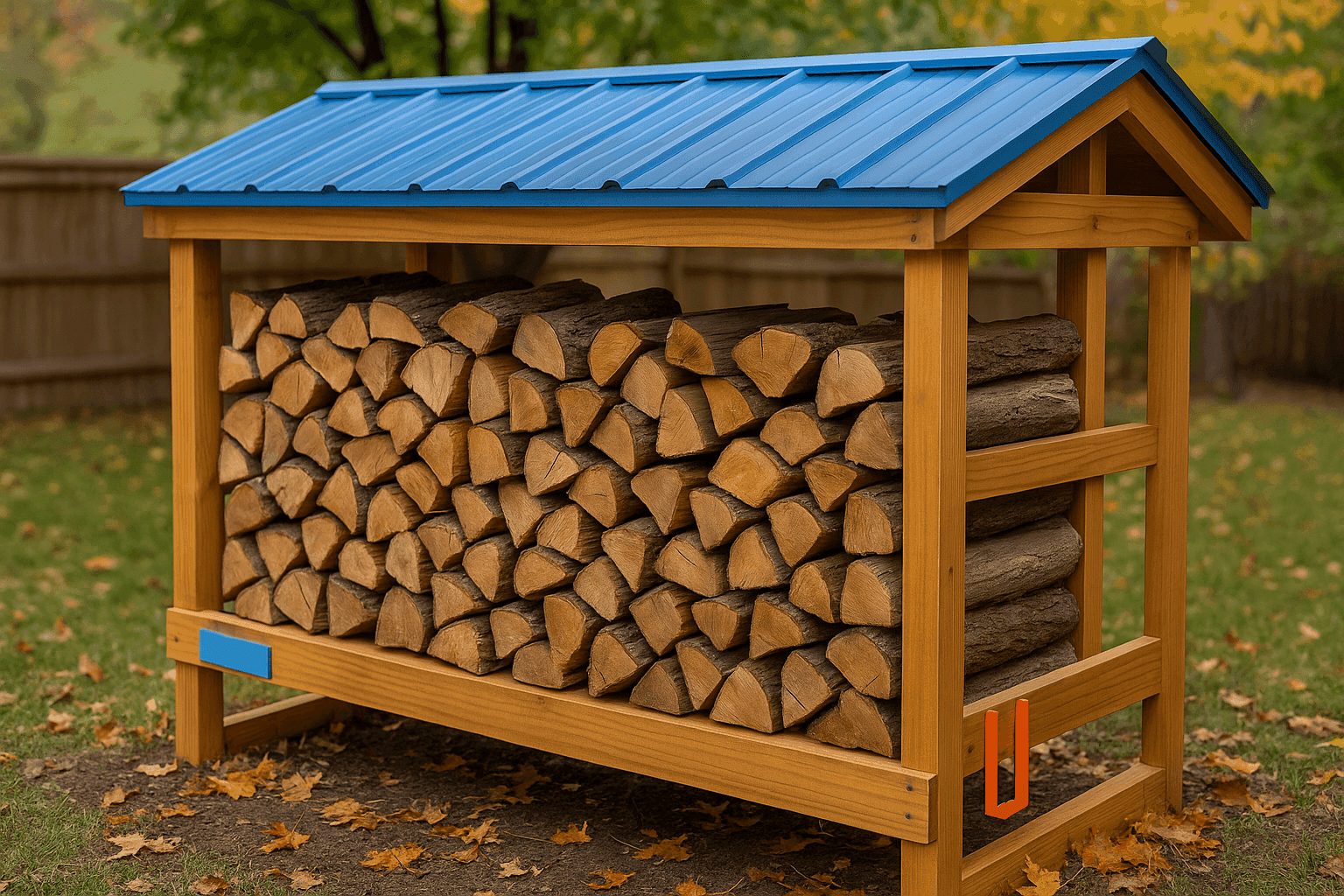
Nothing ruins the mood of a perfect autumn evening quite like reaching for firewood only to find a soggy, moldy mess where your logs used to be! I learned this lesson the hard way during my first winter in the mountains, and I swore I'd never deal with wet firewood again. Building your own firewood rack is one of those satisfying projects that combines practical necessity with the pride of crafting something that'll serve you for years. With firewood delivery season just around the corner, there's no better time to get organized and build a proper storage system. Trust me, when you're pulling perfectly dry logs for cozy autumn fires while your neighbors are struggling with damp wood, you'll feel like the neighborhood genius.
Materials & Tools
- Frame Lumber: Eight 2x4x8' pressure-treated boards for structure ($60-80)
- Roof Materials: ½" plywood sheet and metal roofing or shingles ($40-60)
- Hardware: 3" exterior screws, carriage bolts, galvanized brackets ($25)
- Foundation: Concrete blocks or gravel for base leveling ($30)
- Weather Protection: Wood preservative stain or sealant ($20)
- Tools: Circular saw, drill, level, measuring tape, socket wrench set
- Optional: Mesh sides for ventilation, additional shelving brackets ($15-25)
Construction Steps
- Level your chosen location using concrete blocks or compacted gravel for proper drainage
- Cut lumber to size: four 6' pieces for legs, frame pieces for 8' x 4' footprint
- Assemble the base frame first, ensuring square corners and solid connections with carriage bolts
- Attach vertical supports, spacing them to accommodate standard 16" firewood lengths
- Install horizontal supports between uprights for structural stability and log retention
- Build angled roof frame with overhang to shed water away from stored wood
- Apply plywood decking and roofing material, ensuring proper slope for drainage
- Treat all wood surfaces with preservative stain to extend lifespan and weather resistance
Here's what separates amateur firewood storage from pro-level organization: airflow is everything! Most people build their racks too tight against walls or fences, but you need at least 6 inches of clearance on all sides for proper ventilation. I also add a slight forward tilt to my storage bays – just 2-3 degrees – so logs naturally settle back against the supports instead of rolling forward. Pro builders know to include a "seasoning section" at one end where freshly cut wood can dry for a full year before moving to the ready-to-burn section. Your future self will thank you for this level of organization!