Functional Art: Create Stunning Pressed Flower Coasters
Preserve spring's ephemeral beauty in elegant drink coasters that showcase nature's delicate details
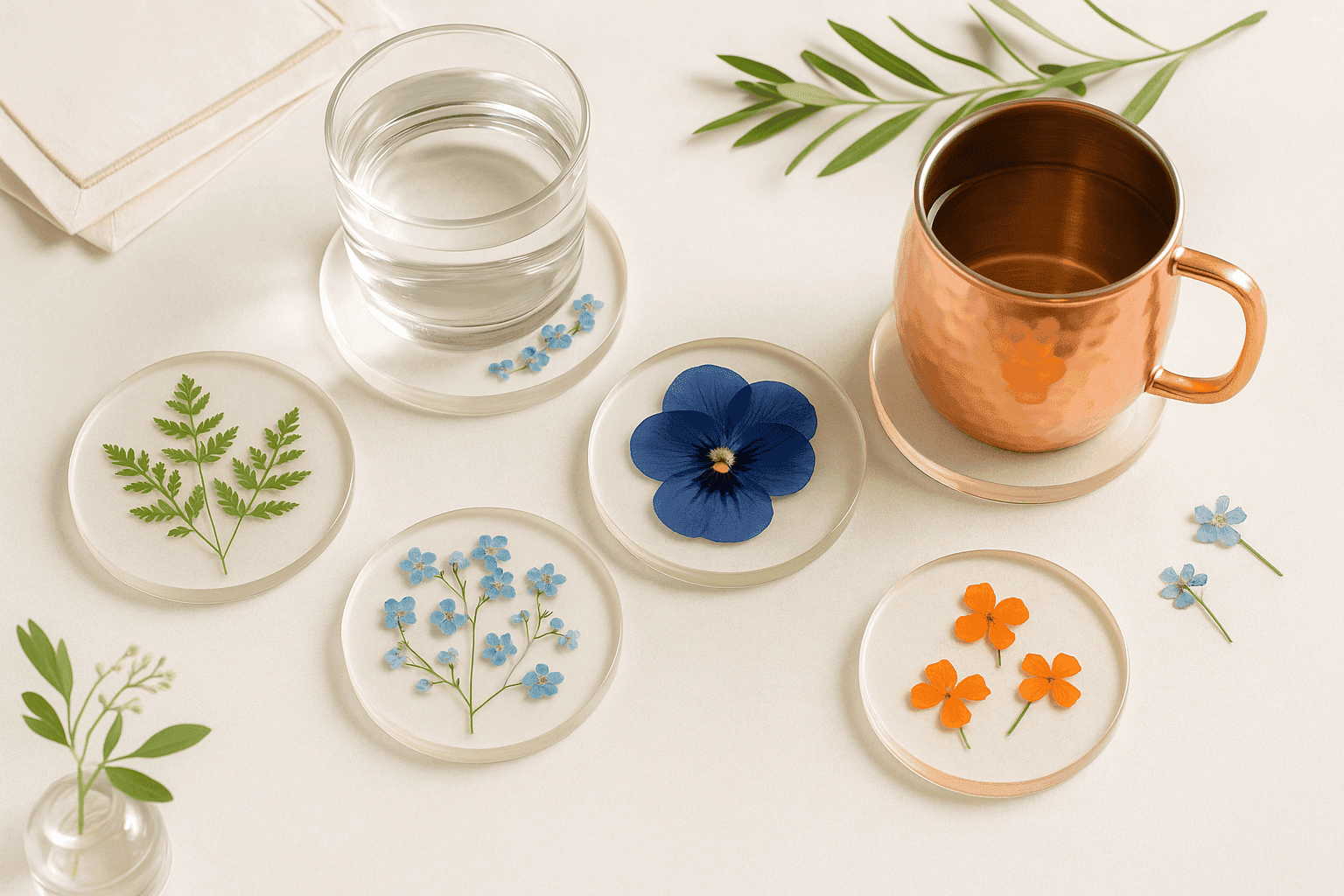
Pressed flower coasters transform spring's fleeting blooms into lasting functional art for your home. By preserving delicate flowers and foliage within clear resin, you create conversation-worthy coasters that protect surfaces while displaying nature's intricate details. This project allows you to capture seasonal flowers at their peak—whether from your garden, a floral arrangement, or a special occasion bouquet—creating both a practical item and a beautiful memento that brings natural elements into your everyday life.
What You'll Need
| For Pressing Flowers: |
| • Fresh flowers and leaves (thin varieties work best) |
| • Heavy books or flower press |
| • Parchment or blotting paper |
| • Tweezers for positioning delicate specimens |
| Resin Materials: |
| • Clear epoxy resin (food-safe, heat-resistant) |
| • Hardener (comes with resin) |
| • Silicone coaster molds (round, square, or hexagonal) |
| • Measuring cups (preferably with milliliter markings) |
| • Wooden stir sticks |
| • Heat gun or torch (for removing bubbles) |
| Additional Tools: |
| • Disposable gloves |
| • Respirator mask |
| • Drop cloth or plastic sheeting |
| • Level surface for curing |
| • Fine-grit sandpaper (220, 400, 600 grit) |
| • Cork or felt backing (optional) |
| Optional Additions: |
| • Mica powder or resin dye for tinting |
| • Gold or silver leaf for accents |
| • Small decorative elements (tiny shells, seeds) |
| • UV-resistant spray (for extra protection) |
How To Do It
- Select and press your flowers:
- Choose thin, flat flowers like pansies, violets, larkspur, and small ferns
- Pick flowers at their peak, ideally in the morning after dew has dried
- Arrange specimens on parchment paper, ensuring no overlapping
- Place between heavy books with weight on top or in a flower press
- Let dry for 2-3 weeks, changing paper after the first few days to prevent molding
- Plan your coaster designs:
- Sketch layouts for each coaster on paper the same size as your molds
- Consider creating a theme (all wildflowers, herbs, or single specimen types)
- Try arrangements with a central focal point surrounded by smaller elements
- For a set, create coordinating designs that work as a collection
- Prepare your workspace:
- Cover work area with plastic sheeting or drop cloth
- Ensure good ventilation (open windows, use fans)
- Position molds on a perfectly level surface
- Gather all materials before mixing resin
- Put on protective gear (gloves, respirator)
- Pour the base layer:
- Mix a small batch of resin according to manufacturer's instructions (typically 1:1 ratio)
- Stir slowly for 2-3 minutes to minimize bubbles
- Pour a thin layer (about 1/8 inch) into each mold
- Use heat gun or torch to remove bubbles (pass quickly over surface)
- Let cure until tacky (30-45 minutes, or per instructions)
- Arrange flowers on base layer:
- While base layer is tacky (not fully cured), place pressed flowers using tweezers
- Position larger elements first, then add smaller details
- Gently press flowers into the tacky resin so they adhere flat
- If adding gold leaf, place small flakes carefully using tweezers
- Allow to continue curing until fully tacky throughout
- Pour the sealing layer:
- Mix another batch of resin (larger quantity for complete coverage)
- Pour slowly over the flowers in a thin stream to avoid displacing them
- Fill mold to the top edge, creating a slightly domed surface
- Remove bubbles with heat gun, paying special attention to areas around flowers
- Cover with a dust cover (box or container) while curing
- Allow full curing time:
- Let coasters cure completely according to resin instructions (usually 24-72 hours)
- Maintain room temperature between 70-75°F (21-24°C) for optimal curing
- Avoid moving or touching coasters during this time
- Demolding and finishing:
- Once fully cured, gently flex silicone molds to release coasters
- If edges are rough, sand with progressively finer sandpaper (220, 400, then 600 grit)
- Polish with a clean cloth to restore clarity after sanding
- Optional: Attach cork or felt backing using adhesive
- Optional: Spray with UV-resistant clear coat to prevent yellowing
- Care and gift presentation:
- Clean finished coasters with soft cloth and mild soap if needed
- For gifts, stack coasters with thin paper between each one
- Tie with ribbon or twine and add a handwritten care card
- Include information about the flowers used and their symbolism
For truly professional-looking pressed flower coasters, consider the Japanese concept of "ma"—the artistic appreciation of negative space. Rather than filling the entire coaster with flowers, allow strategic empty areas that highlight your botanical specimens and create visual breathing room. Another designer technique is to create depth by working in layers: pour a thin base layer of resin, add small elements like ferns or delicate leaves, let it partially cure, then add medium elements, then finally add focal flowers in a final layer before the sealing pour. This creates a magical suspended effect where different elements appear to float at varying depths. For a luxurious touch that elevates your coasters from craft to art, incorporate a subtle color gradient by tinting your base layer with just a whisper of mica powder in a color that complements your flowers—pale blue beneath blue hydrangeas or soft pink under cherry blossoms. This creates a luminous effect that makes the flowers appear to glow from within.