Garden Color Pop: How to Create Eye-Catching Painted Pots
Transform plain planters into personalized works of art
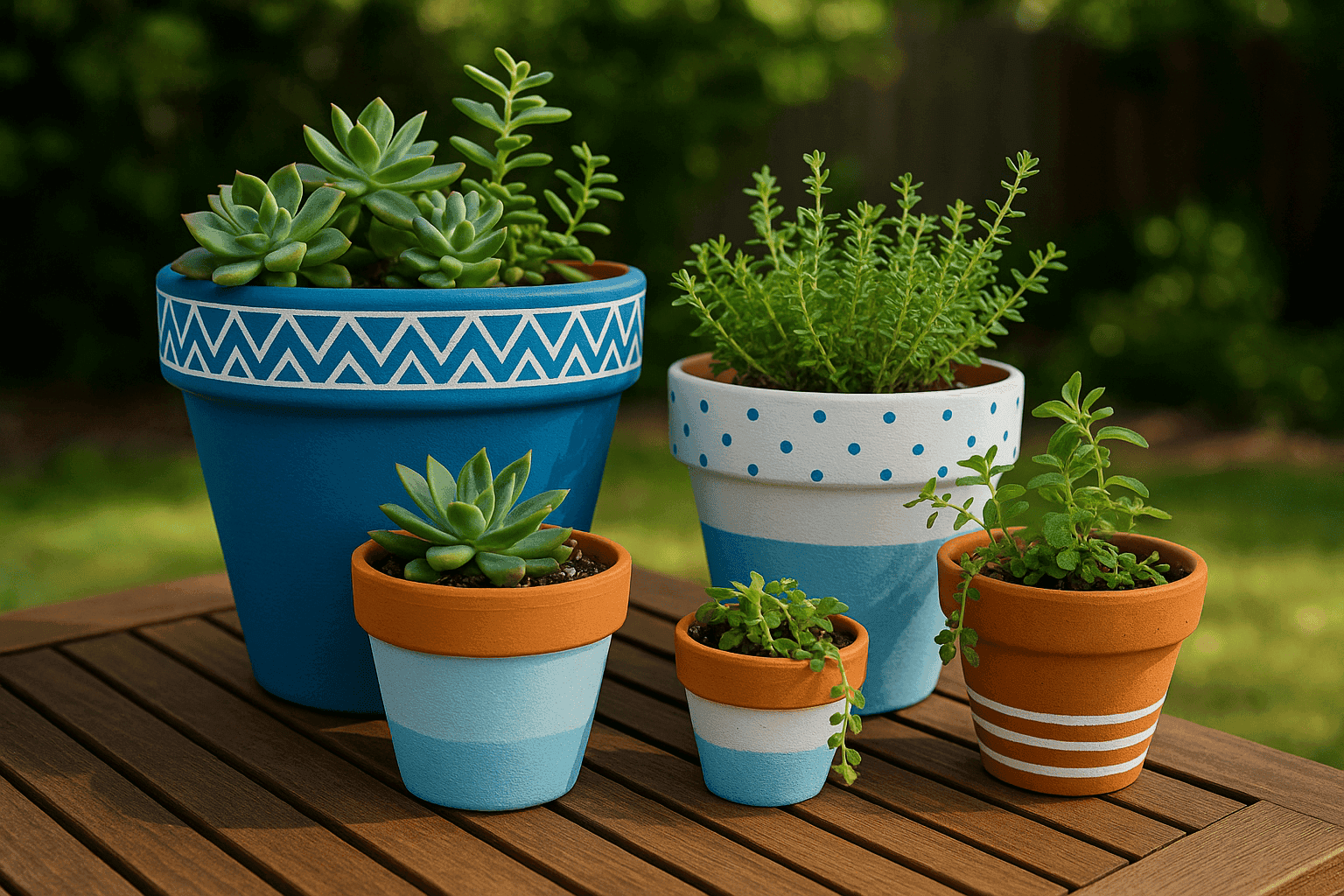
Plain terracotta or plastic pots are functional but often lack personality. With a little creativity and paint, you can transform ordinary planters into vibrant focal points that complement your plants and express your personal style. This simple weekend project allows you to coordinate containers with your outdoor color scheme, create themed collections, or simply add cheerful accents to your garden or patio—all without breaking the budget.
What You'll Need
| • Terracotta or plastic pots (clean and dry) |
| • Sandpaper (medium grit) |
| • Outdoor acrylic paint in your chosen colors |
| • Primer suitable for your pot material |
| • Clear outdoor sealer/varnish |
| • Paintbrushes in various sizes |
| • Painter's tape |
| • Stencils (optional) |
| • Craft sponges (for dabbing/stippling) |
| • Small containers for mixing paint |
| • Drop cloth or newspaper |
| • Clean rags or paper towels |
How To Do It
- Prepare your workspace: Cover your work surface with a drop cloth or newspaper. Ensure good ventilation, especially when applying sealers.
- Clean and prep the pots: Wash pots thoroughly and let dry completely (24 hours for terracotta). Lightly sand the surface to create texture for better paint adhesion.
- Apply primer: For terracotta pots, apply a coat of primer to seal the porous surface and provide a neutral base for your colors. For plastic pots, use a primer specifically designed for plastic surfaces.
- Plan your design: Decide on a pattern or color scheme before you begin. Simple designs often look most professional—consider color blocking, stripes, ombré effects, or geometric patterns.
- Create your design:
- For color blocks: Use painter's tape to create clean lines between different colors.
- For stripes: Wrap tape around the pot at measured intervals.
- For polka dots: Use a round sponge dauber or the eraser end of a pencil.
- For ombré effect: Blend colors while still wet, gradually transitioning from one shade to another.
- For detailed designs: Use stencils or free-hand with a small brush.
- Apply paint in thin layers: Use thin, even coats rather than one thick layer. Allow each coat to dry completely before applying additional layers or adding details.
- Add finishing touches: Once your base design is dry, add any detailed elements, such as small floral designs, patterns, or hand-lettered words.
- Seal your work: Apply 2-3 coats of clear outdoor sealer to protect your design from moisture, UV rays, and soil. Pay special attention to the inside rim and outside bottom where moisture contact is highest.
- Allow to cure: Let the sealed pots cure for 2-3 days before planting. This ensures the sealer is fully hardened and waterproof.
- Plant and display: Add drainage material, potting soil, and your chosen plants. Arrange your painted pots in groups for maximum visual impact.
For a cohesive, designer look, create a collection of pots in varying sizes that share a color palette but feature different patterns. This creates unity while maintaining visual interest. Consider selecting colors that either complement your flowers (opposite on the color wheel for dramatic contrast) or match your home's exterior accents. For modern appeal, try color-blocking with crisp, geometric designs in bold colors with white accents. For a more bohemian look, embrace fluid patterns in earth tones with metallic gold details. Remember that the plant should still be the star—your pot design should enhance, not compete with, its natural beauty.