Give Holiday Linens New Life as Festive Throw Pillows
Transform stained or outdated tablecloths into beautiful seasonal pillow covers that save money and memories
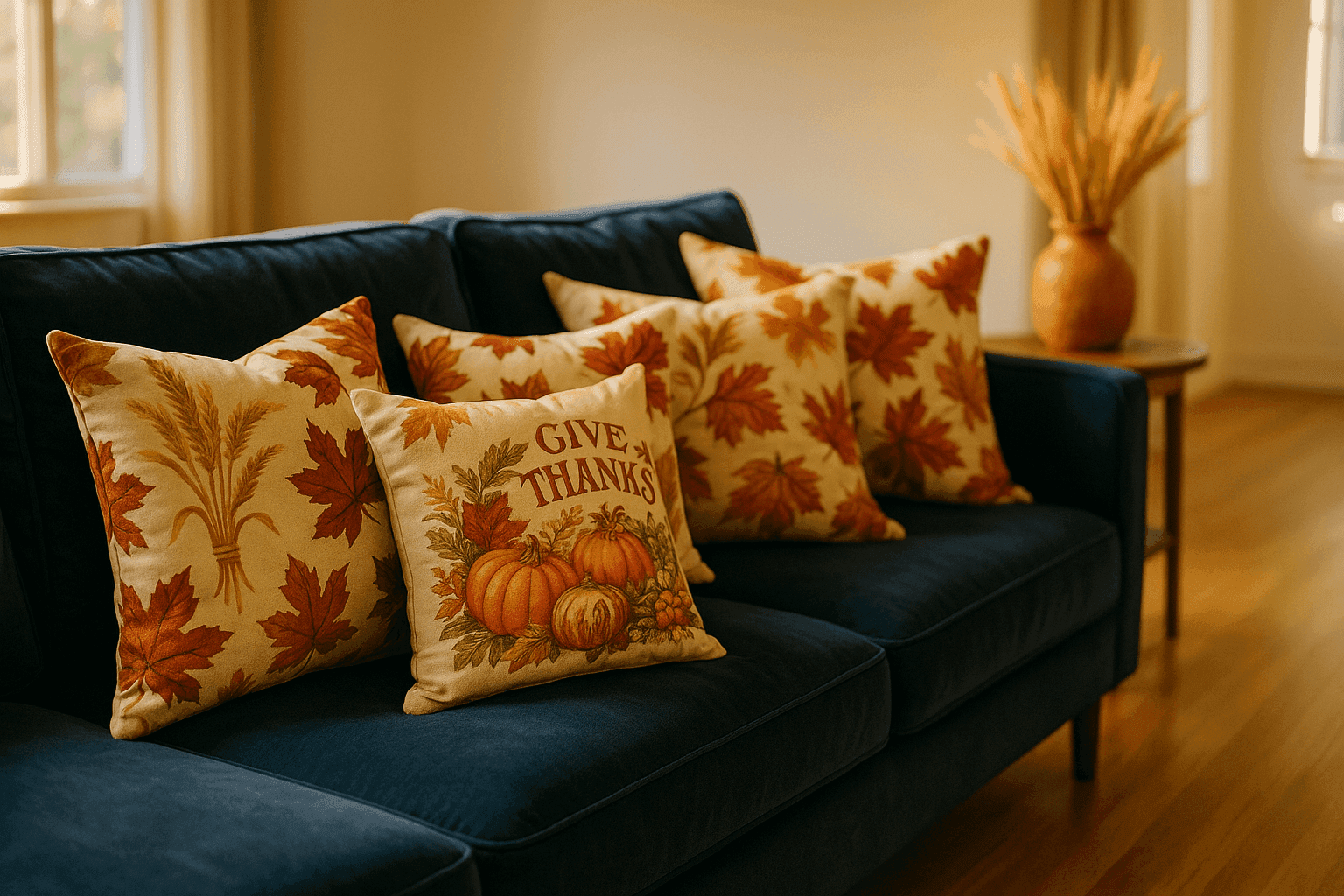
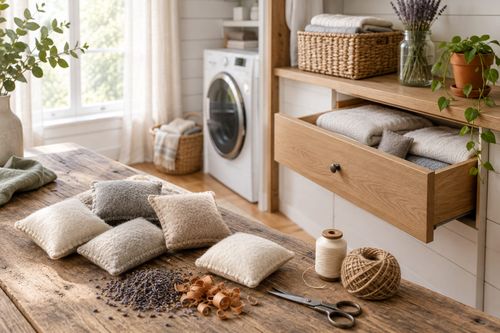
I have a beautiful Thanksgiving tablecloth that my aunt gave me years ago, but it picked up an unfortunate gravy stain right in the center during our first holiday dinner—too damaged to use as a tablecloth but too pretty and sentimental to throw away. Transforming holiday linens into throw pillows is the perfect solution for tablecloths with localized stains, outdated patterns you still love, or simply gorgeous fabrics that deserve year-round visibility instead of spending 11 months folded in a closet. This project costs essentially nothing if you have the tablecloth and pillow inserts already, or around $15-20 if you need to buy inserts, and takes about an hour per pillow once you've cut your fabric. The beauty of using tablecloth fabric is that holiday prints are often more sophisticated than what you find in regular craft fabric—rich autumnal plaids, elegant leaf patterns, vintage turkey motifs—and the larger scale of tablecloths means you can often create 4-6 pillow covers from a single cloth. I've made sets for my own home, gifted them to family members who remember the original tablecloth, and even sold a few at craft fairs where people love the nostalgic charm of repurposed holiday textiles.
What You'll Need
- Fabric Source:
- Holiday tablecloth (stained, outdated, or underused)
- Look for cotton or cotton-blend fabrics that sew easily
- Standard tablecloth yields 4-6 pillow covers depending on size
- Wash and iron before cutting
- Pillow Forms:
- 18x18 inch pillow inserts (most common size)
- Or 20x20 inch for larger statement pillows
- Down alternative or polyester fill both work well
- Cost: $5-8 each at discount stores
- Sewing Supplies:
- Sewing machine (or needle and thread for hand-sewing)
- Thread matching fabric color
- Fabric scissors or rotary cutter
- Measuring tape and ruler
- Pins or fabric clips
- Iron for pressing seams
- Total Cost: $0-20 per pillow depending on inserts
Transformation Steps
- Assess your fabric by laying out the tablecloth and identifying unstained areas with interesting patterns that would make attractive pillow fronts. Plan your cuts strategically to work around damage while capturing the best design elements.
- Cut fabric squares measuring 19x19 inches for 18-inch pillow inserts (adding 1 inch total for seam allowances), using a ruler and rotary cutter for perfectly straight edges. Precise cutting makes the difference between professional-looking pillows and obviously homemade ones.
- Create envelope backs by cutting two rectangles measuring 19 inches tall by 14 inches wide, which will overlap in the back to create an opening for inserting and removing the pillow form. This no-zipper method is beginner-friendly and actually looks quite polished.
- Hem the overlap edges by folding one long edge of each back piece over twice by 1/2 inch, pressing with your iron, and sewing a straight seam to create clean finished edges that won't fray over time or with repeated washing.
- Pin all pieces together by placing the front fabric right-side up, then layering both back pieces right-side down with hemmed edges overlapping in the center, creating a fabric sandwich. Pin around all four edges to hold everything in place while sewing.
- Sew the perimeter using a 1/2-inch seam allowance around all four sides, backstitching at the beginning and end for security. Sew slowly at corners, pivoting with the needle down to create sharp 90-degree turns rather than rounded edges.
- Trim and turn by cutting away excess fabric at corners at a diagonal (being careful not to cut through stitching), which reduces bulk and allows corners to turn out sharply. Turn the cover right-side out through the back opening and use a chopstick or turning tool to push corners out completely.
- Press and stuff by ironing the finished cover to create crisp edges and seams, then inserting your pillow form through the envelope back. Fluff and arrange on your sofa, knowing you've saved money while preserving a meaningful textile in a beautiful new form.
Professional sewists elevate simple envelope-back pillows by adding thoughtful finishing touches that look expensive but require minimal extra effort. Try topstitching around the perimeter about 1/4 inch from the edge using a contrasting or metallic thread, which creates a designer frame effect and reinforces seams. For truly elevated results, add piping or cording around the edges before sewing front and back together—this requires one extra step but delivers that custom upholstery look. Interior designers also recommend the "faux flange" technique: cut your fabric 2 inches larger on all sides, then after assembling the pillow, topstitch a square 1 inch from the edge all the way around, creating the illusion of a flanged border that adds substantial visual interest. Finally, if your tablecloth has a particularly beautiful border or hem detail, orient your cuts to incorporate that existing element as a design feature rather than cutting it away—original hemstitching or decorative edges become instant character that distinguishes your pillows from ordinary craft projects.