Green Thumbs Start Early: Build Your Own Mini Greenhouse
Create a perfect environment for seedlings and extend your growing season
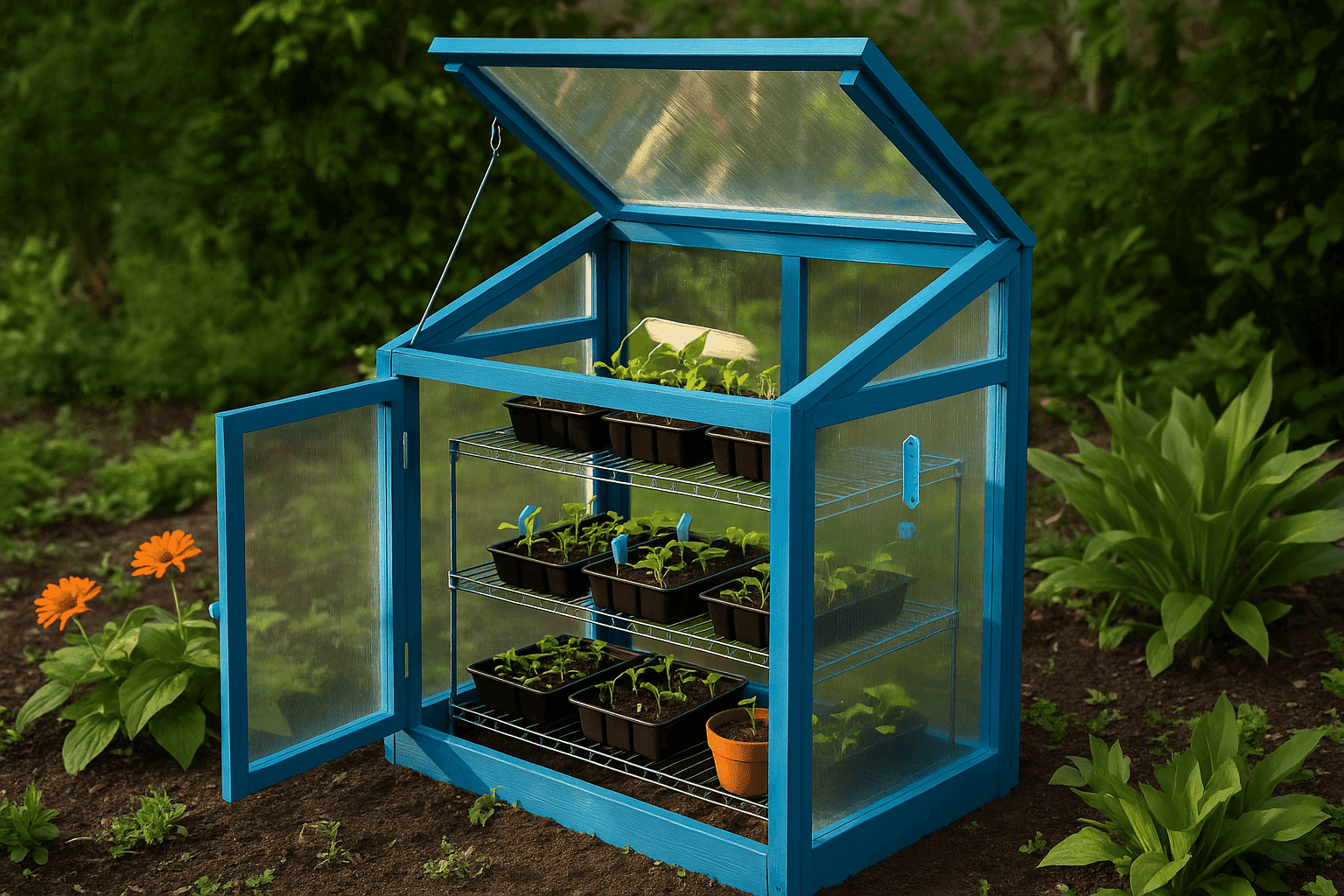
A mini greenhouse extends your growing season and provides the perfect environment for starting seeds and nurturing young plants. Rather than investing in an expensive commercial option, you can build a customized greenhouse that perfectly fits your space and gardening needs. This weekend project uses readily available materials to create a durable, efficient structure that protects tender plants from cold temperatures, harsh weather, and pests—giving your garden a head start regardless of outdoor conditions.
What You'll Need
| For Wood Frame Greenhouse: |
| • 1"×2" or 2"×2" lumber for frame |
| • Clear plastic sheeting (6 mil greenhouse plastic) |
| • Wood screws or nails |
| • Staple gun and staples |
| • Hinges (2-4 depending on size) |
| • Handle for door |
| • Hook and eye latch |
| • Wood sealer or paint (exterior grade) |
| • Wire shelving or wood for shelves |
| For PVC Frame Alternative: |
| • ½" or ¾" PVC pipes |
| • PVC connectors (elbows, tees, crosses) |
| • PVC cement |
| • Clear plastic sheeting |
| • Zip ties or clips |
| Tools: |
| • Saw (hand saw or power saw) |
| • Drill and bits |
| • Measuring tape |
| • Level |
| • Scissors or utility knife |
| • PVC cutter (if using PVC) |
| • Safety gear (gloves, goggles) |
How To Do It
- Design your greenhouse: Determine size and shape based on your space and needs. A good starter size is 3' wide × 2' deep × 4' tall, which fits on a patio or deck. Sketch your design with measurements for each piece.
- Prepare your materials:
- For wood frame: Cut lumber to size according to your plan. Sand cut edges and apply outdoor sealer or paint to all wooden pieces to prevent rot.
- For PVC frame: Cut PVC pipes to desired lengths using a PVC cutter or saw. Test-fit pieces with connectors before final assembly.
- Assemble the base frame: Create a rectangular base using your chosen material. Ensure corners are square by measuring diagonally from corner to corner (measurements should be equal for a perfect rectangle).
- Build the vertical supports: Attach four vertical posts at each corner of the base. For stability, ensure they're perfectly vertical using a level.
- Create the roof frame: Connect the tops of the vertical supports with horizontal pieces. For a pitched roof, add central supports that are taller than the sides, then connect with angled pieces for the roof slope.
- Construct the door frame: Build a door sized to fit one side of your greenhouse. For wood frames, reinforce corners with brackets. For PVC, create a separate rectangular frame that can be attached with hinges.
- Install shelving: Add shelves at different heights to maximize growing space. Wire shelving allows drainage and airflow, while wood shelves should have drainage holes or gaps between boards.
- Cover with plastic sheeting:
- For wood frame: Stretch plastic over the frame and staple securely, starting at the middle of each side and working toward corners. Trim excess with scissors.
- For PVC frame: Drape plastic over the structure and secure with zip ties or special greenhouse clips. Leave some slack for expansion.
- Attach the door: Install hinges to hang your door. Add a handle and hook-and-eye latch to keep it closed during windy conditions.
- Create ventilation: Install a small window or vent in the roof or upper side that can be opened on warm days to prevent overheating. For simpler designs, the door can serve as ventilation when propped open.
- Secure the greenhouse: For outdoor placement, anchor your greenhouse to the ground with stakes or weights to prevent tipping in strong winds.
- Add finishing touches: Consider adding a thermometer, automatic vent opener, small fan for air circulation, or irrigation system depending on your needs.
For a mini greenhouse that combines function with style, consider how it will integrate with your overall garden design. Rather than hiding it away, treat your greenhouse as a garden feature by adding decorative elements like painted trim in a color that complements your home, decorative door hardware, or solar-powered fairy lights for evening ambiance. Position your greenhouse where it receives optimal morning sun but is protected from harsh afternoon heat. For those with limited space, consider a lean-to design that attaches to an existing fence or wall, maximizing space efficiency while providing a protected growing environment. Remember that organization is key to a successful greenhouse—include labeled sections for different plant types and install a pegboard panel for hanging tools and accessories.