Junk Drawer Victory: Craft Custom Dividers from Cardboard Scraps
Transform recycled boxes into perfectly-fitted drawer organizers that actually keep things separated
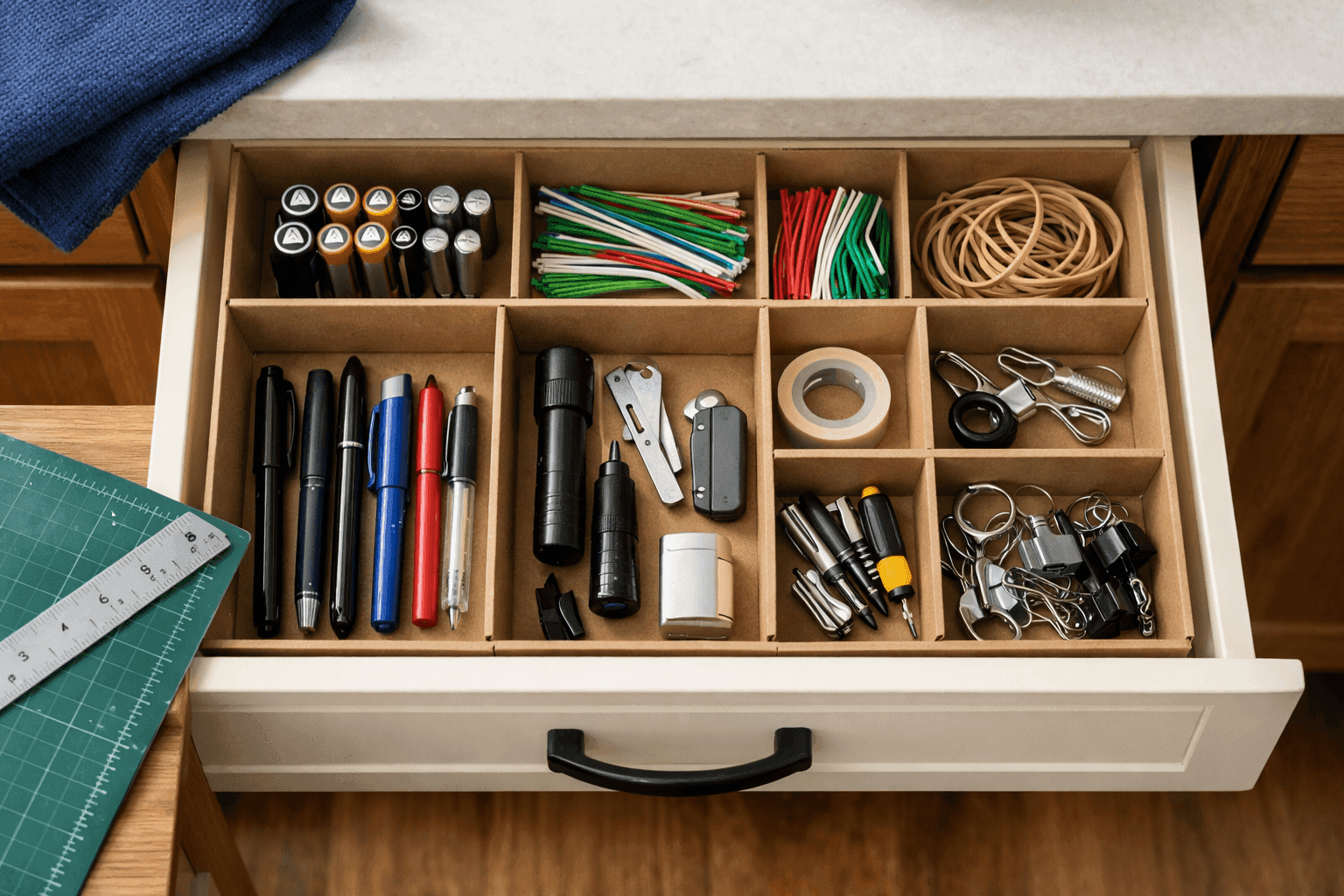
That kitchen junk drawer has been mocking you for months with its chaotic jumble of batteries, twist ties, rubber bands, and mysterious keys you're afraid to throw away because what if you suddenly need them. Store-bought drawer dividers never quite fit your specific drawer dimensions, they cost way more than they should for what amounts to plastic boxes, and they still don't create the exact compartment sizes you actually need for your particular collection of random items. Making custom drawer dividers from cardboard boxes costs absolutely nothing since you're using recyclables headed for the bin anyway, takes about 30 minutes per drawer, and gives you perfectly-fitted organizers sized exactly for your drawer and your stuff. This brilliantly simple solution turns discarded shipping boxes into functional organization that actually works instead of just shifting the chaos around into slightly neater piles.
What You'll Need
- Cardboard: Clean shipping boxes or cereal boxes (thicker is better for durability)
- Measuring Tools: Ruler or measuring tape, pencil for marking
- Cutting Tools: Box cutter or sharp scissors, cutting mat or cardboard surface
- Optional Finishing: Contact paper, wrapping paper, or fabric to cover cardboard ($5-10)
- Optional Securing: Hot glue gun or double-sided tape to keep dividers in place
- Optional: Clear packing tape to reinforce edges for long-term durability
- Time Investment: 30-45 minutes per drawer including measuring and assembly
Step-by-Step Method
- Measure your drawer's interior dimensions carefully—length, width, and height—because custom fit is the entire point of this project
- Plan your compartment layout by actually placing items in the drawer to see what size sections you need, rather than guessing and ending up with useless tiny spaces
- Cut long strips for the main dividers that run the length or width of your drawer, making them slightly shorter than drawer height so they don't prevent it from closing
- Create interlocking slots by cutting halfway down from the top of strips that will cross each other, which lets them slide together into a grid without tape or glue
- Test your dividers in the empty drawer before adding finishing touches, adjusting slot depths or strip heights as needed for proper fit
- Cover cardboard with contact paper or wrapping paper if desired for a more polished look, though plain cardboard works perfectly fine and nobody sees inside your drawers anyway
- Assemble dividers in the drawer by sliding interlocking pieces together, pressing firmly to ensure they stay perpendicular and create actual separated compartments
- Load compartments with categorized items, putting frequently-used things in easily accessible sections and creating zones that make sense for how you actually use the drawer
Professional organizers recommend creating unequal compartment sizes rather than a perfect grid, because your drawer contents aren't uniform and identical boxes waste space. Make one larger section for bulky items like tape dispensers or scissors, medium sections for batteries and pens, and smaller compartments for tiny things like rubber bands that would otherwise migrate throughout the entire drawer. Also, reinforce the bottom edges of your dividers with clear packing tape to prevent cardboard from eventually wearing through where items rub against it repeatedly. This simple addition extends the life of your free organizers from a few months to years of actual use. The beauty of cardboard dividers is that when they finally do wear out or when you rearrange your drawer contents, you can guilt-free toss them and make new ones in 30 minutes rather than feeling wasteful about discarding expensive store-bought organizers.