Linen Closet Fix: The Compression Ratio Nobody Expects
A comforter takes up a whole shelf because it's mostly trapped air, not fabric — remove that air with a vacuum seal, and the actual bedding underneath it turns out to need a fraction of the space.
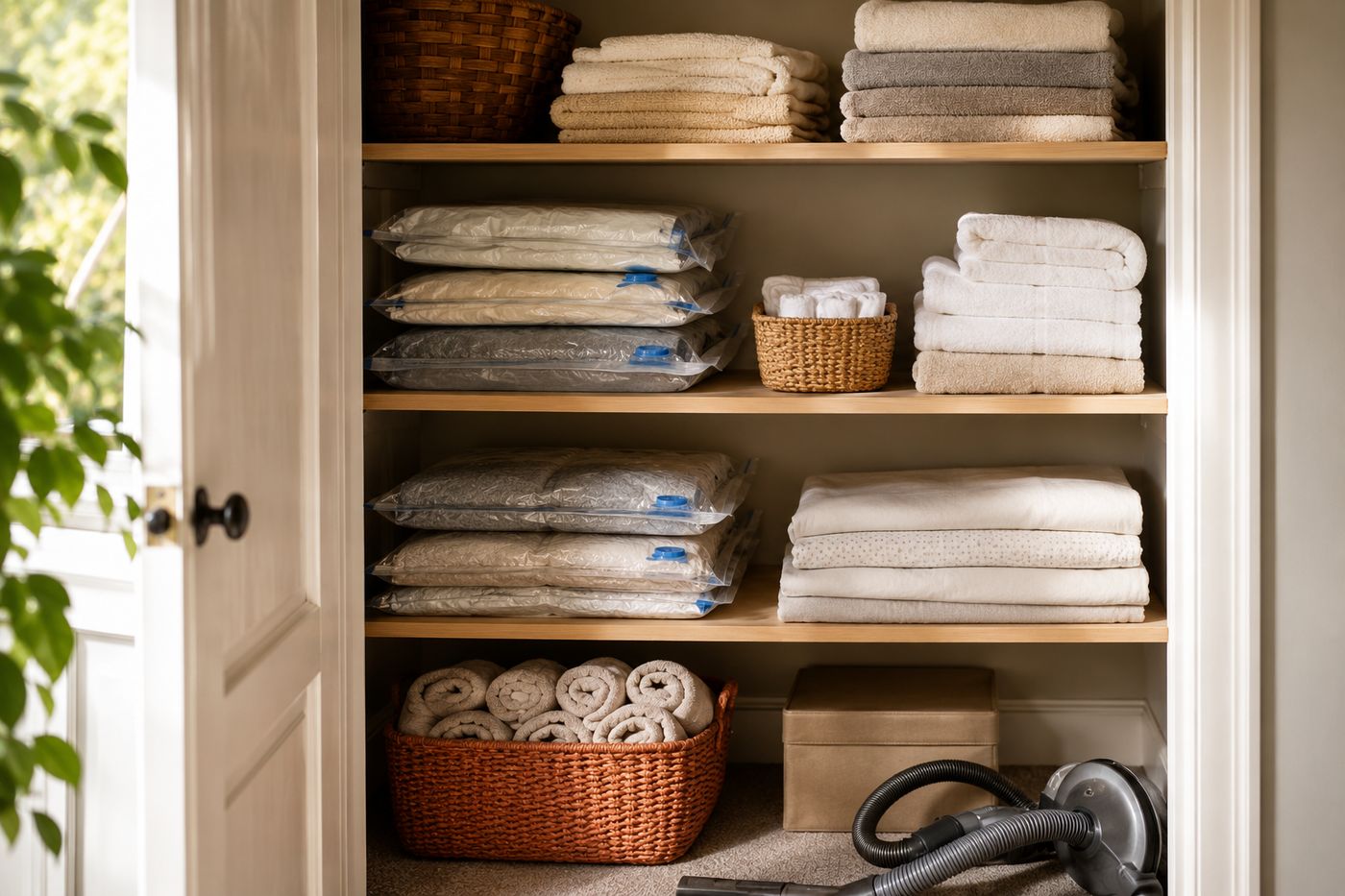
A fluffy comforter feels bulky because the fill inside it — down, poly-fill, whatever the insulation is — traps huge amounts of air between the fibers, and that trapped air is what actually accounts for most of the item's physical volume, not the fabric or fill material itself. A vacuum storage bag removes that air specifically, which is why a king-size comforter that occupies an entire shelf can compress down to the thickness of a hardcover book once the air is gone — the actual material was never taking up that much space to begin with. That's the mechanical reason this storage method works so much better than simply folding items more tightly, since folding can't remove air trapped inside the fill the way a vacuum seal does. The airtight seal has a second benefit beyond space: it keeps out dust, moths, and moisture completely, which is why bedding stored this way for months comes out smelling clean rather than musty. A pack of bags costs about $18 and reorganizing a full closet takes about an hour.
What You'll Need
- Vacuum storage bags, assorted sizes — about $18 for a pack of eight
- Vacuum cleaner with a hose attachment
- Clean, dry bedding to store — comforters, pillows, blankets, off-season linens
- Labels or masking tape, for identifying contents once bags are flattened
How to Do It
- Empty the linen closet completely so you can see everything you're working with and plan the new layout from a clean slate.
- Confirm every item going into a bag is fully clean and completely dry — sealing away any dampness or residue traps it inside the airtight bag for months, which defeats the whole freshness benefit.
- Stuff a comforter, pillow set, or blanket into an appropriately sized bag, even if it looks impossibly full at first.
- Seal the zip closure completely along its full length, checking for any gaps that would let air back in during compression.
- Attach your vacuum hose to the bag's valve and run the vacuum until the bag has fully compressed and stops shrinking further, which typically takes under a minute.
- Remove the hose and confirm the valve seals itself, keeping the bag airtight without the vacuum attached.
- Label each flattened bag with its contents, since compressed bedding looks nothing like its original shape and is hard to identify at a glance later.
- Stack the flattened bags on shelves, taking advantage of the reclaimed space to reorganize the rest of the closet's contents more logically.
Professional organizers who set up seasonal storage systems often avoid vacuum-sealing down-filled bedding for extended periods beyond a single season, since prolonged heavy compression can affect how well the down fibers loft back to their original fluffiness once released, unlike synthetic fill which generally bounces back regardless of how long it was compressed. Reserving vacuum bags for synthetic-fill items or shorter seasonal storage keeps this method working well for every type of bedding in the closet.