Memory Showcases: Creating Custom Shadow Boxes
Display treasured keepsakes and collectibles in personalized three-dimensional frames
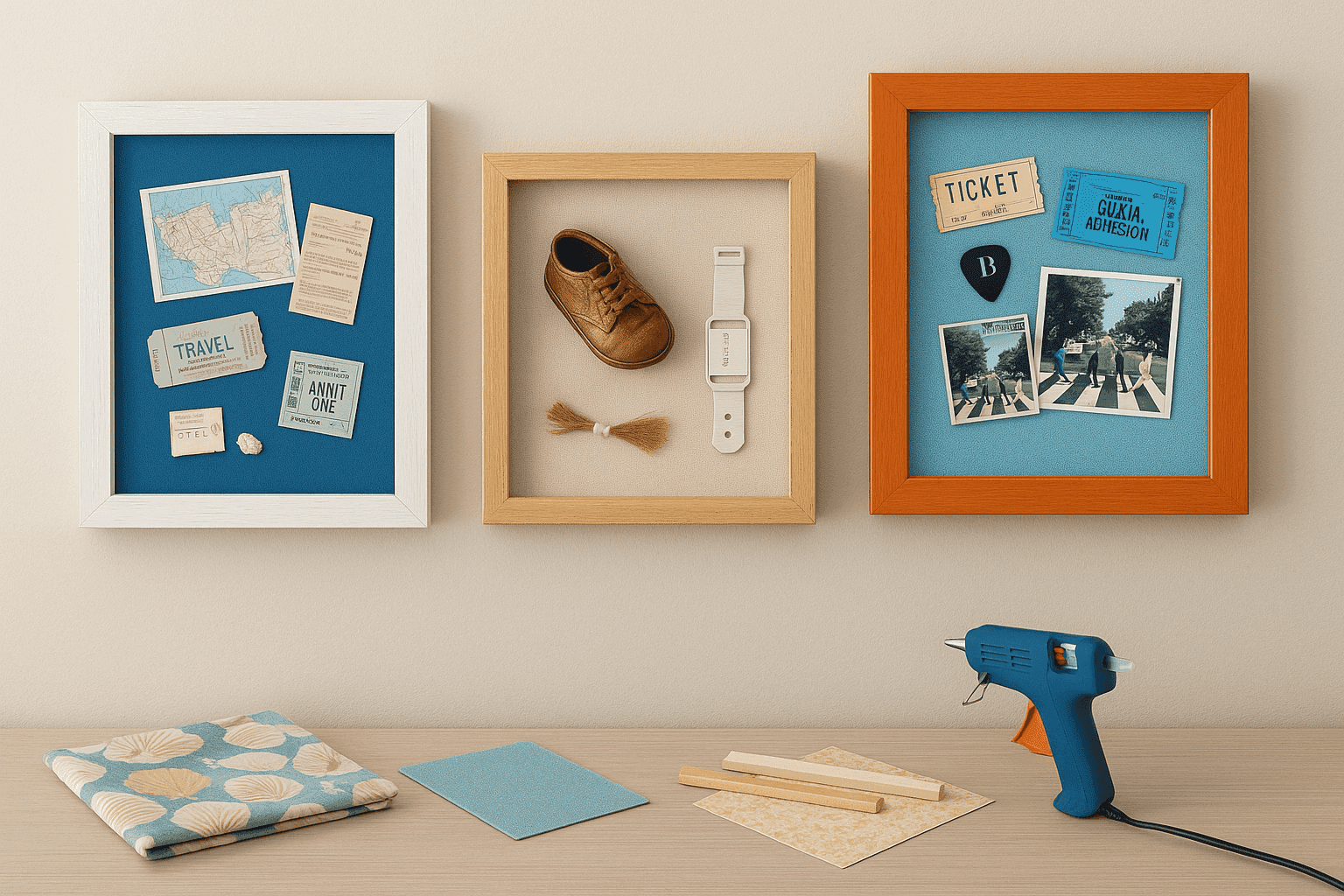
Shadow boxes elevate everyday mementos into meaningful art, allowing you to preserve and display three-dimensional objects that tell your personal story. Unlike standard picture frames, shadow boxes provide depth that accommodates items with varying thicknesses—from concert tickets and medals to seashells and vintage keepsakes. By creating custom shadow boxes, you can design displays perfectly suited to your treasures while adding personalized decor that sparks conversation and preserves cherished memories.
Materials & Tools
| • Box Frame Options: Wood, metal, or pre-made shadow boxes |
| • Box Construction: Wood pieces, mitered corners, hinges |
| • Background Materials: Fabric, decorative paper, cork |
| • Display Elements: Foam core, pins, mounting putty |
| • Assembly Tools: Glue gun, staple gun, brads, pins |
| • Glass/Acrylic: Clear acrylic sheeting or glass panes |
| • Cutting Tools: Miter saw, craft knife, scissors |
| • Hanging Hardware: D-rings, picture wire, sawtooth hangers |
| • Keepsakes: Memorabilia, collectibles, photos |
Creation Process
- Plan your display. Decide on the theme and story you want to tell through your shadow box. Consider what items you'll include and arrange them on a flat surface to determine required dimensions and layout.
- Choose your approach:
- Option 1: Modify a store-bought shadow box (easiest)
- Option 2: Convert a deep picture frame into a shadow box (moderate)
- Option 3: Build a custom shadow box from scratch (advanced)
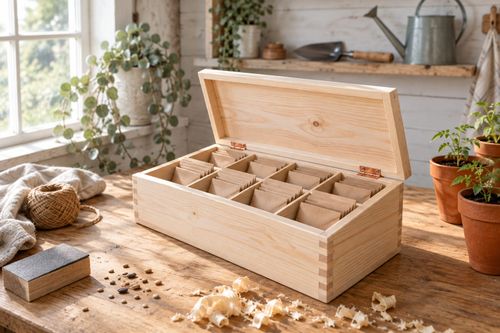
- Prepare your shadow box frame. For a custom-built box, cut wood pieces to desired dimensions, creating a box that's typically 1-3 inches deep. Assemble using wood glue and finishing nails at mitered corners. For pre-made frames, remove backing and glass for easy access.
- Create the background. Cut acid-free matboard, decorative paper, or fabric slightly larger than the backing dimensions. Attach to the backing board using acid-free glue or staples, pulling taut to avoid wrinkles. Consider textured backgrounds like burlap, velvet, or cork that complement your theme.
- Prepare items for display. Clean and preserve items appropriately—consider UV-resistant sprays for documents or photos and gentle cleaning for three-dimensional objects. Create small display stands or platforms using foam core covered with complementary fabric for items that need elevation.
- Design your layout. Arrange items on the prepared backing board, experimenting with composition before permanent attachment. Consider visual balance, the story you're telling, and whether items should be layered or separated. For complex arrangements, take a photo of your final layout for reference.
- Secure items in place. Use appropriate attachment methods based on item value and type:
- Archival-quality adhesives for paper items
- Clear fishing line or invisible thread for suspended items
- Stainless steel pins pushed through fabric items into the backing
- Removable museum gel or mounting putty for valuable objects
- Custom-made acrylic stands for heavy or irregularly shaped items
- Add identifying information. Include small, discreet labels or a printed narrative explaining the significance of displayed items. Use acid-free card stock and archival pens for longevity.
- Complete the assembly. Carefully place the acrylic or glass front on the frame. Secure the backing with framing points, turn buttons, or the manufacturer's closure system. Add hanging hardware centered on the back for proper balance.
- Display considerations. Position shadow boxes away from direct sunlight to prevent fading. For collections, create multiple shadow boxes of consistent size and style, then arrange in a grid or clustered gallery wall for maximum impact.
Create visual depth by varying the distance between items and the glass front. Mount some elements directly to the backing while suspending others closer to the glass using clear monofilament and small adhesive dots. This technique creates a dynamic, layered appearance that draws viewers in to examine details. For a contemporary twist on traditional shadow boxes, consider unconventional shapes like hexagons or triangles that can be arranged in modular patterns on your wall. When creating multiple shadow boxes, use a cohesive color palette across all displays while varying the background textures to create unity with subtle variation.