Midnight Feast: Build a Show-Stopping Charcuterie Board Station
Create an elegant grazing spread that keeps guests satisfied from evening appetizers through midnight celebration
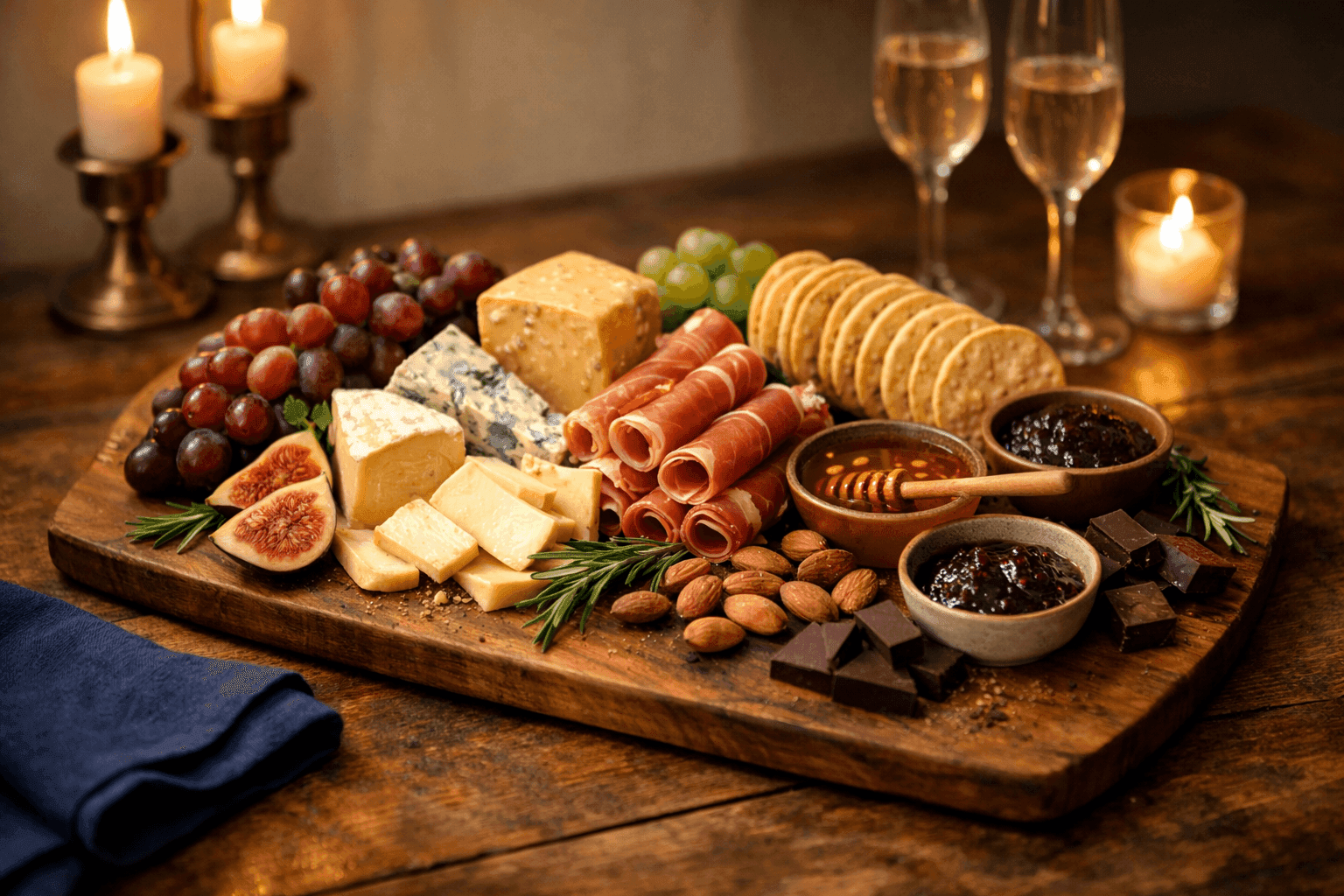
New Year's Eve parties have that awkward gap between dinner and midnight where guests are hungry again but nobody wants to serve a full meal at 11 PM, and suddenly everyone's raiding your pantry for snacks. A well-planned charcuterie board station solves this perfectly by providing an elegant spread that guests can graze on throughout the evening without you having to constantly refill appetizers or worry about timing. Setting up a proper board takes about 45 minutes and costs $60-80 for 8-10 people, but it creates that Instagram-worthy centerpiece that makes your party feel elevated while also being genuinely practical. The secret is building a board that's substantial enough to carry people through several hours of grazing, visually impressive enough that it becomes a conversation piece, and strategically arranged so it still looks good even after guests have been picking at it for hours.
What You'll Need
- The Board: Large wooden cutting board, slate, or marble board (at least 18x12 inches)
- Cheeses: 3-4 varieties with different textures—aged cheddar, brie, goat cheese, blue cheese ($20-30)
- Crackers & Bread: Mix of water crackers, artisan crackers, and sliced baguette ($8-12)
- Fruits: Grapes, figs, apple slices, dried apricots, or fresh berries ($10-15)
- Proteins: Salami, prosciutto, or smoked salmon ($10-15)
- Accompaniments: Honey, jam, whole grain mustard, nuts, olives, dark chocolate ($8-12)
- Garnishes: Fresh rosemary or thyme sprigs for visual appeal
Step-by-Step Method
- Plan your layout by placing cheeses first since they're your anchor elements—space them evenly across the board so each area has a cheese as its centerpiece
- Prep cheeses properly by removing them from the refrigerator 30-45 minutes before serving so they reach room temperature where flavors actually shine
- Add small bowls for honey, jam, or olives to create height variation and contain wet ingredients that would otherwise make everything soggy
- Arrange meats by folding or rolling slices into interesting shapes rather than just laying them flat—this adds visual texture and makes them easier to grab
- Fill gaps with crackers stood on edge in clusters, which looks more intentional than scattered crackers and makes the board feel abundant
- Scatter fruits strategically throughout to add color pops and provide palate cleansers between rich cheeses and salty meats
- Tuck nuts and chocolates into remaining spaces, using them to fill awkward gaps and add final textural variety to your composition
- Garnish with fresh herb sprigs as a final touch that signals "this is fancy" while also adding a subtle aromatic element when guests reach for items
Professional caterers always build boards with "replenishment zones" in mind—they arrange items in clusters so you can easily add more of one thing without disrupting the entire composition. Place a small bowl of backup grapes nearby, keep extra crackers in a decorative container on the table, and have a second smaller board ready in the kitchen with additional cheese and meats you can quickly transfer when the main board starts looking picked over. The key to a board that looks good all night is accepting that it will get messy, so build it with enough abundance that even after grazing it still appears intentionally arranged rather than ransacked. Also, provide small plates and cheese knives right next to the board so guests don't feel awkward about digging in—remove that barrier and suddenly everyone's comfortable grazing throughout the evening instead of hovering politely while secretly starving.