Paint Inspirational Garden Stones for $8
A bucket of smooth rocks, two paint pens, and an evening — the garden detail that makes visitors hunt like it's a treasure trail
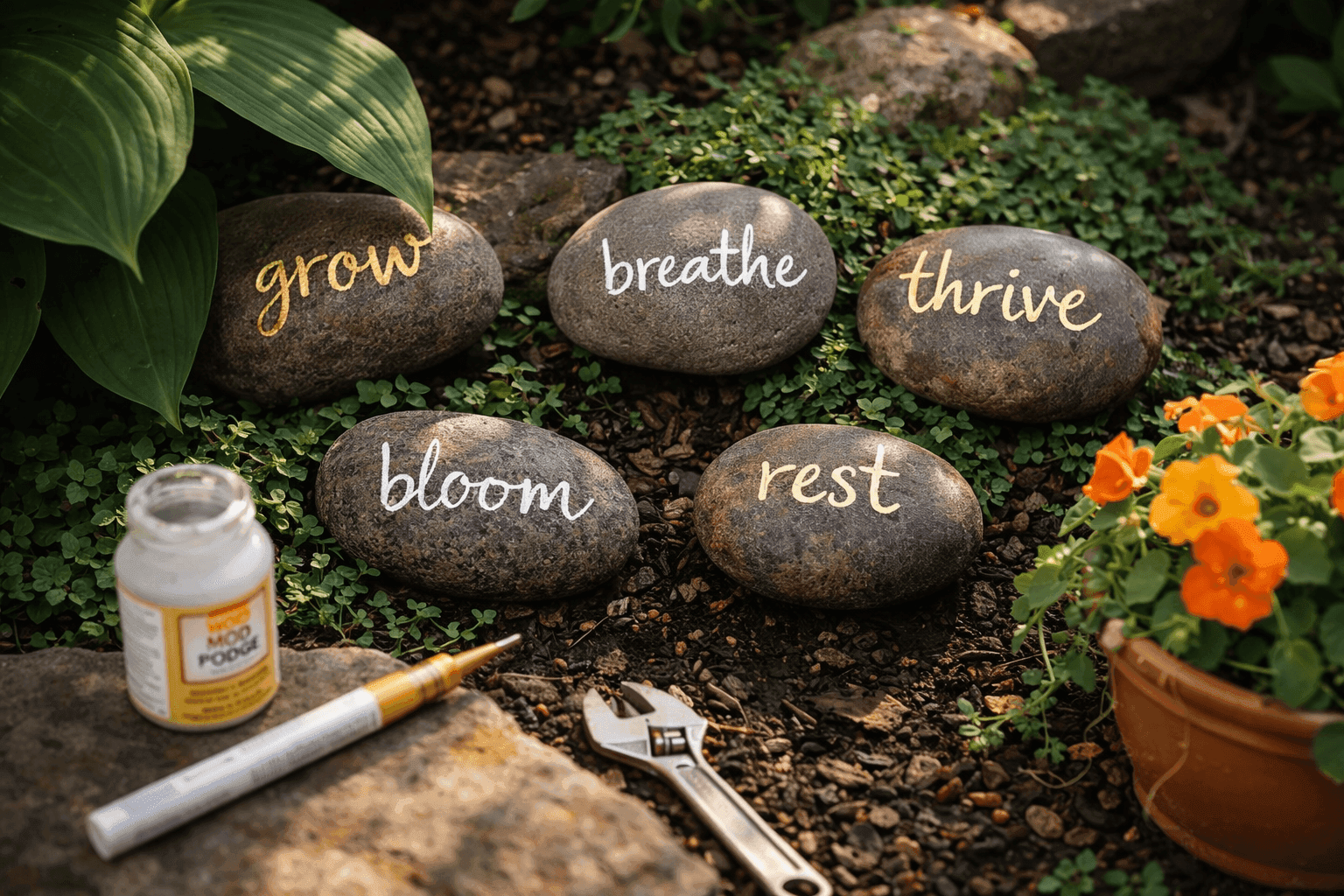
There is a specific kind of garden detail that costs almost nothing, requires no installation, no tools, and no particular skill — and yet produces a moment of genuine delight every single time someone encounters it unexpectedly while walking through your beds. A smooth river rock with the word bloom lettered in gold, half-hidden under a hosta leaf, does something that a $200 garden sculpture cannot quite replicate: it feels personal, intentional, and quietly generous in a way that mass-produced garden decor never achieves. Paint pens from any craft store make the lettering clean and controlled enough that complete beginners produce results that look considered and beautiful, the rocks themselves are free from any creek bed or gravel source, and the whole batch of fifteen takes about an hour of relaxed, creative work for $8 total. Tuck them into beds, prop them against borders, nestle them among groundcover — and then watch your visitors slow down and start hunting for more.
What You Need
- Smooth river rocks, qty 10–15 — collected free from creek beds, gravel driveways, or landscape supply yards; look for rocks with at least one flat or gently curved face large enough to letter comfortably — palm-sized rocks between 3 and 6 inches across are the ideal canvas
- Paint pens, white and gold — Posca or Molotow brand paint markers give the cleanest, most opaque lettering on stone surfaces; a medium tip (2–3mm) handles both larger letters and fine detail work without needing multiple pen sizes (~$4 each, $8 for both)
- Clear outdoor Mod Podge or exterior clear sealer — essential for protecting finished lettering through rain, frost, and UV exposure; without a sealer coat, even high-quality paint pen lettering fades and flakes within a single outdoor season (~$6–8 for a bottle that seals dozens of rocks)
- Soft brush, 1-inch wide — for applying the Mod Podge sealer coat smoothly over the finished lettering without disturbing the paint
- Rubbing alcohol and cloth — for cleaning rock surfaces before lettering; even smooth-looking creek rocks carry dust and mineral deposits that prevent paint pen ink from bonding cleanly to the surface
- Pencil — for sketching letter placement lightly on the rock before committing with the paint pen; pencil marks disappear under the sealer coat
How to Make Them
- Select your rocks with the lettering surface in mind — turn each rock until you find the face with the smoothest, flattest profile and the most neutral color, which will give the paint pen ink the best surface to bond to and make the finished lettering most readable from a few feet away. Speckled, mottled, or very dark rocks can make white lettering hard to read; mid-tone gray river rocks are the most versatile canvas for both white and gold pens.
- Clean each rock thoroughly by wiping the lettering face with rubbing alcohol on a cloth, then allowing it to dry completely before touching it with the paint pen. Natural oils from handling and mineral surface deposits on creek rocks both prevent paint pen ink from adhering properly — a rock that looks clean to the eye can still have enough surface residue to cause lettering that chips away within weeks of outdoor exposure.
- Sketch your word or phrase lightly in pencil on the rock face before opening the paint pen, centering the text on the available surface and sizing the letters to fit comfortably with breathing room on all sides. Letters crammed to the edges of the rock look rushed; centered text with generous margins reads as deliberate and well-composed. A single meaningful word — grow, bloom, breathe, thrive, rest — almost always reads more powerfully than a longer phrase on a small stone surface.
- Prime your paint pen before use by shaking it vigorously for thirty seconds with the cap on, then pressing the tip firmly against a scrap surface several times until ink flows freely and evenly. A paint pen used without priming delivers inconsistent, patchy ink flow on the first several strokes — and those first strokes on your rock are the ones that matter most.
- Letter each word slowly and deliberately, following your pencil guidelines and keeping the pen at a consistent angle to the rock surface throughout each stroke. Work from left to right and top to bottom to avoid dragging your hand through wet ink, and lift the pen tip completely between letters rather than dragging it across the surface — dragged transitions between letters is the single technique issue that separates lettering that looks careful from lettering that looks hurried.
- Allow the first coat of lettering to dry for five minutes, then apply a second pass over any letters that show the rock surface texture through the ink — paint pens on rough stone surfaces often need two coats for full, even opacity, and a thin first coat that shows the stone grain beneath looks unfinished against the surrounding rock surface.
- Add simple embellishments around the lettering once the main word is dry if desired — small dots, stars, leaf shapes, or a simple border line drawn freehand with the paint pen add visual interest without requiring any artistic training. A cluster of three small dots at each end of the word, or a simple underline with a slight curve, is enough to make the composition feel complete rather than just text on a rock.
- Seal each finished stone with two coats of clear outdoor Mod Podge applied with a soft brush, allowing full drying time between coats — at least thirty minutes in warm weather. The sealer coat is what determines whether your lettering survives two seasons outdoors or fades and chips after the first rainstorm, and two coats provide meaningfully more protection than one without significantly changing the appearance of the finished surface.
Art therapists who use rock painting as a mindfulness practice with clients always recommend choosing words that relate directly to the plants or garden spaces where the stones will live rather than generic inspirational phrases — a stone that reads "patience" placed at the base of a slow-growing peony, or "resilience" nestled against a plant that came back after a hard winter, creates a layer of personal meaning that transforms a decorative object into something that tells a specific story about that garden and the person who tends it. The site-specific word choice costs nothing additional and is consistently what art therapists identify as the detail that makes painted stones feel genuinely meaningful rather than simply decorative — both to the maker and to every person who discovers them.