Pallet Paradise: Build Your Own Outdoor Furniture
Transform reclaimed wooden pallets into stylish, budget-friendly outdoor living spaces
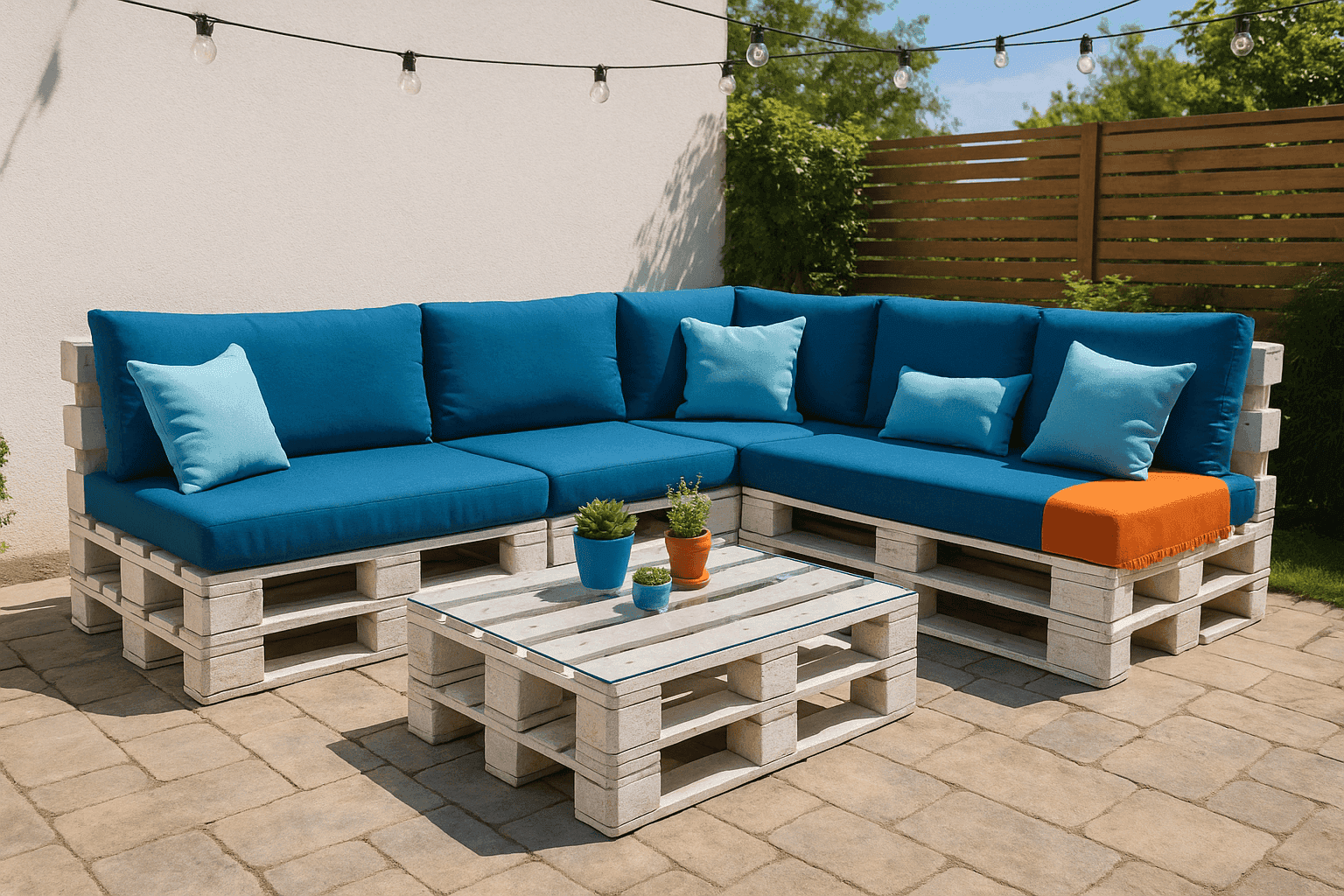
Wooden pallets offer the perfect combination of affordability, availability, and rustic charm for DIY outdoor furniture projects. With some basic tools and a weekend's worth of effort, you can transform these humble shipping platforms into beautiful, functional seating areas, tables, and accent pieces that withstand the elements while elevating your outdoor living space. The modular nature of pallets makes them incredibly versatile—perfect for creating everything from simple benches to complete sectional sofas.
Materials & Tools
| • Pallets: Heat-treated (HT) wooden pallets |
| • Lumber: 2x4s for reinforcement if needed |
| • Fasteners: Deck screws, wood screws, nails |
| • Sanding Materials: 80, 120, and 220 grit sandpaper |
| • Finishing Products: Exterior primer, paint or stain |
| • Sealer: Exterior polyurethane or deck sealer |
| • Comfort Elements: Outdoor foam, weather-resistant fabric |
| • Tools: Saw, drill, sander, pry bar, hammer |
| • Safety Gear: Gloves, goggles, dust mask |
Building Process
- Select appropriate pallets. Look for stamps indicating "HT" (heat-treated) rather than "MB" (methyl bromide), which can contain harmful chemicals. Choose pallets that are clean, dry, and structurally sound. Standard pallets measure approximately 40"x48".
- Dismantle or prepare pallets. Depending on your design, you may use whole pallets or disassemble them for individual boards. For dismantling, use a pry bar and hammer, working slowly to prevent wood splitting.
- Clean thoroughly. Remove all dirt, debris, and protruding nails or staples. For stubborn dirt, use a pressure washer, then allow wood to dry completely.
- Sand all surfaces. Begin with coarse-grit sandpaper to remove splinters and rough patches, then progress to finer grits for a smooth finish. Pay special attention to edges and seating surfaces.
- Construct your furniture base. For a basic bench or sofa, stack pallets two high for proper seating height, securing them together with screws through the support beams. For tables, a single pallet may suffice, with optional added legs for height.
- Add structural reinforcement. Depending on your design, reinforce with 2x4 lumber in high-stress areas like armrests or leg connections. For tables, consider adding a smooth top surface using pallet boards arranged in a pattern.
- Fill gaps if desired. For tables or surfaces where items might fall through, add additional pallet boards to fill gaps, creating a solid surface.
- Apply finish for weather protection. Start with exterior primer for better adhesion, then apply 2-3 coats of exterior paint or stain in your desired color. Finish with 2 coats of exterior polyurethane or deck sealer for maximum durability.
- Add comfort elements. For seating, cut outdoor foam to size and cover with weather-resistant fabric. Create cushions with piping and hidden zippers for a professional look and easy cleaning.
For a cohesive outdoor living space, create modular pieces that can be arranged in multiple configurations. Build individual seat units that can function independently as chairs or be pushed together to form sofas or L-shaped sectionals. Include hidden casters on the bottom of heavier pieces to make rearranging effortless. When selecting outdoor fabric for cushions, consider fade-resistant Sunbrella or similar marine-grade options, which justify their higher cost through years of color retention and weather resistance.