Rest Assured: Crafting a Statement Wood Headboard for Your Bedroom
Create a one-of-a-kind focal point that transforms your bedroom on a budget
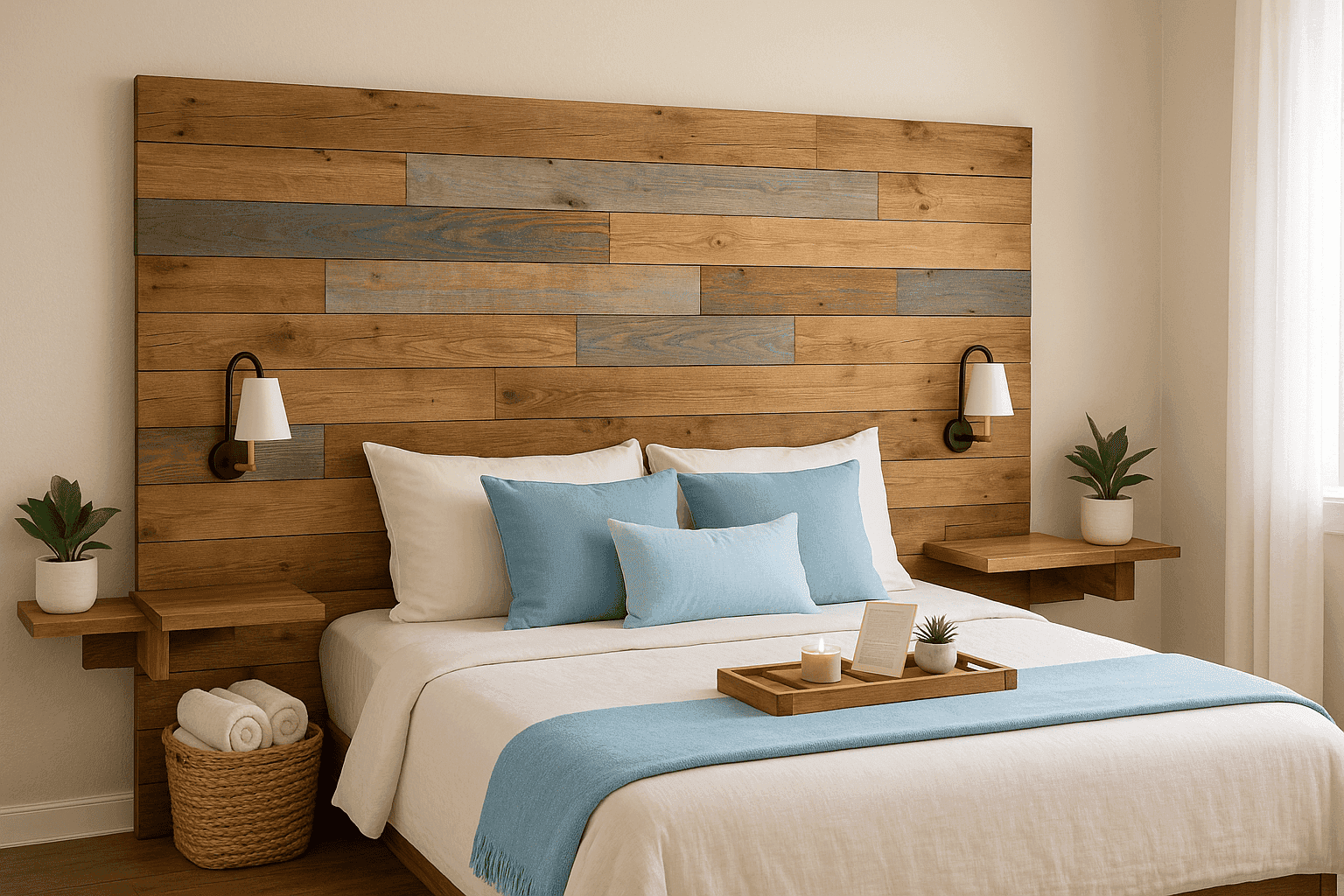
A custom wooden headboard creates an instant focal point in your bedroom while adding warmth, texture, and personality. Unlike store-bought options that can be expensive and generic, DIY headboards allow you to tailor the size, style, and finish to perfectly complement your space. From rustic reclaimed wood to sleek modern panels, wooden headboards offer endless design possibilities that can be achieved with basic tools and moderate woodworking skills.
Materials & Tools
| • Wood boards (reclaimed or new lumber) |
| • Supporting frame materials (2x4s) |
| • Wood screws and mounting hardware |
| • Sandpaper (various grits) |
| • Wood stain or paint |
| • Polyurethane or sealer |
| • Measuring tape and level |
| • Saw (circular, miter, or jigsaw) |
Construction Process
- Design and measure: Determine the size and style of your headboard—typically 3-4 inches wider than your mattress on each side and extending 24-30 inches above the top of the mattress. Sketch your design before beginning.
- Prepare your wood: For reclaimed wood, clean thoroughly and check for nails or splinters. For new lumber, sand all boards to remove mill marks and rough edges. Cut all pieces to your predetermined measurements.
- Create a support frame: Build a simple rectangular frame using 2x4s that will serve as the structure to attach your decorative wood pieces. For larger headboards, include center supports for stability.
- Arrange and attach boards: Lay out your design on a flat surface, then attach the decorative boards to your frame using wood screws from the back side for a clean front appearance. Consider the pattern—horizontal, vertical, herringbone, or mixed.
- Finish for durability: Sand any rough edges, then apply your chosen stain or paint. Once dry, protect the wood with 2-3 coats of polyurethane or sealer, allowing proper drying time between coats.
For added dimension and interest, mix boards of different widths or incorporate special elements like a live edge piece at the top. Consider installation options early in your planning—headboards can be mounted directly to the wall (best for stability), attached to your bed frame, or designed with legs to stand independently. If you're new to woodworking, start with a simple rectangular design using pre-cut boards from a home improvement store. For those with limited tools, many lumber yards will cut your wood to size for a small fee. Add integrated functionality by incorporating floating nightstand shelves on either side or installing dimmable reading lights directly into the headboard.