Tree and Shrub Fertilizing: Feed Now for Spring Success
Strengthen root systems with fall feeding that fuels vibrant spring growth
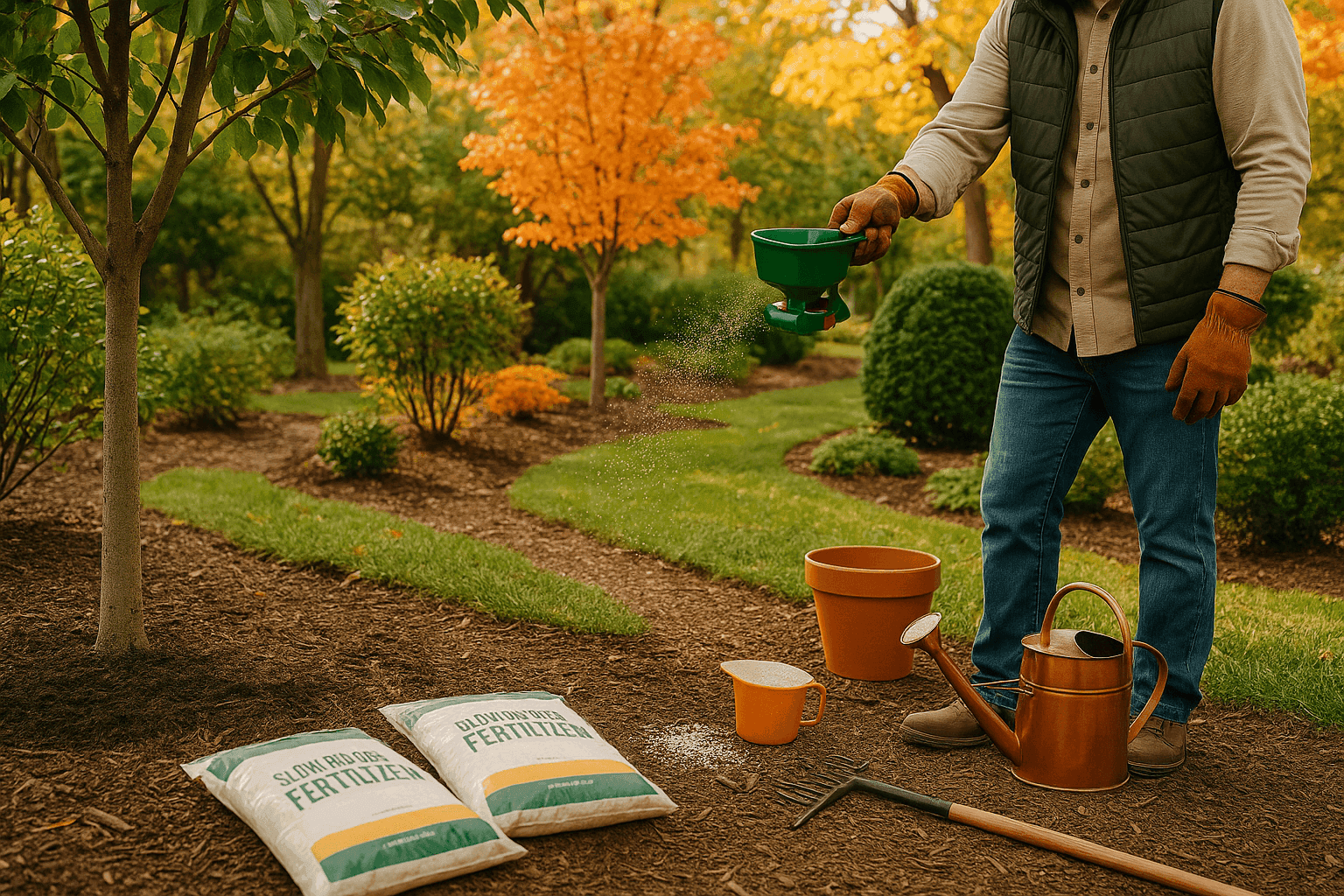
Fall fertilizing is the secret weapon that separates thriving landscapes from merely surviving ones, giving woody plants the nutritional foundation they need to weather winter stress and explode with healthy growth come spring. While most homeowners think about feeding plants during the growing season, professional landscapers know that autumn feeding focuses energy on root development rather than foliage, creating stronger, more resilient plants that handle cold weather better. Slow-release fertilizers applied 6-8 weeks before hard frost provide nutrients gradually throughout winter, ensuring your trees and shrubs wake up in spring with robust root systems ready to support vigorous new growth. This strategic timing means you're investing in next year's garden success while your plants are naturally preparing for dormancy.
Fertilizing Supplies
- Fertilizer Types: Slow-release granular fertilizer (10-10-10 or similar balanced blend), organic compost, bone meal for phosphorus boost
- Application Tools: Broadcast spreader for large areas, hand spreader for targeted feeding, measuring cup for precise amounts
- Soil Preparation: Garden rake, soil aerator or garden fork, pH test kit to check soil conditions
- Watering Equipment: Garden hose with sprinkler attachment, soaker hoses for deep watering
- Safety Gear: Work gloves, dust mask when handling dry fertilizers, knee pads for ground-level work
Application Process
- Test soil pH around each plant, as most trees and shrubs prefer slightly acidic to neutral soil (6.0-7.0)
- Calculate fertilizer amounts based on plant size and manufacturer recommendations, typically 1-2 pounds per inch of trunk diameter
- Clear the area around each plant, removing fallen leaves and debris to ensure good soil contact
- Apply fertilizer in a circle extending from 6 inches from the trunk to the drip line edge of branches
- Rake granular fertilizer lightly into the top 2-3 inches of soil without damaging surface roots
- Water thoroughly after application, soaking the soil to 12-18 inches deep to activate slow-release nutrients
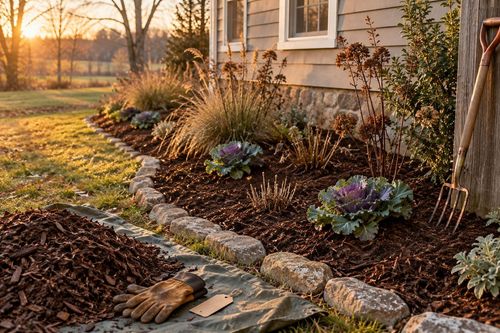
- Mulch over the fertilized area with 2-3 inches of organic mulch, keeping mulch away from plant stems
- Monitor moisture levels through fall, ensuring consistent soil moisture until ground freezes
Master gardeners follow the "feed the soil, not the plant" philosophy by combining slow-release fertilizer with a 2-inch layer of compost around the root zone. This creates a nutrient-rich environment that beneficial microorganisms love, establishing a healthy soil ecosystem that continues feeding plants long after the fertilizer is depleted. For established trees over 5 years old, consider deep root fertilization using a soil auger to place nutrients 8-12 inches deep where feeder roots are most active – this technique delivers nutrition directly to the root zone and dramatically improves uptake efficiency.