Turn Halloween Candy Chaos Into an Organized Treat System
Create a smart rotation system that keeps treats fresh and teaches healthy habits
The night after Halloween, every parent faces the same challenge—a massive pile of candy that threatens to become either a free-for-all disaster or a source of daily battles over treats. Creating a thoughtful candy organization system transforms this chaos into an opportunity to teach kids about portion control, delayed gratification, and food management while actually keeping those treats fresh and enjoyable for months. I love this project because it's practical parenting disguised as organization, giving kids ownership over their haul while you maintain reasonable boundaries that prevent sugar meltdowns and wasted candy. With about $20 worth of clear containers, labels, and a simple tracking chart, you'll set up a system that works way better than hiding candy on top of the refrigerator or letting it sit in pillowcases until Valentine's Day. The beauty of this approach is that it makes treats special rather than forbidden, creates natural limits without constant nagging, and honestly makes the candy last so much longer because everything stays fresh and nothing gets forgotten or crushed at the bottom of a bag.
Organization Supplies
- Storage Containers:
- Clear plastic bins with lids (3-4 medium size, $10-12 total)
- Small snack-size containers or bags for daily portions ($5 for reusable set)
- Large glass jar or clear container for "special treats" display ($5-8)
- Labeling Materials:
- Label maker or printable labels
- Permanent markers for dating
- Colored stickers for category coding
- Tracking System:
- Poster board or cardstock for rotation chart ($2-3)
- Dry-erase board and markers (optional, $8-10)
- Small calendar or sticker chart for tracking treats
- Tools:
- Scissors for opening packages
- Kitchen scale (optional, for portioning)
- Measuring cups for consistent portions
Creating Your System
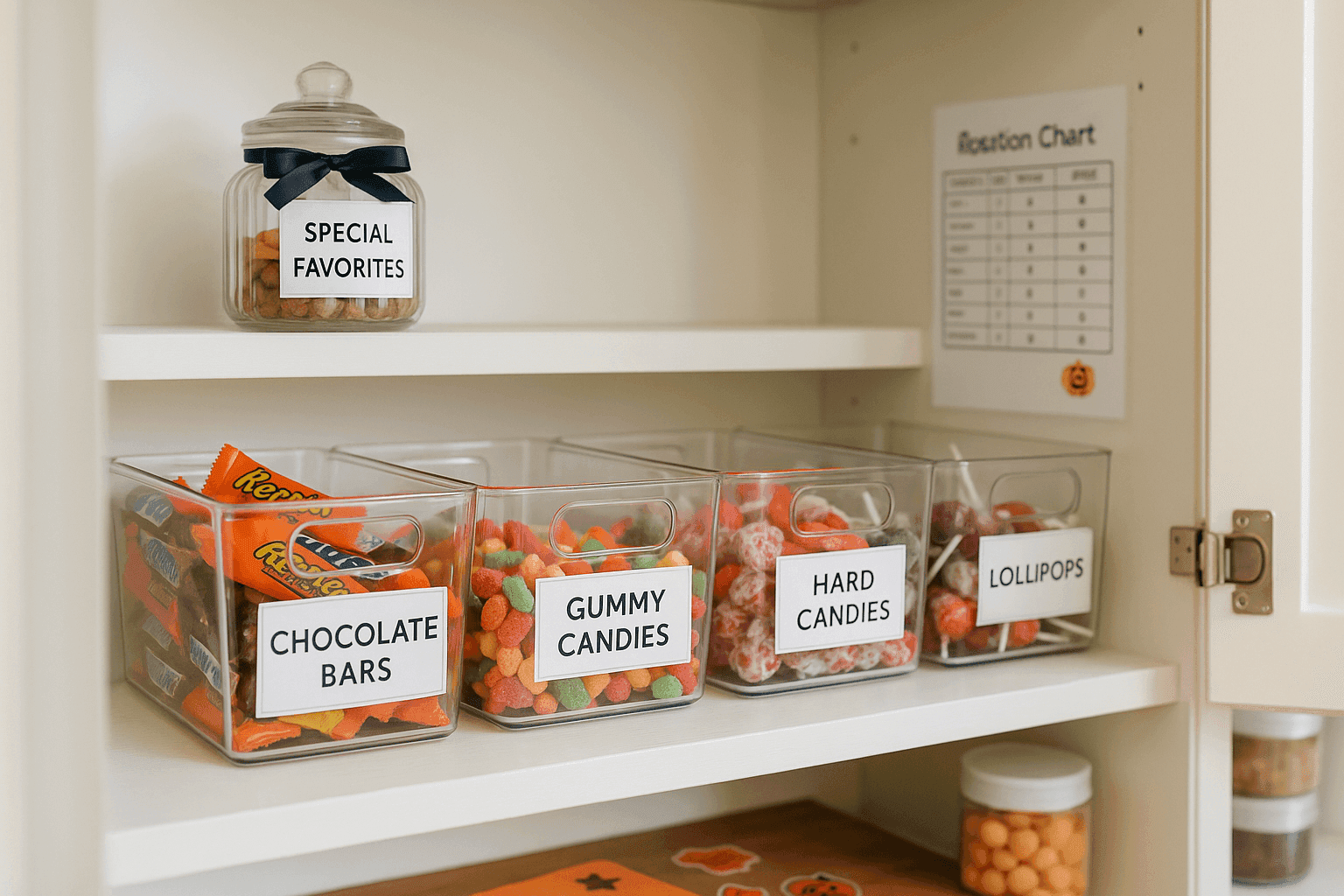
- Sort by Category: Work with your kids to organize candy into clear groups like chocolate bars, gummy candy, hard candy, and lollipops—this initial sorting makes everything easier and helps kids see exactly what they have while teaching categorization skills.
- Check Expiration Dates: Go through each category and remove any candy that's already opened, crushed, or suspicious, then organize remaining treats with shortest expiration dates in front so you naturally rotate through them in the right order.
- Label Clear Containers: Assign one bin to each candy category with clear labels, adding the date you organized everything so you can track freshness—transparent containers let kids see options without dumping everything out every time they want a treat.
- Create the Rotation Chart: Design a simple visual system that shows how many pieces kids can choose per day or week, using stickers, checkboxes, or a calendar format that makes the rules clear and puts kids in charge of tracking their own consumption.
- Establish Selection Rules: Set up a system like "choose 2 pieces after lunch and 1 after dinner" or "pick 5 items for the week on Sunday," then let kids make their own choices within those boundaries—this builds decision-making skills and prevents constant candy negotiations.
- Designate Storage Location: Place containers in an accessible but not constantly visible spot like a pantry shelf or cabinet, keeping them at a height where kids can reach with permission but aren't staring at candy all day long.
- Set Up Special Treats: Create a separate "favorites jar" where each child can put their 5-10 most prized pieces that they're saving for later, teaching the concept of saving the best for last and delayed gratification in a concrete, visual way.
- Plan Monthly Review: Schedule a quick check-in at the end of each month to reorganize, discard anything that's gone stale, and adjust the system based on what's working—this keeps the organization functional and gives kids ongoing practice with food management.
Savvy parents take this system one step further by implementing the "trade-up" concept that professional organizers use for toys and collectibles. After the initial sorting, offer kids the option to trade quantity for quality—exchange ten pieces of candy they're lukewarm about for one special trip to pick out their favorite treat at the store, or swap duplicate candies with siblings to get more of what they actually love. This naturally reduces the total volume while increasing satisfaction, teaches negotiation and value assessment, and honestly makes kids way more thoughtful about what they actually want to eat versus what they grabbed just because it was there. Many families also institute a "Switch Witch" tradition where kids can leave out candy they don't want on November 1st in exchange for a small toy or book, which accomplishes the same goal of reducing overwhelming quantities while maintaining the magic and giving kids agency over their choices.